Showing posts with label Educators. Show all posts

04 September 2013

RAG RADIO / Thorne Dreyer : Chicago's Mike Klonsky Fights for Public Education, 'Small Schools'

Chicago education activist Mike Klonsky in the studios of KOOP Radio, Austin, Texas, Friday, August 20, 2013. Photo by Roger Baker / The Rag Blog.
Rag Radio podcast:
Former SDS leader Mike Klonsky is fighter
for 'Small Schools' and democratic education
A veteran of the Civil Rights Movement and the struggle against the War in Vietnam, Mike has been involved in community and labor organizing as well as the fight for democratic education.
By Rag Radio / The Rag Blog / September 4, 2013

Former SDS leader Mike Klonsky, now a Chicago-based public education activist and advocate for "Small Schools," joined us on Rag Radio, Friday, August 30, 2013.

Rag Radio is a weekly syndicated radio program produced and hosted by long-time alternative journalist Thorne Dreyer, and recorded at the studios of KOOP 91.7-FM, a cooperatively-run all-volunteer community radio station in Austin, Texas.

Listen to or download our August 24 interview with Mike Klonsky here:


Mike Klonsky is an educator, an education theorist, a public schools activist, and a “Small Schools” advocate.

A veteran of the Civil Rights Movement and the struggle against the War in Vietnam, Klonsky was a leader in Students for a Democratic Society (SDS), serving as SDS National Secretary in 1968, and has been involved in community and labor organizing as well as the fight for democratic education. A "red diaper baby," his father was a life-long activist and a veteran of the Spanish Civil War.

Mike Klonsky teaches in the College of Education at DePaul University. One of the founders of the Small Schools Workshop, Mike serves as its national director. He also coaches basketball at a Chicago high school. Klonsky is the author of Small Schools: The Numbers Tell a Story (University of Illinois Small Schools Workshop) and co-author, along with Bill Ayers and Gabe Lyon, of A Simple Justice: The Challenge for Teachers in Small Schools (Teachers College Press).

Mike Klonsky on Rag Radio. Photo by Roger Baker / The Rag Blog.
Mike served as a member of the National Advisory Council on Youth Violence and is past president of the editorial board of Catalyst, Chicago’s school-reform journal. He has also written extensively on the history and progress of Chicago’s dynamic struggles to save and transform public schools. His SmallTalk Blog is read by thousands of educators and activists.

Read Mike Klonsky's August 27, 2013, article, "Drive-By Teachers and the Great Charter School Scam," on The Rag Blog.


Rag Radio is hosted and produced by Rag Blog editor Thorne Dreyer, a pioneer of the Sixties underground press movement. Tracey Schulz is the show's engineer and co-producer.

Rag Radio has aired since September 2009 on KOOP 91.7-FM, an all-volunteer cooperatively-run community radio station in Austin, Texas. Rag Radio is broadcast live every Friday from 2-3 p.m. (CDT) on KOOP and is rebroadcast on Sundays at 10 a.m. (EDT) on WFTE, 90.3-FM in Mt. Cobb, PA, and 105.7-FM in Scranton, PA. Rag Radio is now also aired on KPFT-HD3 90.1 -- Pacifica radio in Houston -- on Wednesdays at 1 p.m.

The show is streamed live on the web and, after broadcast, all Rag Radio shows are posted as podcasts at the Internet Archive.

Rag Radio is produced in association with The Rag Blog, a progressive Internet newsmagazine, and the New Journalism Project, a Texas 501(c)(3) nonprofit corporation.

Rag Radio can be contacted at ragradio@koop.org.

Coming up on Rag Radio:
THIS FRIDAY, September 6, 2013:
Award-winning novelist and screenwriter Stephen Harrigan, author of The Gates of the Alamo and Challenger Park.
Friday, September 13, 2013: Populist author and commentator Jim Hightower.
Friday, September 20, 2013: Long-time activist Michael James, founder of Rising Up Angry and Chicago's Heartland Cafe.

The Rag Blog

[+/-] Read More...

17 July 2013

RAG RADIO / Thorne Dreyer : Texas Law Prof Gerald Torres on Voting Rights, Affirmative Action & More

University of Texas law professor Gerald Torres in the studios of KOOP-FM in Austin, Texas, Friday, July 12, 2013. Photos by Roger Baker / The Rag Blog.
Rag Radio podcast:
UT-Austin law prof Gerald Torres
joins us on Rag Radio

We discuss the recent U.S. Supreme Court decisions on voting rights and affirmative action, plus immigration reform, Atmospheric Trust litigation, Native American sovereignty, and much more.
By Rag Radio / The Rag Blog / July 17, 2013

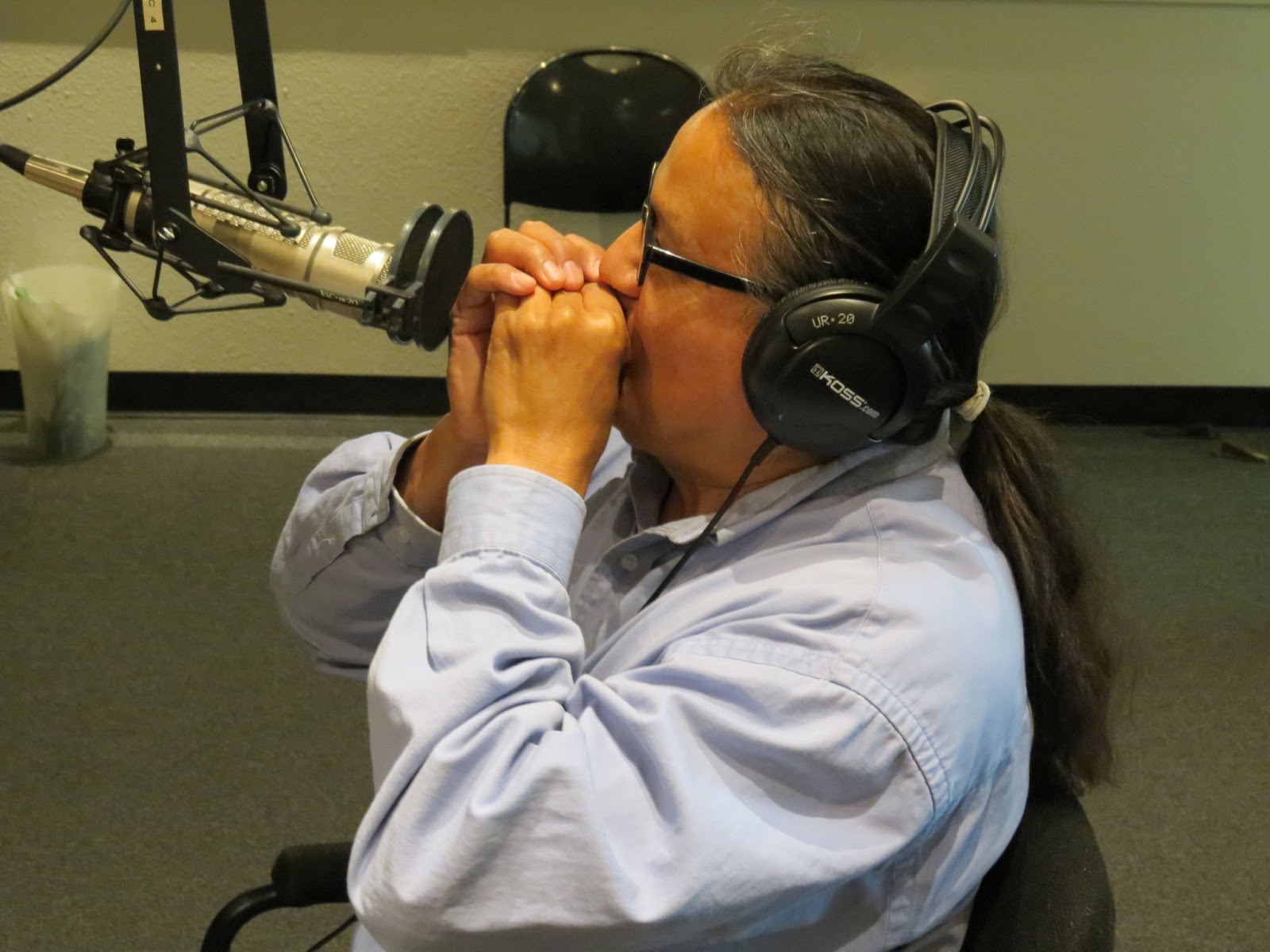
University of Texas law professor Gerald Torres was Thorne Dreyer's guest on Rag Radio, Friday, July 12, 2013. Torres, who holds the Bryant Smith Chair in Law at the University of Texas, is an expert on environmental and agricultural law, critical race theory, and federal Indian law.

And he plays a mean harmonica!

Rag Radio is a syndicated radio program produced at the studios of KOOP 91.7-FM, a cooperatively-run all-volunteer community radio station in Austin, Texas.

Listen to or download this episode of Rag Radio here:


Among issues that Professor Torres discusses with us on the show are the recent U.S. Supreme Court decisions on voting rights and affirmative action, plus immigration reform, Atmospheric Trust litigation, and Native American sovereignty.

Gerald Torres, who was associate dean of the University of Minnesota Law School before coming to UT-Austin, has served as deputy assistant attorney general for the Environment and Natural Resources Division of the U.S. Department of Justice in Washington, D.C., and as counsel to then U.S. Attorney General Janet Reno.

His book, The Miner’s Canary: Enlisting Race, Resisting Power, Transforming Democracy (Harvard University Press), written with Harvard Law Professor Lani Guinier, was described by Publisher’s Weekly as “one of the most provocative and challenging books on race produced in years.”

Gerald Torres in performance!
Professor Torres is a past president of the Association of American Law Schools. He has served on the board of the Environmental Law Institute, the National Petroleum Council, and on EPA’s National Environmental Justice Advisory Council. He is a member of the Council on Foreign Relations and the American Law Institute.

Torres was honored with the 2004 Legal Service Award from the Mexican American Legal Defense and Educational Fund (MALDEF) for his work to advance the legal rights of Latinos. He currently is Board Chair of the Advancement Project, the nation’s leading social and racial justice organization. He is also on the board of the Natural Resources Defense Council and is Vice-Chairman of the Board of Earth Day Network.

He has been a visiting professor at Harvard, Stanford, and Yale law schools.


Rag Radio is hosted and produced by Rag Blog editor and long-time alternative journalist Thorne Dreyer, a pioneer of the Sixties underground press movement.

The show has aired since September 2009 on KOOP 91.7-FM, an all-volunteer cooperatively-run community radio station in Austin, Texas. Rag Radio is broadcast live every Friday from 2-3 p.m. (CDT) on KOOP and is rebroadcast on Sundays at 10 a.m. (EDT) on WFTE, 90.3-FM in Mt. Cobb, PA, and 105.7-FM in Scranton, PA.

The show is streamed live on the web by both stations and, after broadcast, all Rag Radio shows are posted as podcasts at the Internet Archive.

Rag Radio is produced in association with The Rag Blog, a progressive Internet newsmagazine, and the New Journalism Project, a Texas 501(c)(3) nonprofit corporation. Tracey Schulz is the show's engineer and co-producer.

Rag Radio can be contacted at ragradio@koop.org.

Coming up on Rag Radio:
THIS FRIDAY,
July 19, 2013: Sociologist, media critic, and author Todd Gitlin.
Friday, July 26, 2013: Sanford, FL-based political science prof Jay D. Jurie, on the consequences of the Trayvon Martin verdict.

The Rag Blog

[+/-] Read More...

13 March 2012

Robert Jensen : Holding Onto the Joy in Teaching

Pompous professor. Image from Canadian Mysteries.

Holding onto the joy in teaching
We are the best teachers when we aren’t afraid of the dark.
By Robert Jensen / The Rag Blog / March 13, 2012

I am a tenured professor in a relatively stable university, which is quite possibly the best job in the world. I get paid well to read, think, talk, and write, and I have more job security than almost anyone I know.

Like many professors, I am critical of the increasingly corporate nature of universities. The conservative/neoliberal project of turning public schools into educational factories is also gathering steam in higher education, and there is much organizing work necessary just to protect what little space for critical thinking still exists.

But the longer I teach, the more I appreciate the privileges that come with the job, and the more fun I have. So, when I recently had to write a “statement of teaching philosophy,” I tried to reflect that gratitude and pleasure.


Statement of Teaching Philosophy:

Pay attention, be astonished, tell about it

After years of research, I have developed a three-stage teaching method that breaks new ground in pedagogical theory: Stage 1: Pay attention. Stage 2: Be astonished. Stage 3: Tell about it.

The first thing to say about this sophisticated advance in our understanding of university teaching is that I stole it, from Mary Oliver’s poem “Sometimes.”

If it appears I’m trying to poke fun at university professors’ self-indulgent tendency toward pomposity, I am. Since I am a university professor who occasionally can be self-indulgent and pompous, I have standing to poke fun. Frankly, we don’t poke fun at ourselves enough. That’s part of my teaching philosophy: Poke fun at myself, as often as possible, especially in front of students.

In this regard, poets perform an important service for professors. If we professors are ever tempted to claim that we have had an original insight into the human condition, we should pause and remember this: There’s at least one poet, and likely dozens, who had the insight long before we did and who expressed it far more eloquently than we could ever hope.

I don’t teach poetry, but I often read poetry to my class. That’s part of my teaching philosophy, to remind students that whatever the subject, poets have something important to say to us. I read to my students even though I have had no voice training and am not particularly good at reciting poetry.

That’s part of my teaching philosophy, too. I think it’s healthy for students to see professors stumble. When every word we utter in class is precise and polished, it can create distance between professor and student. Students are too easily impressed by us, and they can come to believe we are our performances.

Better that they see we are human beings, struggling and stumbling, so that intellectual work doesn’t appear to be something only specialists can do. Our job isn’t to be smart but to help students understand that they can be smart, too.

So, I read to my class, from Mary Oliver and Wendell Berry, from Marge Piercy and Faiz Ahmed Faiz. I play songs, too, though I’m sensible enough not to sing in class.

Back to Oliver. Those three recommendations comprise her “instructions for living a life.” They also are serviceable instructions for teaching. I try to pay attention, not only to the scholarship in my field but to the world around me, which means I try to get out in the world beyond the university as often as possible.

I am constantly astonished by the human capacity for both depravity and love, and I spend considerable time trying to figure out these paradoxes. I tell about it as often as possible, as a teacher, public speaker, and writer.

After 20 years of teaching at the University of Texas at Austin, I have written numerous statements about my teaching philosophy. Each exercise is an opportunity for me to challenge myself. The somewhat unorthodox style of this essay comes not from a lack of respect for the assignment but a desire to challenge myself in a new way. This might be because, after 20 years, I have a sense that I’m a better teacher than ever, but at the same time I’m less sure why that might be the case.

Here’s one plausible answer to the question of why my teaching might be better today: I’m more comfortable with ambiguity than when I was younger. As we age, we have a choice. We can conclude that we’re right in our assertions about the world and proceed based on that assumption. Or, we can conclude that we’re right and proceed based on the assumption that we’re missing something.

I have spent considerable time studying the role of news media in our culture, politics, and economy. I am confident that the assertions I make about that institution and those systems are compelling. I’m pretty sure that I’m right, and I argue strenuously that those assertions are the best way to understand journalism and society. And I also wonder about that.

Time for another poet. Faiz Ahmed Faiz concludes his poem “The City from Here”:
There are flames dancing in the farthest corners,
throwing their shadows on a group of mourners.
Or are they lighting up a feast of poetry and wine?
From here you cannot tell, as you cannot tell
whether the color clinging to those distant doors and walls
is that of roses or of blood.
I read that poem to my journalism students as a reminder that when we look, we look from one perspective. “When you look at the city from here,” from any one place, it can be easy to confuse roses and blood. Since we are always looking from somewhere, caution and humility are important. I read that poem to remind students that their point of view is a point of view. I read that poem to remind myself as well.

With that winding introduction, here’s a concise statement of my teaching philosophy: I have the best job in the world. I get paid a salary that allows me to live comfortably and give back to the community. To earn this salary, I am asked to spend my time thinking, reading, writing, and talking, all things I enjoy doing even when not being paid.

On occasion, I have to go to a boring meeting or file a stupid report, which can at times be annoying. But, all in all, this is a really good gig. The least I can do is pay attention, be astonished, and tell about it with as much joy and passion as possible. When I do that, I think I’m a pretty good teacher, and I think I do that most every day I walk into the classroom.

But I’m not 100 percent sure I’m as good as I think. When I look out at my students and see roses, maybe that’s just how the city looks from the lectern. Perhaps I simply don’t see the blood.

Time for a closing metaphor, this time borrowed from Wendell Berry’s poem, “To Know the Dark”:
To go in the dark with a light is to know the light.
To know the dark, go dark. Go without sight,
and find that the dark, too, blooms and sings,
and is traveled by dark feet and dark wings.
We are the best teachers when we aren’t afraid of the dark. When I began teaching, I went into the dark with the biggest flashlight I could find. That light allowed me to see many things, but the intensity of the beam obscured other things, in the shadows. That light allowed me to feel smart, but these days I am less reassured by being smart. The older I get, the more I realize that being smart isn’t going to get us all the way home.

So, these days I carry a smaller flashlight, and I turn it off as often as I can muster the courage. My best teaching is when I go dark.

[Robert Jensen is a journalism professor at the University of Texas at Austin, where he teaches courses in media law, ethics, and politics -- and a board member of the Third Coast Activist Resource Center in Austin. His books include All My Bones Shake: Seeking a Progressive Path to the Prophetic Voice, and Getting Off: Pornography and the End of Masculinity. His writing is published extensively in mainstream and alternative media. This article was first published at Truthout. Robert Jensen can be reached at rjensen@uts.cc.utexas.edu. Read more articles by Robert Jensen on The Rag Blog.]

The Rag Blog

[+/-] Read More...

22 March 2010

Bill Ayers and Bernardine Dohrn : Bringing the War Home, 1970

News photo taken March 6, 1970, of the New York Fire Department responding to an explosion at an upscale Greenwich Village townhouse. Image from Wikipedia.

Bringing the war home: 1970-2010
Eventually we came to think that we could make a revolution, and that in any case it was our responsibility to try.
By Bill Ayers and Bernardine Dohrn / The Rag Blog / March 22, 2010
Conscience is the sword we wield. Conscience is the sword that runs us through. -- Marge Piercy
A front page headline in the New York Times on March 7, 1970, announced: “Townhouse Razed by Blast and Fire; Man’s Body Found.” The story described an elegant four-story brick building in Greenwich Village destroyed by three large explosions and a raging fire “probably caused by leaking gas” at about noon on Friday, March 6.

The body was later identified as belonging to 23-year old Ted Gold, a leader of the 1968 student strike at Columbia University, a teacher, and a member of a “militant faction of Students for a Democratic Society.”

Over the next several days two more bodies were discovered -- Diana Oughton and Terry Robbins had both been student leaders, civil rights and anti-war activists -- and by March 15 the Times reported that police had found “57 sticks of dynamite, four homemade pipe bombs and about thirty blasting caps in the rubble,” and referred to the townhouse for the first time as a “bomb factory.”

That awful event announced widely the existence of the Weather Underground, in some ways the most notorious, but far from the only group of Americans to take up armed struggle as a protest tool at that moment -- the story took off from there, growing, changing, and accelerating every day

A few days after the Townhouse explosion Ralph Featherstone and William “Che” Payne, two “black militants," associated with the Student Nonviolent Coordinating Committee, according to Time Magazine, “were killed when their car was blasted to bits” by a bomb police said was being transported to Washington D.C. to protest the prosecution of SNCC leader H. Rap Brown. The Black Liberation Army leapt onto the national scene, and other organized groups -- Puerto Rican independistas, Native American first nation militants, and Chicano separatists -- emerged demanding self-determination and justice.

Next door neighbor Dustin Hoffman stands near the West 11th Street townhouse that was destroyed by an explosion and fire on March 6, 1970. Photo from the AP.

Violent resistance to violence was far from an isolated phenomenon: Time noted that in 1969 there had been 61 bombings on college campuses, most targeting ROTC and other war-related targets, and 93 bomb explosions in New York, half of them classified as “political,” a category that was “virtually non-existent 10 years ago.”

According to the FBI, from the start of 1969 to mid-April 1970, there were 40,934 bombings, attempted bombings, and bomb threats. Out of this total, 975 had been explosive, as opposed to incendiary, attacks, meaning that on average, two bombs planned, constructed, and placed, detonated every day for more than a year. Our national history includes times of anarchist resistance, labor militancy, massive unreported (and still largely unacknowledged) slave rebellions, and the armed abolitionism of John Brown; the late 1960’s and 1970’s was becoming one of those times.

How had it come to this?

Empire, invasion, and occupation always earn blow-back. In 1965 most Americans supported the war, but by 1968 people had turned massively against it -- the result of protest and organizing and a burgeoning peace movement, and of civil rights leaders like the militants from SNCC, Muhammad Ali, and Martin Luther King, Jr. denouncing the war as illegal and immoral. Even more important, veterans came home and told the truth about the reality of aggression and occupation and war crimes.

The US government found itself isolated around the world and in profound and growing conflict with its own people inside its own borders. The Vietnamese themselves were decisive: they refused to be defeated. The Tet Offensive in 1968 destroyed any fantasy of an American victory, and when President Lyndon Johnson announced at the end of March 1968 that he would not run for reelection, it seemed to us we had won a victory.

But peace proved to be a dream deferred, for the war did not end -- it escalated into an air and sea war, expanded into all of Cambodia and Laos, and every week the war dragged on another six thousand people were murdered in Southeast Asia. Six thousand human beings -- massive, unthinkable numbers -- were thrown into the furnaces of war and death that had been constructed by our own government.

The war was lost, but the terror continued. All Vietnamese territories outside U.S. control were declared “free-fire zones” and airplanes rained bombs and napalm on anything that moved, destroying crops and live-stock and entire villages. John McCain, an unremorseful war criminal, flew some of those missions. As a young lieutenant, John Kerry testified in Senate hearings at the time that U.S. troops committed war crimes every day as a matter of policy, not choice.

No one knew precisely how to proceed, for the anti-war movement had done what it had set out to do -- we’d persuaded the American people to oppose the war, built a massive movement and a majority peace sentiment -- and still we couldn’t find any sure-fire way to stop the killing; millions of people mobilized for peace, and our project, our task and our obsession, was so simple to state, so excruciatingly difficult to achieve: peace now.

The war slogged on into a murky and unacceptable future, and the anti-war forces splintered then -- some of us tried to organize a peace wing within the Democratic Party, others organized in factories and workplaces, some fled to Europe or Africa or Canada, others to communes, the land, and hopeful but small organizing projects. Some began to build a vehicle to fight the war-makers by other means, a clandestine force that would, we hoped, survive what we thought of as an impending American totalitarianism.

Every choice was contemplated, each seemed a possibility then -- and we had friends and family in every camp -- and no choice seemed utterly beyond the pale.

The Weather Underground carried out a series of illegal and symbolic attacks on property then, some 20 acts over its entire existence, and no one was killed or harmed; the goal was not to terrorize people, but to scream out the message that the U.S. government and its military were committing acts of terrorism in our name, and that the American people should never tolerate that.

Some felt that our actions were misguided at best, off-the-tracks, indefensible and even despicable, and that case is not impossible to make. But America’s longest war itself, with all its attendant horrors, was doubly despicable, and while many stood up, who in fact did the right thing; who ended the war; who transformed the world?

We began to think of ourselves as part of the Third World project -- revolutionary liberation movements demanding justice and freeing themselves from empire, we believed, would also transform the world. We thought that we who lived in the metropolis of empire had a special duty to “oppose our own imperialism” and to resist our own government’s imperial dreams.

Eventually we came to think that we could make a revolution, and that in any case it was our responsibility to try. It was a big stretch, but every revolution is impossible until it occurs; after the fact, every revolution seems inevitable.

All of that was 40 years ago -- lots of water under the bridge since then, raging rivers and cascading falls, rapids and torrents, chutes and ladders -- a long time in the life of a person -- the young become the old, and stories get retold.

But it’s also a matter of perspective: the meaning of any historical event will always be contested, and the more recent the event, the fiercer the contestation. The last word has not been written about the radical movements of youth in Europe in 1968, and certainly the meaning of the Black Freedom Movement or of the U.S. invasion and occupation of Viet Nam and the various American reactions to that catastrophe -- from mindless jingoism to sincere patriotism, from reluctant participation to gung-ho brutality, from protest to armed resistance -- are far from settled.

We’re reminded of the Chinese premier Chou En Lai responding to a French journalist’s question many years ago about the impact of the 18th Century French revolution on the 20th Century Chinese revolution. He thought for quite awhile and finally said, “It’s too soon to tell.” Forty years is less than the blink of an eye.

The big wheel keeps on turning: events and actions and adventures plunge relentlessly forward and nothing withstands the whirlwind of life on-the-move and history in-the-making. No single narrative can ever adequately speak to the diversity and complexity of human experience, for meaning itself is in the mix, always contested and never easily settled.

Because meaning is made and remade in the present tense, our backward glances are now necessarily refracted through the U.S. defeat in Viet Nam, the steady decline of empire, the hollowing out of the economy through militarism, the destruction of our political system, the environmental catastrophe that capitalism wrought, the terror attacks of 9/11 and the subsequent invasions and occupations and wars that continue as defining features of our national life. There is no sturdy accounting of distant times: everything must change, no one and nothing remains the same.

Many who knew and loved them 40 years ago, choose to remember Ted Gold, Diana Oughton, Terry Robbins, Ralph Featherstone, and Che Payne every day as beautiful and committed young people who believed fiercely in peace and justice and freedom, believed further that all men and women are of incalculable value, and thought that they had a personal and urgent responsibility to act on that deep belief.

Bill Ayers and Bernardine Dohrn.

We think of Brecht: a smile is a kind of indifference to injustice. And then we turn to Rosa Luxemburg writing to a friend from prison: love your own life enough to care for the children and the elderly, to enjoy a good meal and a beautiful sunset, to embrace friends and lovers; and love the world enough to put your shoulder on history’s great wheel when required.

We have not forgotten our fallen friends, not for a moment. March 6 was for us a time of more formal remembrance. Their deaths and all that followed offered us an opportunity to reconsider and recover. We were able to recommit and to see that the first casualty of making oneself into an instrument of war is always one’s own humanity, that, in the words of the poet Marge Piercy, “conscience is the sword we wield. Conscience is the sword that runs us through.” We remember our lost comrades, their many brave, as well as their damaging last acts, and we continue to vibrate with the hope and despair they embodied then.

[William Ayers is Distinguished Professor of Education and Senior University Scholar at the University of Illinois at Chicago. Bernardine Dohrn is Clinical Associate Professor of Law and Director and founder of the Children and Family Justice Center at Northwestern University. Both Ayers and Dohrn were leaders in SDS and the New Left, and were founders of Weatherman and the Weather Underground.]

The Rag Blog

[+/-] Read More...

30 October 2009

Paul Baker : Giant of Texas Theater Dies at 98

Paul Baker in front of Dallas Theater Center, designed by Frank Lloyd Wright, 1960. Photo by Eliot Elisofon / Life Images.

Giant of Texas theater Paul Baker:
Director, educator, firebrand dies at 98
See 'Paul Baker at Baylor: A student remembers,' by Jim Simons, Below.
Texas has lost one of its legendary artistic mavericks: Theater pioneer Paul Baker died Sunday [October. 25, 2009] of complications from pneumonia at his Central Texas ranch.

Mr. Baker, 98, was the founding artistic director of the Dallas Theater Center, which he led for 23 of its 50 years. His unconventional ideas about education nurtured such playwrights as Preston Jones, and his students have been among the most influential Dallas arts leaders...

Mr. Baker was also known for his mercurial moods and his practical jokes. Actor Charles Laughton, whom he directed in the 1950s, called him "crude, irritating, arrogant, nuts and a genius..."
While a professor at Baylor University in the 1950s, Mr. Baker attracted national attention with his experimental productions. His national profile caused Dallas theater backers to invite him to set the initial course for the city's leading theatrical institution. He worked with master architect Frank Lloyd Wright on the design of the Theater Center's home for its first 50 years, the Kalita Humphreys Theater. [This would be Wright’s last building.]

Controversy always lurked near Mr. Baker. In 1963, Baylor University asked him to omit language the school objected to from Eugene O'Neill's Long Day's Journey Into Night. He, his wife, Kitty (who taught mathematics at the Baptist-affiliated university), and his entire staff resigned -- but immediately set up an even bigger shop at Trinity University, by then in San Antonio.

Lawson Taitte / Dallas Morning News

In the 1950s, Baker invented revolutionary arts training known as “integration of abilities,” which won the attention of theater artists around the world...

...Baker made a crucial voyage to England, Germany, Russia and Japan to observe theater. Insights from this trip helped form a new Baylor theater, Studio One, which placed the audience in swivel chairs embraced by six stages. Over the next decades, Baker would contribute to 10 other Texas theater designs that positioned the dramatic action around the halls, rather than on a 19th century-style picture frame stage.

Michael Barnes / Austin American-Statesman

From left, Burgess Meredith, director Paul Baker, and Charles Laughton at rehearsal for Hamlet, Baylor University. Photo by Myron Davis / Time & Life Pictures /Getty Images.
Paul Baker at Baylor:
A student remembers


By Jim Simons / The Rag Blog / October 30, 2009

In my one year at Baylor University in the late ‘50s, I was not impressed by the quality of education or the professors. Even so, my best college professor at the three universities I attended may well have been Paul Baker at Baylor.

I took two courses he taught: Beginning Playwriting and Introduction to the Creative Process. I quickly confirmed I was no playwright in the making. My heavy-handed play, laden with obvious symbolism and self-consciously intellectual dialogue, earned me a C, generous at that. But the other course was one of the best I ever encountered in
Texas academe. We studied all kinds of art -- literature, painting (I wrote a paper on Joan Miro), architecture, dance and music in one electrifying semester.

It was the process of creating art that Baker was after. We read what artists themselves had written in letters or essays about their work. We read their works (literature) and the analyses of critics. It was, as you can tell, a lot of work. Work undertaken willingly and enthusiastically. In class Professor Baker lectured in his roving and animated style and he brought in a few of the people we studied to lecture in person. Luckily, all my other courses were a cakewalk and so I made an A in this scintillating class.

At the time I did not realize how truly marvelous this course, or Baker himself, was. It was only years later that I came to view this as a significant part of my education. Day dreaming in law school as the teacher droned on about the Statute of Uses or Texas land titles, I found my mind going back to things we learned from Baker, or more accurately, with Baker. His mind seemed always sweeping over the familiar (to him) material and finding new insights which clearly delighted him. He was equally delighted if one of the lunks seated in the Baylor Theater where the class was held came upon a revelation.

At the time it was said that there were about three avowed liberals on the Baylor faculty. I believe Paul Baker was one of them. I knew my great debate coach, Glenn Capp, was one of them and I had heard that Dr. A.J. Armstrong of the English Department (and his wife Anne) completed the courageous Baylor triumvirate. There might have been a few other pretenders or, as we said in other contexts, “LBJ liberals,” not unlike what Sam Rayburn said of Dixiecrats, they were like "new antiques." (Of course, Rayburn never said that of his close ally, Lyndon.)

I was shocked to see that the story about Paul Baker’s death at age 98 that ran in the Austin paper failed to even mention Baker’s resignation from Baylor in 1963 over the attempt to censor a play at the Baylor Theater. I wondered whether Baylor University had succeeded in whitewashing history?

In 1963 Paul Baker mounted a production of Eugene O’Neill’s “Long Days Journey Into Night” at Baylor Theater and, if I recall, got to perform it once before Baptist ministers in Waco and others incensed by its language and themes put up a righteous howl, as Baptists do so well. Then president of Baylor Abner McCall ordered Baker to excise all the “bad language” and some of the improper themes before going on with the production.

Baker resigned rather than accede to this demand. Virtually the entire Drama Department, including its graduate students, also resigned. Many followed Baker to Trinity University in San Antonio where he kept teaching and producing plays. His principled stand at Baylor had only enlarged the gigantic stature of this man in my eyes.

A few years ago, perhaps in the ‘90s, I saw Paul Baker again when he appeared at the Hyde Park Theater in Austin to support a play written and performed in by Ken Webster. Did I actually speak to Baker and stumblingly try to tell him how he had lit up my young mind back at Baylor University four decades ago? Or, did I so vividly imagine my encounter with him that I had come to believe my fantasy? I am honestly not sure. I hope I did at least try to tell him what he meant to the education of one kid at Baylor.

Growing up in Waco in the ‘40s I had gotten the idea that Baylor was the pinnacle of the college experience, an experience no one else in my family had. Hence, after my freshman year at SMU, I jumped at the full debate scholarship offered to me by Prof Capp (as he was known by all) and took up residence in old Brooks Hall, a gothic five story men’s dormitory without elevators, now gone, replaced by a gleaming 21st century dorm.

Unfortunately, not all of our youthful ideas survive a reality check. Baylor did not live up to the idea I had of it from living in Waco and rooting for the football team on Saturdays when my long dead father took me to the games. Some of the fondest memories of my life. As a student at Baylor in 1958, even I could see how narrow and parochial the school was and how limited its horizons in assessing the human condition through great literature and science. Diversity was something strenuously resisted and so the intellectual climate there was stifling.

Some five years before the dustup that drove Paul Baker away, I left Waco to take up residence at the Campus Guild Coop on the campus of the big state university in Austin. Home at last. But the part of Baylor I took with me was what I learned three hours a week in Paul Baker’s course, perhaps the best one I had in my checkered college life.

The season has been marked by the shaking of the earth as giants have fallen. Before word of Paul Baker there was another giant who passed. The great American and Texas jurist William Wayne Justice was also taken away. It is likely that they never met each other even though close in age. But both men affected my life and the lives of so many others.

[Civil rights lawyer and activist Jim Simons wrote Molly Chronicles: Serotonin Serenade, a memoir about movement law and radical poitics in Sixties Austin.]

The Rag Blog

[+/-] Read More...

07 February 2009

Bill Ayers : Lawmaker Calls for His Ouster; Graphic Memoir to be Published

University of Illinois at Chicago professor Bill Ayers talks to a reporter in 2008. Illinois State Sen. Larry Bomke wants Ayers removed from his university post under a proposal that says anyone who has committed an act of violence against the governments of the United States or Illinois cannot work at a public university. Photo by Candice C. Cusic / Chicago Tribune.
Bill Ayers in the news. The Chicago educator and former SDS activist later associated with the Weatherman faction, called a proposal by an Illinois state senator to have him fired "absurd."

Meanwhile Publishers Weekly, referring to Ayers as a "lauded educational theorist," announced that the scholarly Teachers College Press will publish a graphic novel adaptation of Ayers' critically acclaimed memoir, "To Teach: The Journey."

Ayers is a highly regarded professor at the University of Chicago at Illinois. The right wing attempted to make Ayers' alleged association with Barack Obama an issue during the 2008 presidential campaign.

Thorne Dreyer /
The Rag Blog / February 7, 2009
William Ayers calls push for his firing by Illinois state senator 'frivolous'

By Steve Brosinski / February 6, 2009
See 'Teachers College Press to Publish Graphic Adaptation of Bill Ayers Memoir' by Calvin Reid, Below.
Calling a state senator's push to get him axed from his public university job "frivolous," William Ayers on Thursday said lawmakers have more important things to do than to go after him.

Ayers, a former member of the radical Weather Underground and a topic of heated discussion during the 2008 presidential and primary campaigns, was responding to a Downstate Republican's proposal to forbid a public university from employing someone who has "committed a violent act" against the United States or Illinois.

"This is absurd," Ayers, 64, said in a speech at Riverside-Brookfield High School. "It's a waste of time."

The Weather Underground set off bombs at government buildings in protest of the Vietnam War. In a 2001 book, Ayers said he participated but never hurt anyone. Charges were filed against him but were dropped in 1973.

Ayers, a professor at the University of Illinois at Chicago, said the proposal by state Sen. Larry Bomke of Springfield is "working off of a Fox News paradigm."

Ayers defended his controversial past, and said it would have been wrong to not take a stance against the Vietnam War.

Copyright © 2009, Chicago Tribune

Source / Chicago Tribune
Teachers College Press to publish graphic adaptation of Bill Ayers memoir
By Calvin Reid / February 5, 2009

Teachers College Press, a scholarly, professional and trade publisher focused on the theory and practice of teacher education, has reached agreement on a two-book deal with William Ayers, the University of Illinois at Chicago professor, lauded educational theorist and former leader of the radical 1960s Weather Underground. And, yes, Ayers is indeed the same figure dragooned into the 2008 presidential race in a controversial attempt to use his background in radical politics and a minor acquaintance with Barack Obama to undermine Obama’s presidential run.

In spring 2010, TCP will publish a graphic novel adaptation of To Teach: The Journey, a much-praised memoir of Ayers’s life as a teacher, tentatively to be called To Teach: The Graphic Memoir with art by Xeric Award-winner Ryan Alexander-Tanner. More than a simple memoir, To Teach is also a peer-reviewed work of scholarship on Ayers’s teaching precepts as well as a vivid recollection of his adventures in the classroom. At the same time, TCP will publish a new and revised third edition of the original prose To Teach: The Journey. One of TCP’s all-time bestselling titles, To Teach was originally published in 1993 and has sold more than 75,000 copies over three printings, the last one released in 2001.

“For an academic/scholarly press, that’s a major bestseller,” noted TCP acquisitions editor Meg Lemke, who “co-acquired” the book with TCP director Carol Saltz, who will edit the new prose edition. Lemke will oversee the production of the graphic edition. Despite the media hoopla over his radical past, Ayers is a serious and much respected Chicago-based educational activist and theorist who has been with TCP for years and published at least five books at the house. Ayers is also the series editor of TCP's Teaching Social Justice series of titles. (Fugitive Days, Ayers's memoir of his past as a radical political activist is published by Beacon Press.). The idea to produce a graphic novel version of Ayers’s classic education title came after TCP contacted him about an updated edition of To Teach, which was lasted revised in 2001. “It was a collaborative idea among Carol, myself and Bill,” Lemke said.

The artist for the project, Alexander-Tanner, has won a Xeric Award (a grant presented in support of self-published comics). A former student of Ayers’s brother Rick, Alexander-Tanner had done interviews with William Ayers for a series of cartoons about him and was an easy pick to illustrate the project. Alexander-Tanner, who lives in Portland, Ore., even moved to Chicago to live in Ayers’s house for five months to fully collaborate on the adaptation.

Lemke called the graphic novel adaptation “well-written and drawn, serious but still funny and inspiring” and compared it to such graphic nonfiction works as Marjane Satrapi’s Persepolis. She said To Teach is “a popular course adoption text and we think the graphic adaptation will pair with this for courses at the high school as well as college level, and become an even more widely loved 'gift book' for aspiring progressive teachers and anyone working with youth.”

Source / Publishers Weekly
The Rag Blog

[+/-] Read More...

Only a few posts now show on a page, due to Blogger pagination changes beyond our control.

Please click on 'Older Posts' to continue reading The Rag Blog.