Showing posts with label Deaths. Show all posts

16 December 2013

Allen Young : Ralph Dungan, the 'Good Liberal'

Ralph Dungan in Chile, 1966. Photo from The Washington Post.
Discretion, valor, 
and the 'good liberal'
In the most patronizing tone, Mr. Dungan said if we opposed U.S. policy, we should 'return to the U.S. and run for Congress.'
By Allen Young / The Rag Blog / December 16, 2013

The October obituary of Ralph Dungan, one of President John F. Kennedy’s top aides who later served as ambassador to Chile, reminded me of my one-time experience with this man referred to by a historian as a “good liberal.”

In the mid-1960s, when I was living in Santiago, Chile, on a scholarship from the Inter-American Press Association, I was called in to Ambassador Dungan's office along with another American graduate student and given a tongue-lashing that I have never forgotten.

My friend and I both had strong objections to the growing military involvement of the United States in Vietnam and awareness of the growing anti-war movement back home, and we had been expressing our views to our Chilean friends. Fluent in Spanish, I spoke to a gathering of students at the University of Chile.

In the most patronizing tone, Mr. Dungan said if we opposed U.S. policy, we should “return to the U.S. and run for Congress.” He made veiled threats that if we continued this behavior, our lives could become complicated.

I became quite angry about this lecture and considered informing Chile's very popular left-wing press. This could have led to headlines, but the truth is that I was quite intimidated by the whole thing. I was only 25 years old, and I was afraid I could lose my scholarship and my related draft deferment. I didn't stop expressing my views, but I became more cautious.

Thus a classic liberal showed his true colors on the issue of the Vietnam War and freedom of expression. And I was not as courageous as I might have been. Looking back on my entire life, this moment in Chile is the best example I have of truly understanding the famous line from Shakespeare's Henry IV: "Discretion is the better part of valor."

[Allen Young left The Washington Post to work with Liberation News Service in the late Sixties and later became an important voice in the gay liberation movement. Allen now lives in rural Massachusetts where he is involved with environmental issues and writes a column for the Athol Daily News.]

The Rag Blog

[+/-] Read More...

09 December 2013

Harry Targ : My Nelson Mandela

Nelson Mandela, 1918-2013.
My Nelson Mandela
Real historic figures get lionized, sanitized, and most importantly redefined as defenders of the ongoing order rather than activists who committed their lives to revolutionary changes...
By Harry Targ / The Rag Blog / December 10, 2013

One of the ironies of 21st century historical discourse is that despite significantly increased access to information, historical narratives are shaped by economic and political interest and ideology more than ever before.

Widely distributed accounts about iconic political figures such as Dr. Martin Luther King stun those of us who are knowledgeable about the times in which these figures lived. Real historic figures get lionized, sanitized, and most importantly redefined as defenders of the ongoing order rather than activists who committed their lives to revolutionary changes in the economic and political structures that exploit and oppress people.

Most of the media reviews of the life and achievements of Nelson Mandela fit this model.

However, most of my remembrances of Nelson Mandela are different.

First, he committed his life to the cause of creating an economic and political system in his homeland that would provide justice for all people.

Second, Nelson Mandela was part of the great wave of revolutionary anti-colonial leaders who participated in the mass movements for change in the Global South in the 20th century. These movements for independence led to the achievement of liberation for two-thirds of the world’s population from harsh, inhumane white minority rule. The campaign against apartheid in South Africa was part of this anti-colonial struggle.

Mandela shared the vision of such figures as Mahatma Gandhi, Jawaharial Nehru, Kwame Nkrumah, Amical Cabral, Franz Fanon, Fidel Castro, and Che Guevara. These leaders were spokespersons for mass struggles that transformed the world in the 20th century.

Third, Nelson Mandela gave voice and inspiration to young people in the Global North who sought peace and justice in their own societies. Mandela inspired movements that went beyond the struggle against racism and imperialism to address sexism and homophobia as well.

Nelson Mandela, c.1950. Photo by Apic/Getty Images.
Fourth, Mandela made it clear to many of us (despite sanitized media frames) that he saw himself as part of the movements of people who themselves make history. He worked with all those who shared his vision of a just society: grassroots movements, the South African Communist Party (SACP), the South African labor movement (COSATU), the Black Consciousness Movement, and progressives from faith communities.

To quote from Mandela’s first speech upon release from prison on February 11, 1990:
On this day of my release, I extend my sincere and warmest gratitude to the millions of my compatriots and those in every corner of the globe who have campaigned tirelessly for my release.

I send special greetings to the people of Cape Town, this city which has been my home for three decades. Your mass marches and other forms of struggle have served as a constant source of strength to all political prisoners.

I salute the African National Congress. It has fulfilled our every expectation in its role as leader of the great march to freedom.

I salute our President, Comrade Oliver Tambo, for leading the ANC even under the most difficult circumstances.

I salute the rank and file members of the ANC. You have sacrificed life and limb in the pursuit of the noble cause of our struggle.

I salute combatants of Umkhonto we Sizwe...who have paid the ultimate price for the freedom of all South Africans.

I salute the South African Communist Party for its sterling contribution to the struggle for democracy. You have survived 40 years of unrelenting persecution.

I salute General Secretary Joe Slovo, one of our finest patriots. We are heartened by the fact that the alliance between ourselves and the Party remains as strong as it always was.

I salute the United Democratic Front, the National Education Crisis Committee, the South African Youth Congress, the Transvaal and Natal Indian Congresses and COSATU and the many other formations of the Mass Democratic Movement.

I also salute the Black Sash and the National Union of South African Students. We note with pride that you have acted as the conscience of white South Africa. Even during the darkest days in the history of our struggle you held the flag of liberty high. The large-scale mass mobilisation of the past few years is one of the key factors which led to the opening of the final chapter of our struggle.

I extend my greetings to the working class of our country. Your organised strength is the pride of our movement. You remain the most dependable force in the struggle to end exploitation and oppression...

I pay tribute to the many religious communities who carried the campaign for justice forward when the organisations for our people were silenced...

I pay tribute to the endless heroism of youth, you, the young lions. You, the young lions, have energised our entire struggle.

I pay tribute to the mothers and wives and sisters of our nation. You are the rock-hard foundation of our struggle. Apartheid has inflicted more pain on you than on anyone else.

On this occasion, we thank the world community for their great contribution to the anti-apartheid struggle. Without your support our struggle would not have reached this advanced stage. The sacrifice of the frontline states will be remembered by South Africans forever.
Finally, Nelson Mandela inspired many of us in our own ways to commit to the historical march of people to make a better world. That commitment is powerfully described by a friend, Willie Williamson, a retired teacher from Chicago:
As a young man I learned about Nelson Mandela serving time in prison in South Africa. At that time I was politically ignorant about international affairs, but became curious about the Apartheid racial system because it reminded me so much of the small Mississippi town that I grew up in.

Already angered, after completing a stint in the Vietnam War, I became outraged and somewhat withdrawn. But it was the fight to free Mandela that brought me around to understanding that I had to become a part of a movement with justice at its core. I have Mandela to thank for my understanding of how to relieve an unjust power of its stranglehold. The fight must always be for justice throughout the world!
[Harry Targ is a professor of political science at Purdue University and is a member of the National Executive Committee of the Committees of Correspondence for Democracy and Socialism. He lives in West Lafayette, Indiana, and blogs at Diary of a Heartland Radical. Read more of Harry Targ's articles on The Rag Blog.]

The Rag Blog

[+/-] Read More...

26 June 2013

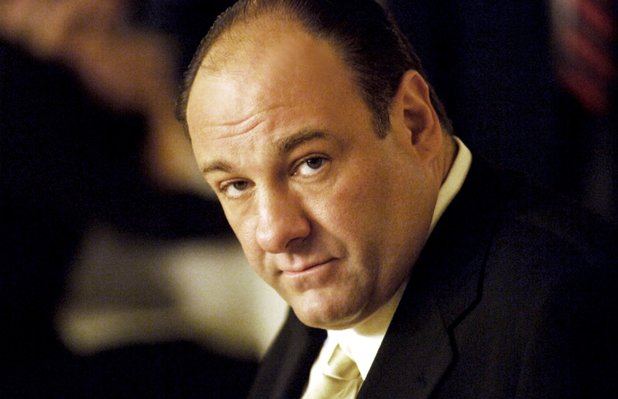
Turk Pipkin : Remembering James Gandolfini

James Gandolfini as Tony Soprano from season six of The Sopranos.
Sleep well, Jimmy:
Remembering James Gandolfini
Though I'd worked a long while in film and television, I never dreamed that a tall drink of water from Texas would end up acting alongside Gandolfini in the show that I loved...
By Turk Pipkin / The Huffington Post / June 26, 2013

From the premiere episode forward, I was a huge fan of The Sopranos and the show's amazing lead actor James Gandolfini. What David Chase and team were creating week after week was quite amazing, but what Gandolfini was creating and living moment by moment was a timeless work of art and passion that we will not see again for a very long time.

Though I'd worked a long while in film and television, I never dreamed that a tall drink of water from Texas would end up acting alongside Gandolfini in the show that I loved, even when I was invited by the Austin Film Festival to do a panel with Sopranos creator David Chase and to honor Chase with their lovely writing award.

David and I spent some enjoyable time talking about his hit show and about the past months I'd spent in Italy writing a book about the Calabrian mafia, the Ndrangheta. I'd recently been in La Stampa prison interviewing Ndrangheta hitmen, one of whom told me of taking a target into the woods and ordering him to dig a grave. When the man ran away, the bad guys had cut his achilles tendons, then made him continue digging. "Let's see you run now," they laughed.

A few days later, Sopranos casting agents called to ask if I'd audition for a part in the show. The scene came over my fax and I read the pages trembling, my eyes pouring over the lines of Aaron Arkaway, Janice's born-again, narcoleptic boyfriend. The title of the episode was one of my lines, "Have you heard the good news?"

I shot the audition in Austin, Fedexed the tape and was on the plane to New York to start shooting by the next week. The first day on the set -- with one of the greatest casts and crews ever assembled -- I ran through the first scene with the full cast with the exception of James Gandolfini, who I believe was still in makeup.

Turk Pipkin, as the narcoleptic Aaron Arkaway, with Aida Turturro, who played Janice Soprano. Photo from HBO.
The Sopranos family was watching football on Thanksgiving Day and I had the easy task of taking a deep narcoleptic nap. I asked the director if it would be okay for me to fall asleep on Tony's shoulder and he said to give it a shot with Gandolfini's stand-in.

Here's the thing. I'd been up all night -- a great way to look sleepy and as it would turn out, one of Gandolfini's own tricks to create a look and feel he wanted -- so when we ran the scene a second time, I didn't actually notice that my head was not resting on a stand-in but on the man himself. Just before "action," Gandolfini leaned down to my drooling face on his shoulder and introduced himself.

One episode turned into two and then into three. There wasn't a lot of broad comic relief on the show and I was loving being a part of it, especially being in the spell of the great and kind James Gandolfini. Filming the show was a marathon for all involved. Late one night, Gandolfini had a rare break where he wasn't in a scene. When he came back for a post-midnight scene, he brought back enough sushi for the cast and crew to cover a 20-foot table. Those type of gestures were not uncommon.

When I'd fallen asleep on the dining room table during Thanksgiving dinner, he bounced nuts off my noggin from the other end of the table, and between takes kept saying, "Man, am I throwing those too hard?" I said, "Is that all you got?" And it turned out that indeed he had a little more.

Gandolfini was a cigar smoker and between scenes would retire to the back porch of the Soprano family home for a stogie. This is on an indoor soundstage at Silver Cup Studios in Queens mind you, a definite "No Smoking" zone. I asked him what it takes to get that privilege and he said, "All it takes is asking. And you're the first to ask."

So there I was, looking at the painted swimming pool chroma-key of the Sopranos family back yard, smoking a Cuban cigar with the greatest actor of my day. Thank you Jimmy, for that and for so much more.

I was just a tiny cog in the great wheel that was The Sopranos, just one of thousands who James Gandolfini treated with kindness and respect. There are few so great who remain so humble, who are able to grasp their own incredible abilities and still recognize them as a gift.

James Gandolfini was a gift. And he will be missed beyond measure. Luckily we have his incredible body of work to keep us company. Thanks, Jimmy, for showing us the way. And thanks, David, for letting me lean on the shoulder of greatness.

[Turk Pipkin, an Austin-based writer, actor, and filmmaker, played a recurring role on The Sopranos. Pipkin founded the education and social action nonprofit, The Nobelity Project, and his films include Nobelity, One Peace at a Time, and Raising Hope. He is the author of 10 books including the New York Times bestseller, The Tao of Willie, written with Willie Nelson.]

The Rag Blog

[+/-] Read More...

27 March 2013

Chellis Glendinning : Confessions of an Obituary 'Aficionada'

Fred Astaire: Bidding adieu.
Witness to notable crossings:
Confessions of an obituary aficionada
Brimming with Mississippi gentility and rousing political arguments, he drew me into the swirl of mad farmers, musicians, historians, sheep herders, and political philosophers who were demanding that the state of Vermont secede from the United States of America.
By Chellis Glendinning / Wild Culture / March 27, 2013

Bolivia-based psychotherapist and author Chellis Glendinning on the fine art of biography-after-the-fact.

I’m a daily reader of the New York Times obituaries. There, I said it. And yes, this little habit of mine has been going on for decades. Needless to say, in that time I’ve witnessed a surfeit of notable crossings into the unknown. Simone de Beauvoir. Picasso. Katherine Hepburn. Anwar Sadat. Indira Gandhi. Mercedes Sosa. And, in the process, I’ve gained an education in the fine art of biography-after-the-fact.

For example, I’m an admirer of Fred Astaire -- and of Fred Astaire’s NYT obit. Placing him in the era of America’s immigration rush, vaudeville, and the rise of Hollywood talkies, it covers his working-class upbringing, attendance at dance school, how he stayed so lithe, film successes, marriages, praise from colleagues, and why he put away his tap shoes. The essay is capped off with his philosophy of hoofing: “The search for what you want is like tracking something that doesn’t want to be tracked.” The obit itself is as elegant as Fred Astaire in a tuxedo skipping across the linoleum.

Which brings us to the obituary as literary form. While the death notice began as a titillating little gossip crumb in early-1700s England, Melanie Johnson’s The Dead Beat: Lost Souls, Lucky Stiffs, and the Perverse Pleasures of Obituaries informs us that we have arrived at the Golden Age of the Obituary. In addition, says Johnson, while the earliest obit writers perceived the job as the lowest-entry-rung of a hopefully rising journalistic career, today’s writers accomplish the mythic feat of blending “empathy and detachment; sensitivity and bluntness.”

But, we might ask, from where springs this mad dash toward minimalism? True, invention of the six-word narrative, short-short fiction, and “smoke long” (a tale whose enjoyment lasts the length of a cigarette) parallels the fascination. The cell phone, whose text-messaging lines allow but 40 characters, could be a culprit.

In this era of flash-technologies, life has become too hurried and fragmented for lolling about for days on end with Sense and Sensibility. Whatever the sociology of this literary development, in a mere 100-500 words, the obituary may have replaced the biography, using the most telling incidents of a lifetime to reveal the blistering whole of a person’s story; perhaps, we might consider, its practitioners have become today’s bards.

Nonetheless, in not-so-Golden-Age circles, to be an aficionada, as I am, is still not an accepted social status. If ever my little secret happens to come up in conversation, the incredulous demand to know why, and I’m never able to formulate an explanation that saves me from assignment to the “Goth” category. That is... until my own friends’ life stories began to appear like confetti in a ticker tape parade in those same revered pages -- and in the San Francisco Chronicle, Santa Fe New Mexican, Washington Post, Anderson Valley Advertiser, By What Authority, Orion, La Jornada, CounterPunch...

Feminists, writers, filmmakers, anti-nuclear activists, farmers, historians, ecologists, bioregional activists, folk singers, yoga teachers, technology critics, philosophers, they -- and I could see that death was no longer going to be something that happened occasionally and to someone else. It was the flame-eyed, snake-coifed Gorgon in the room -- right here and right now.

The passing that threw me over was that of John Ross. The news came via an email announcement from his colleagues in San Francisco, reporting that the doctors had done all they could to prolong his time and, by choice, he had left his room in a Mexico City hotel for Lake Patzcuaro where he had lived on and off for 50 years. It wasn’t that we hadn’t had sufficient notice of the possibility, yet I sat in my chair for some time, as stunned as a bird slamming into a glass window.

I could not imagine a world
without John Ross.
Red-diaper baby, the first journalist to venture into the Chiapas selva to report on the Zapatistas, Human Shield against the war in Iraq, author of books documenting left-wing history in the U.S., jazz poet: Ross was a bona fide character. Toothless and almost blind from conflict generated during his various political exploits, he could guzzle cheap wine like nobody’s business and recite poetry into the wee hours. He was obnoxious as all get-out, and he had liver cancer.

Ross took the rail-runner from Albuquerque to Santa Fe to visit me while on a book tour for his monstrous tribute to Mexico City, El Monstruo. His mission was to swig espresso, buy a really cool cane to bolster his failing leg, and (needless to say) talk politics. I was on the verge of moving to Bolivia, and he reached into the suitcases of memory to regale me with his encounters with now-President Evo Morales. Although neither of us said a word, when he mounted the aluminum steps for the return journey, we knew it would be the last time we would be together. I clung to the vision of this brave warrior as he hobbled to grab the overhead bar and plop his wiry body into a seat.

The news of his passing in January 2011 struck me in a way that even my own mother’s death did not. I could not imagine – or accept – a world without John Ross.

Maybe I was still reeling from Ross’ passing when Richard Grossman’s metastatic melanoma flared up. Grossman was what one might call a “sweetheart with an edge.” Caring in friendship, he also boasted something of an uncouth penchant for sticking his face into stretch limousines and loudly decreeing the shame of the owners in a world of gross inequity. He was best known for his contribution to progressive thought for the “legal” mechanism corporations rely on to perpetrate injustice and exploitation: they enjoy the same rights as individual people do.

He had also fought for workers’ rights in the context of the environmental movement, jumpstarted organizations to push citizen rights, designed a school for teaching democracy, and spearheaded court cases to challenge the “rights” of corporations. Grossman and I had had a habit of talking on the phone for hours each week -- Río Grande Valley to the Catskills -- about history and politics. He had a fondness for growing opium poppies, and since cultivating such a crop was illegal in the U.S. (and, incidentally, since I had written a book about the global heroin trade), he reveled in referring to his delicate blossoms with code words and a tone of devilish irony.

Two weeks before he died, in November of 2011, Grossman was talking up a storm about his new lawsuit in Pennsylvania; he had just done an interview for Corporate Crime Reporter proposing a law to strip away 500 years of Constitutional protections for corporations -- and out of the blue he offered financial help to salve my housing problems in Bolivia. His last email to me capped off with: “Be Good, Be Bad, Be Historical.” And then the calls and letters stopped...

Rebekah Azen’s suicide hit like the clang of an alarm clock: “SAD NEWS FROM SANTA FE” announced the note from a friend-in-common. Upon arriving in New Mexico from Wisconsin, Azen had sought roots with a Native clan at San Felipe Pueblo that she called her “family,” and by the time I met her in the 1990s, she was hot on the trail of the visionary philosophies of what she called the two Henrys: Thoreau and George. Her particular outrage had to do with theft of land and home, drawing parallels between the colonization of indigenous peoples and the housing hardships of the working class – and she wrote abundantly on the topic in Green Fire Times.

Of late, she had been suffering from an ill-explained illness, although her diligent work in the anti-electromagnetic radiation movement, and her constant complaints about her librarian job at the Santa Fe New Mexican where she was daily barraged by Wi-Fi, gave the sense that she had electro-hypersensitivity, otherwise known as microwave sickness. One afternoon in October of 2011, probably very slowly as Azen always moved at the pace of a snail in a Buddhist retreat, she walked into her beloved, juniper-spotted Tesuque desert and blasted her skull to bits with a bullet.

I couldn’t get over the courage that such an act took. Maybe it was desperation: she hadn’t been able to sleep for months. But being that she was an ally with whom I had navigated the labyrinthine passageways of philosophy and literature, not to mention Cochiti Pueblo’s wind-sculpted Tent Rocks -- and who had come to me in my moment of need -- I knew her spirit: that exit was the handy work of one intrepid voyager.

Then Thomas Naylor surprised us with a stroke, and on December 12, 2012, the family chose to remove the life-support technologies. That decision would have pleased Thomas: he was a raving critic of mass technologies and of the authoritarian institutions they reflected, facilitated, and propagated. After a successful career as an economics/computer science professor at Duke University, he moved to Vermont and authored a series of books on decentralism, including Downsizing the USA.

Thomas Naylor: Brimming with
Mississippi gentility.
I met him in 2008. I had written an essay for CounterPunch entitled “Techno-Fascism,” and it turned out that Naylor had been using that same term. He sent me a packet containing a four-page hand-scrawled letter, a pile of articles, and a book he had written called Secession. And so it came to be that Naylor, brimming with Mississippi gentility and rousing political arguments, drew me into the swirl of mad farmers, musicians, historians, sheep herders, and political philosophers who were demanding that the state of Vermont secede from the United States of America.

His activism was inflamed by old-fashioned ethical outrage, and he waxed emotional when it came to the immorality of remaining within a U.S. that was ruining the planet with its technologies and killing people with its imperialist wars. Right before his death, he was organizing an assembly of the small nations of the world to discuss their role in addressing the injustices caused by imperial nations and gain worldwide backing for secession movements, to be held in Liechtenstein in 2013. But then, unexpectedly, he was gone.

One angle on this incessant bombardment of obituaries is that today’s culprits to the final demise tend not so much toward what in my grandmother’s day was called “natural causes” as they do toward the impacts of the dirty chemicals and abrasive technologies overrunning planet Earth. Pesticides. Nuclear power plant leakages. Preservatives. Dioxin-infused tampons. Cell-tower and satellite emissions of electromagnetic radiation. Carbon monoxide. Asbestos. Chemical hormones. Heavy metals. I do not feel just the wells of grief at these deaths; I feel unnerved and discombobulated by the untimely and unnecessary theft of lives -- and wisdom -- from our midst.

And there is something else. Now, after reading so many of my own friends’ life endeavors in encapsulated form, I finally understand why I have relished the NYT obituaries all these years. As we know, the end of an individual’s life bold-facedly reveals that person’s participation in an era. Yet too, and perhaps more notably for the longings of the human psyche, it offers up the wide view we all seek so that we can make meaning of life. And more importantly still, it proposes a frame.

When the dreaded skeleton-laden-with-roses-and-gauze snatches away a comrade, we are able to see with utter clarity what that person did with this life, what her challenges and burdens were, how he mounted them, what she did with ease, what he attempted against all odds. No matter how illuminated or bewildered, how fulfilled or unfinished, how healed or how wounded, the frame reveals that each person is in reality a hero.

The irritations and disappointments we may have felt at personality quirks fall away; whether the most introverted of poets, the most inspiring of orators, or the crankiest of curmudgeons, the final marking unveils each of us as a wondrous creature in the eyes of Creation.

This article was first published at The Journal of Wild Culture.

[Chellis Glendinning lives in Bolivia. She is a psychotherapist specializing in treatment of traumatic stress and the author of six books. Her Off the Map: An Expedition Deep into Empire and the Global Economy won the U.S. National Press Women book award in 2000, and she just finished a novel about the energies emanating from artifacts used in revolutions and social movements. In Bolivia she writes for Los Tiempos. She may be contacted via www.chellisglendinning.org Read more of Chellis Glendinning's writing on The Rag Blog.]

The Rag Blog

[+/-] Read More...

16 January 2013

Robert Jensen : Jim Koplin: Living Your Life Honestly

James Henry Koplin, 1933-2012. Image from JimKoplin.com.

Jim Koplin:
Living your life honestly

By Robert Jensen / The Rag Blog / January 16, 2013
“Good teaching is living your life honestly in front of students.”
I don’t recall exactly when Jim Koplin first told me that, but I know that he had to say it several times before I began to understand what he meant. Koplin was that kind of teacher -- always honing in on simple, but profound, truths; fond of nudging through aphorisms that required time to understand their full depth; always aware of the connection between epistemology and ethics; and patient with slow learners.

But, I’m getting ahead of myself. Some background: Jim Koplin was, by way of a formal introduction, Dr. James H. Koplin, granted a Ph.D. in psychology from the University of Minnesota in 1962 with a specialization in language acquisition, tenured at Vanderbilt University and later a founding faculty member of Hampshire College, retired early in 1980 to a rich life of community building and political organizing.

I never took a class from him, though in some sense the 24 years I knew him constituted one long independent study. That finally ended on December 15, 2012, not upon satisfactory completion of the course but when Jim died at the age of 79. He left behind a rich and diverse collection of friends, all of whom have a special connection with him. But I hang onto the conceit that I am his intellectual heir, the one who most directly continued his work in the classroom.

So, with that conceit firmly in place and his death fresh in my mind, it seems proper and fitting that I offer lessons learned from Koplin to the world outside his circle of students and friends.

I’ve spent a considerable amount of time in my 20 years of teaching at the University of Texas at Austin reflecting on Jim’s core insight, that good teaching is living your life honestly in front of students.

The first, and most obvious, implication is a rejection of the illusory neutrality that some professors claim. From the framing of a course, to the choice of topics for inclusion on the syllabus, to the selection of readings, to the particular way we talk about ideas -- teaching in the social sciences and humanities is political, through and through.

Political, in this sense, does not mean partisan advocacy of a particular politician, party, or program, but rather recognizing the need to assess where real power lies, analyze how that power operates in any given society, and acknowledge the effect of that power on what counts as knowledge.

Every professor’s “politics” in this sense has considerable influence on his/her teaching, and I believe it is my obligation to make clear to students the political judgments behind my decisions. The objective is not to strong-arm students into agreement, but to explain those choices and defend them when challenged by students. At the end of a successful semester, students should be able to identify my assumptions, critique them, and be clearer about their own.

I would recommend this approach for all faculty members, but it has been particularly important for me because I am politically active in fairly public ways, which students often learn about through mass media and the internet. To make clear the difference between the goals of Jensen-in-the-classroom (encouraging critical thinking) and Jensen-in-public (advocating political positions), I have taken extra care to be transparent in front of students.

This also was a product of my time with Jim, who insisted that if intellectual inquiry led one to conclusions about what is needed to advance social justice and ecological sustainability, then one should contribute to those projects. Jim’s life offered me a model for how intellectual work need not be separated from community and political work.

In one of my early conversations with Jim about this balance, he referred me to one of his elders, Scott Nearing, who said that three simple principles guided his life: the quest “to learn the truth, to teach the truth, and to help build the truth into the life of the community.” Each of those endeavors feeds the other two; scholarship, teaching, and community engagement are a package deal for me. But Jim always reminded me that what one does in front of students is not the same as what one does in front of a crowd at a rally, or in an organizing meeting.

Perhaps Jim’s most important contribution to my development as a teacher came in his advocacy of interdisciplinary undergraduate education. In the contemporary academy, the reward system and culture tend to push professors toward intellectual specialization over the big picture, and toward working with graduate students over undergraduate teaching. In my connection with Jim, I saw the importance of -- and joy in -- a truly interdisciplinary approach to knowledge that took as its primary task teaching at the most basic levels.

The first course I taught in the university-wide program called First-Year Seminars, “The Ethics and Politics of Everyday Life,” was straight out of Koplin: I had students read five books that touched on the political, economic, and ecological implications of our choices in our daily lives. Every time I worried that I would be pushing students too far, Jim would tell me that the students were hungry for honest, jargon-free radical talk, and he was right.

I devised my current interdisciplinary course, “Freedom: Philosophy, History, Law,” in conversation with Jim. As it came into focus, I told Jim that I wanted the course to not only challenge the culture’s simplistic definition of freedom but to undermine the confidence of anyone who thinks the term can be easily defined.

On the first day of class, I tell students that the minute they think they have nailed down a definitive definition of freedom, some new experience will force them to modify that. It is the struggle to understand the concept that matters, and I am just another person struggling with them, albeit with the advantage of more extensive reading and experience.

That reflects another of Jim’s other lessons, the understanding that a good teacher learns alongside students. That doesn’t mean pretending that students have as much to teach me as I have to teach them (if that were the case, why am I the one getting paid?); the excitement comes from genuinely being open to that discovery with students.

As a teacher, I shape -- but cannot control -- the experience. There’s always a certain kind of thrill in that process, especially in front of a class of 300. There are days when I feel a bit like I am doing an intellectual high-wire act. Those tend to be my favorite classes.

That thrill is rooted in another Koplin lesson: Good teaching is based in recognizing our intellectual limits, our ignorance. By that, he did not just mean that any single teacher can’t know everything. Instead, Jim meant that we humans are always more ignorant than knowledgeable, that even in fields in which we have dramatically deepened our understanding of the world, there is -- and always will be -- far more that we do not know than we do know.

I have come to realize that the longer I teach, the more I know and the less certain I am about what I know. The more aware I am of the limits of my knowledge, the better teacher I become.

Jim also believed that all teaching required an appreciation of the arts, and he taught me to look for wisdom in poetry. To the best of my knowledge, Jim never wrote a line of poetry in his life, but that made him only more appreciative of the form.

I cannot remember if I shared this poem with him or vice versa; at some point, as it is with a good teacher, the flow of information and insight was two-way and impossible to track. Whomever it came from first, Jim and I came across the poem “Dropping Keys” by Hafiz, the 14th century Sufi poet from Persia.
The small person
Builds cages for everyone
She
Sees.

Instead, the sage,
Who needs to duck her head,
When the moon is low,
Can be found dropping keys, all night long
For the beautiful,
Rowdy,
Prisoners.
For too many students, education too often feels like a cage. If we aren’t careful, we teachers can find ourselves building cages, guarding cages, and then locking ourselves inside those cages.

Jim Koplin never stopped dropping keys for me. To honor his memory, I will try to do the same for my students.

This article was also published at New Left Project.

[Robert Jensen is a professor in the School of Journalism at the University of Texas at Austin and board member of the Third Coast Activist Resource Center in Austin. He is the author of
Arguing for Our Lives: Critical Thinking in Crisis Times (City Lights, coming in 2013). His writing is published extensively in mainstream and alternative media. Robert Jensen can be reached at rjensen@uts.cc.utexas.edu. Read more articles by Robert Jensen on The Rag Blog.]

The Rag Blog

[+/-] Read More...

12 December 2012

Paul Buhle : Comix Artist Spain Rodriguez (1940-2012)

Spain Rodriguez: Transforming comics. Image from CBLDF.

The passing of a comix pioneer:
Spain Rodriguez (1940-2012)

By Paul Buhle / Dissent / December 12, 2012
In Trashman: Agent of the Sixth International, the signature saga of his early years, Rodriguez's revolutionaries took revenge on a truly evil American ruling class.
We are now so far from the 1960s and ’70s that the crucial locations, personalities, and moments of one very popular art form’s transformation have been largely forgotten. Spain Rodriguez, with a handful of others (the best remembered are happily still with us: Gilbert Shelton, Robert Crumb, Bill Griffith, Kim Deitch, Art Spiegelman, Trina Robbins, and Sharon Rudahl, to name a few), pushed the comics agenda so far forward that no return to the limitations of superheroes and banal daily newspaper strips would ever be possible.

Comic art, belatedly recognized in The New York Times (and assorted museums) as a real art and not a corrupting children’s literature, owes much to them.

Spain (his birth name was Manuel, his father a Spanish immigrant, his mother an Italian-American artist) grew up in Buffalo, New York, a rebellious working-class kid who wore long sideburns and was impressed by the civil rights movement. He dropped out of art school in Connecticut and, after returning to Buffalo and working a factory job with a motorcycle gang engagement, landed in New York in time for the efflorescence of Underground Comix (styled with an “x” to distinguish itself) in a comic tabloid offshoot of the East Village Other.

His colleagues were a strangely mixed crew, all of them old enough to have been influenced by EC Comics, the most politically liberal and artistically accomplished of the old comics industry, and the one hardest hit by the congressional hearings of the McCarthy era. (As with attacks on the Left, every charge of subversion and perversion hid Middle-American outrage: these were Jews corrupting innocent American youth.)

In a sense, every “underground” artist of these early days sought revenge in the name of comic art, and realized it through the depiction of sex, violence, and anti-war and anti-racist sentiment unthinkable in what remained of the mainstream. Sex and violence, lamentably, became chief attractions to many readers, recalling the “headlights” (aka “sweater girl”) crime and horror comics of the late 1940s, albeit with a left-wing or libertarian ambience.

The whole comix artistic crowd moved to San Francisco around 1970, joining Robert Crumb and a few others already there, part of the acid-rock, post–Summer of Love setting. Underground comix, replicating the old kids-comics format but now in black and white, grew up alongside the underground press, whose reprinting of comix created the market for the books.

Crumb was the artist whose work sold the best, in the hundreds of thousands, but Spain was widely regarded as the most political. He was heavily influenced by the most bohemian of the EC comics world, wild man Wallace Wood, whose sci-fi adventures depicted civilizations recovering from atomic war and whose Mad Comics stories assaulted the 1950s commercialization of popular culture. Wood’s dames were also extremely sexy, too overtly sexy for the diluted satire of the later Mad Magazine.

Spain Rodriguez. Photo by Sean Stewart / Babylon Falling.

Trashman: Agent of the Sixth International was Rodriguez’s signature saga in these early years, serialized in underground papers, comix anthologies, and eventually collected in comic book form as Subvert Comics. These revolutionaries took revenge on a truly evil American ruling class in assorted ways, many of them violent, but they also had fun and sex, and were subject to many self-satirizing gags, in the process.

By the middle 1970s, his work had broadened into more social and historical themes, often with class, sex, and violence highlighting his points. Histories of revolutions and anti-fascist actions (and all their complexities) inspired some of his closest reading of real events, but he had no fixed point on the left-wing scale.

He admired and drew about anti-Bolshevist anarchist leader Nestor Makhno and also anti-Stalinist Spanish anarchist Durruti, but he also drew about Red Army members facing death fighting the Germans, and so on. (Several of these pieces are now reprinted in Anarchy Comics: The Complete Collection, an anthology from that 1980s series, just published by PM Press.)

In recollections of the internal conflicts among comix artists, sometimes pitting feminists against male-dominated circles, Rodriguez is remembered as having been unusually helpful and egalitarian, a memory that contrasts curiously with his sometimes sado-masochistic plot lines but not so curiously with the gender-equality of the sybarites (“Big Bitch” was Trashman’s female counterpart, the tough working-class broad with sex cravings for weaker men).

He poked and prodded San Francisco’s self-image as a haven of liberated sex, sometimes making his younger self a player on the scene. He also helped set in motion the vital murals movement in San Francisco’s Mission District, but was likely best known on the West Coast for his many posters of San Francisco Mime Troupe openings.
Spain Rodriquez lasted long enough to see his work in square covers (if not often hard covers), his unique and quasi-realistic modernism preserved for generations ahead.
The validation of comic art from near the end of the century onward -- Spiegelman’s Maus and left-wing lesbian Alison Bechdel’s Fun Home high among the evidence of artistic achievement -- found Rodriguez with a Salon series, “The Dark Hotel,” and several books of his own. Devil Dog, a biography of disillusioned Marine Corps general Smedley Butler, and Nightmare Alley, an adaptation of the classic noir novel, are easily among the best. Che, his graphic biography of Che Guevara, reached the furthest, with editions published everywhere from Latin America to Europe, Japan, and Malaysia.

At the time of his death, Rodriguez was amid “Yiddish Bohemians,” a strip about Jewish-American puppeteers during the 1920s and ’30s, in what would be the last in a stunning series of collaborations with playwright-professor Joel Schechter. Rodriguez had started a Woody Guthrie poster for an upcoming Bay Area concert and, had he lived, would have drawn a history of the 2003 San Francisco hotel strike.

After more than 40 years (and the disappearance of well over 90 percent of many little-remembered artists’ work in yellowing pulp), the impact of the Underground Comix world remains more a matter of style than substance, daring more than narrative and artistic content. This is unfortunate, because so many artists had particular contributions worthy of note, worthy of reprinting for the sake of comic art alone.

Spain Rodriquez lasted long enough to see his work in square covers (if not often hard covers), his unique and quasi-realistic modernism preserved for generations ahead. That he never lost his political vision or his sense of humor should go without saying, but those of us lucky enough to see him teach or to be taught by him felt the deep impact of his humanism as well.

Rodriguez died at home in San Francisco, with his wife, Susan Stern, a documentary filmmaker, and his daughter, Nora Rodriguez, by his side. A retrospect of his work, including a short documentary film made by his wife, is now in place at the Burchfield Penny Art Center in Buffalo, the second exhibit in Buffalo to honor this improbable local hero.

[Cultural historian Paul Buhl is professor emeritus at Brown University. He publishes radical comic books and graphic novels. Buhle was the editor of Che and is co-editor of the anthology Bohemians, to appear in 2013, with two strips by Rodriguez. Read more articles by Paul Buhle on The Rag Blog.]

The Rag Blog

[+/-] Read More...

15 November 2012

Jim Simons : Judge Bill Kilgarlin Was a Different Kind of Friend

Judge William Wayne Kilgarlin. Image from the Tarlton Law Library, University of Texas at Austin.

Bill Kilgarlin:
A different kind of friend
On the Texas Supreme Court he showed his values and commitments had not changed and Texas was better for it.
By Jim Simons / The Rag Blog / November 15, 2012

It seems like most of my contributions to The Rag Blog have been inspired by the death of someone I knew and who had an influence on my life. So here we go again.

The day before the national election former Supreme Court of Texas Judge Bill Kilgarlin died in New Mexico. He had been one of the best judges to serve on that court during my professional life, nearly 50 years. He wrote decisions recognizing and defining some much needed law around the Bad Faith doctrine, which gave a consumer a cause of action against an insurance company that acted in bad faith to decline or try to underpay benefits, standard practice.

So of course the insurance companies put up big bucks to beat him and all the other people-oriented judges on the Texas Supreme Court, making it one of the worst high courts among the states. They proceeded to undo the law and create one of the more calcified, business-oriented courts to be found anywhere. And so it has continued for the last 25 or 30 years. No Democrat has been elected to it in many years.

This history is probably Bill’s legacy. But to me he was a jovial companion, onetime roommate in law school, and perhaps, above all, a big -- literally and figuratively -- player in two activities that stand above most of the stops along my way. One was scholastic debate and the other was the Young Democrats.

When I met Bill in the late 1950’s he was coaching debate at the University of Houston. It was probably at the Tulane college debate tournament where my colleague (as we called our partners in competition) and I, representing SMU, met the UH team in the final debate. The Kilgarlin-coached team beat us for the big trophy but I left New Orleans with a new friend. Shortly afterwards he was elected to the Texas House of Represntatives.

All of the time I knew Bill he was never so impressed with his status (he accomplished much and was well recognized for it) that he changed in how he related to friends. Nor was he reserved in sharing a pitcher of beer or celebrating an election victory. There was once a radio program called “Just Plain Bill” and it could have referred to Kilgarlin.

One example of this occurred on a steamy night in the summer of 1960. I had been in Houston with two old friends from high school days, swilling beer and carrying on, when I got into a serious argument (over money) with the guy in whose car we came to Houston. Long story short, he left me on the side of the road on South Main in a mosquito-patrolled ditch. Worse, I was broke and it was light years before cell phones.

In my beer-saturated state I could only wonder what I could do. I hardly knew anyone in Houston even if I could somehow find a phone number and call for help. I went across the street to a seedy motel where a compassionate clerk allowed me to use the phone directory and his phone to call Bill Kilgarlin. Without hesitation he came and picked me up.

I stayed over in the house where he was staying, his parents’ modest home. I was able to clear my brain and took nourishment. And to my shock, Bill offered to take me back to Austin in his incredible classic Rolls Royce, or whatever the thing was.

I thought of the guys who abandoned me in a ditch and of Kilgarlin -- two different kinds of friends. He was still a member of the legislature at that time but he loved a good party and we found several in Austin in the next few days.

The atmosphere of that time among Austin liberals is captured perfectly in Bill Brammer’s classic novel, The Gay Place. I don’t remember a character one might have recognized as affable, fun loving Bill Kilgarlin, but surely he was the inspiration for some of Brammer’s Austin partiers.

After a split in the Young Democrats, Bill Kilgarlin (left), then a Harris County State Representative, and Jim Simons confer at the University YMCA. Photo by Hyatt. Image from the Daily Texan, fall of 1959.

One thing Bill loved to do at Scholz Beer Garten was to stand on a table and bellow out operatic arias or drinking songs. His refrain would reverberate thoughout the legendary Austin watering hole. In the late fall of 1960, Kilgarlin and I combined with two other friends in law school to rent a big old house right behind Scholz’s.

Beginning in 1959 when I came to the University of Texas and Bill was in law school, we were on the same side in the factional battling of the Young Democrats. We were solidly aligned with the more liberal group that statewide included Oscar Mauzy, David and Ann Richards, and many other stalwart folks such as Austin’s new tax assessor-collector Bruce Elfant’s parents, Martin and Eileen Elfant.

In so many ways, it was a fantastic group of political people and for the next five years we caroused and schmoozed both at YD functions and in bars across the state of Texas. Both Kilgarlin and I served as statewide YD officers in those years. Only in the much more serious and purposeful days of the Movement later, in the ‘60s, would I ever be that close to a group of like-minded people.

I would have a hell of a time picking which association was more fun. Like Emma Goldman, my revolution must allow dancing. I thought then that those people, with whom so many all-night strategizing sessions and all-day beer parties had illuminated my young life, would forever be my dear comrades.

But the day did come when I had to leave a meeting of liberals in 1967, the Democrats of Texas, because they were too weak-kneed or determined to avoid a subject that could diminish their chances of electing a Governor, to take a stand on principle and condemn the war in Vietnam. My friend and brother in the Movement (then new to us) Martin Wiginton and I walked out and left behind some of our best friends and allies of past political skirmishes.

It was the beginning of new strategy with new younger allies on the anti-war and civil rights fronts. New and just as deep, or deeper, bonds would be forged in the ensuing years. A radical vision and more determined assault awaited.

Bill Kilgarlin was about seven years older than me and he never left the so-called mainstream of liberal politics except, some argue, to compromise himself to then-Governor Dolph Briscoe and get himself appointed to a district judgeship in Houston around 1976. Later on the Texas Supreme Court he showed his values and commitments had not changed and Texas was better for it.

I hardly saw him at all over the last couple of decades. He moved to Santa Fe after being defeated in the special interest coup d'état of the Texas courts by the forces of darkness. Whenver I did see Kilgarlin, it was like there had been no gulf of time between us. He was as friendly and engaging as he was at the Tulane debate tournament of 1958, or in the Young Democrat wars and parties or as my roommate in that house far too near to Scholz’s for me if I wanted to get through law school.

I am glad he enjoyed his privacy, his operas, and his wine for the last years of his life in New Mexico. Most of all, I am glad to have known him.

[Jim Simons practiced law in Austin for 40 years, representing many movement activists, including anti-war GIs. Jim served as a counsel for members of the American Indian Movement who were arrested at Wounded Knee in 1974. After he retired he published his memoir Molly Chronicles in 2007. Read more articles by Jim Simons on The Rag Blog.]

The Rag Blog

[+/-] Read More...

22 October 2012

Thomas McKelvey Cleaver : George McGovern, the Most Decent Man in Politics

George McGovern during the 1972 presidential campaign. Photo from SIPA / REX.

George McGovern:
The most decent man in politics
McGovern, who flew 35 missions as pilot of a B-24, took what he had learned in those deadly skies and put it into his politics, caring for his country the way he cared for his crew...
By Thomas McKelvey Cleaver / The Rag Blog / October 22, 2012

In 1972, my then-boss met with then-presidential candidate Senator George McGovern, and thus I also got to meet him. The most decent guy I ever met in politics.

To me George McGovern and Richard Nixon perfectly illustrate the basic difference between the two parties, and the point is nowhere better made than to look at their respective careers in the Second World War:

Richard Nixon, who arrived on Guadalcanal a year after all the fighting was done, spent his time in the rear with the gear as a supply officer who played poker well enough to come home at the end of the war with the money for a down payment on his first home. Out for himself, from the git-go.

George McGovern, who flew 35 missions as pilot of a B-24 operating out of Italy, facing the chance of being blown out of the sky 35 times (flak was far more deadly to B-24s than fighters), who cared for his crew, men who loved him all the rest of their lives, who took what he had learned in those deadly skies and put it into his politics, caring for his country the way he cared for his crew, using that courage that had to sustain him then, to take the most unpopular position a politician could take: to oppose the war created by the president of his party, and make the issue stick.

Blue skies, Captain McGovern, sir.

Conor Friedersdorf, no Democrat or liberal, had this to say on McGovern's passing:
Over the course of his career, McGovern made a lot of arguments that I personally find unpersuasive. But he sure did get the most important issue of his time right. Think of all the Americans who’d be alive today if the country had listened to McGovern rather than his opponents about the Vietnam War. Think of all the veterans who’d have been better off. Think of how many Vietnamese civilians would’ve been spared death by napalm.
From Hunter S. Thompson’s legendary Fear and Loathing on the Campaign Trail ‘72:
The tragedy of all this is that George McGovern, for all his mistakes... understands what a fantastic monument to all the best instincts of the human race this country might have been, if we could have kept it out of the hands of greedy little hustlers like Richard Nixon.
[Vietnam veteran Thomas McKelvey Cleaver is an accidental native Texan, a journalist, and a produced screenwriter. He has written successful horror movies and articles about Second World War aviation, was a major fundraiser for Obama in 2008, and has been an activist on anti-war,  political reform, and environmental issues for almost 50 years. Read more articles by Thomas Cleaver on The Rag Blog.]

The Rag Blog

[+/-] Read More...

Ron Jacobs : Reflecting on George McGovern

Former presidential candidate and Sen. George McGovern in 2007. Photo by Tim Sloan / AFP / Getty Images..

Come home, America:
Reflecting on George McGovern
I was a senior in high school in 1972. I listened to his acceptance speech while working my summer job and campaigned for McGovern on the military base where my school was located.
By Ron Jacobs / The Rag Blog / October 22, 2012

Like many people of my generation, it is with a certain regret that I read about George McGovern’s passing. His campaign for the presidency was, with the possible exception of Jesse Jackson’s 1984 run, the last radical run for the White House by any member of either mainstream political party.

Made possible by changes in the way Democrats chose their candidate, George McGovern’s ascent to the Democratic Party nomination in 1972 represented the best of the United States. His campaign promises were simple. He would end the Vietnam War within 90 days of his inauguration; he would guarantee every U.S. citizen a livable income; he would limit the income of the richest Americans through taxation; and he was a fervent believer in accessible health care for all.

His first brush with presidential politics occurred in 1968 when supporters of Robert F. Kennedy approached him to replace Kennedy after he was killed in June 1968. McGovern held fast to the platform plank demanding a withdrawal from Vietnam. Unfortunately, that plank was defeated by the Humphrey apparatchiks in the party.

His opposition to the Vietnam War was the key aspect of his campaign and the reason he was supported by most people in the antiwar movement, including Yippies Abbie Hoffman and Jerry Rubin and (secretly) members of the Weather Underground.

I was a senior in high school in 1972. I listened to his acceptance speech while working my summer job and campaigned for McGovern on the military base where my school was located. Organized by a couple of civilian employees of the Defense department working in Frankfurt am Main, we were mostly high school students and recent graduates opposed to the war. Plus, we hated Richard Nixon.

In the months leading up to the election, we would station ourselves just outside the property lines of the Army’s Post Exchange (a shopping center for military personnel and their dependents) several days a week. Passing out campaign literature, bumper stickers, and buttons, we were amazed at how well we were received. GIs of all skin colors took extra copies of our literature to distribute at their barracks.

Military wives took buttons and literature and asked us not to tell their husbands. Germans walking by would take a button and tell us they hoped McGovern would win.

Of course, we also had our detractors. There was more than one time a lifer (a career military man) called me a commie and a faggot. There were even a couple times I was shoved around by a right wing GI or NCO. Officers would argue with us, telling me and my fellow campaigners that we were just naïve and should leave politics to the professionals.

My most memorable interaction was with the wife of my dad’s commanding officer (a career officer). This woman, who had been a family friend since I was a kid, came up to me one afternoon and asked quietly if she could have a McGovern button. I gave her one immediately. She made me promise I wouldn’t mention it to my father or her husband. I smiled and told her I wouldn’t.

I did ask her if she was going to vote for McGovern. Of course, she replied. I don’t want my son (who was a freshman in college) to go to war. I’ve had enough of that with my husband. She hugged me and left.

As we know, George McGovern lost that election. Richard Nixon won by a landslide. The war in Southeast Asia went on for another three years despite the faux peace treaty signed in 1973. Richard Nixon and his administration continued to develop a police state apparatus that has only been improved on in the decades since.

In a piece of poetic justice, that very same administration crumbled by 1974 because of its criminality, corruption, and arrogance. In a moment that I celebrate every August, Richard Nixon resigned from the presidency to avoid going to trial. Dozens of his co-conspirators went to prison. As for the Democrats, they changed the rules once more to prevent a candidate like McGovern from ever gaining the party’s nomination again.

The news of Mr. McGovern’s declining health made me ask a question I hadn’t asked since the day after Nixon was re-elected in 1972. What would have happened if George McGovern had won?

[Rag Blog contributor Ron Jacobs is the author of The Way The Wind Blew: A History of the Weather Underground. He recently released a collection of essays and musings titled Tripping Through the American Night. His latest novel, The Co-Conspirator's Tale, is published by Fomite. His first novel, Short Order Frame Up, is published by Mainstay Press. Ron Jacobs can be reached at ronj1955@gmail.com. Find more articles by Ron Jacobs on The Rag Blog.]

The Rag Blog

[+/-] Read More...

09 August 2012

Gregg Barrios : An Appreciation of Judith Crist

Judith Crist passed away at the age of 90 in Manhattan on Aug. 7, 2012. Photo by Gabe Palacio / Getty Images. Inset below: Crist in 1967. Photo from AP.

An appreciation:
Pioneering film critic
Judith Crist (1922-2012)


By Gregg Barrios / The Rag Blog / August 9, 2012
“To be a critic, you have to have maybe three percent education, five percent intelligence, two percent style, and 90 percent gall and egomania...” -- Judith Crist
She was from another era.

It was an age before cable, Sundance, video stores, and the Internet. For those of us coming of age, it was a heady time. Films were an international language of expression -- the rise of the French new wave, post-neorealism, the underground film and independent film. Movies were considered the lively, seventh art.

The new generation of filmmakers brought brave, new, and vital work to the screen. Universities had film clubs and a nearby art film house. One could see X-rated porn in a legit movie theater. It was the time before Hollywood lost the will and the courage to make movies that really mattered. It was also a time when inquiring minds read film reviews and criticism and took it seriously.

It wasn’t the phalanx of male film critics that fueled the rise of the new American film criticism -- it was Judith Crist who paved the way.

Crist, who died August 7, was the first woman film critic for a daily newspaper and, almost at the same time, the film reviewer for TV’s Today program on NBC. Soon after, she was writing for TV Guide and New York magazine. Each week her reviews were either the kiss of death for exhibitors or a boost in that week’s box office. And while one doesn’t want to overestimate her power, at one point she was reaching over two million readers and scores more of TV viewers on a weekly basis. It drove the suits at the studios into apoplexy.

Critic Roger Ebert has credited Crist for making film criticism both lively and serious -- and by extension, film buffs sought out other critics like Pauline Kael at The New Yorker, Andrew Sarris at the Village Voice and Dwight MacDonald in Esquire. The new era of film reviewing brought readers to consult these critics before and after a night at the movies. Film posters often carried their quotes above the film title.

Crist knew how to pinpoint a film’s strengths and weaknesses, whether she was writing a 500-word or a 25-word or less review. My favorite example of this: Crist’s review of Tora! Tora! Tora! She succinctly wrote: “Bora! Bora! Bora!” When she reviewed The Sound of Music, the first sentence of her review said it all: “If you have diabetes, stay away from this movie.”

After decimating the Liz Taylor-Richard Burton version of Cleopatra, she became the scourge of Hollywood, which banned her from advance screenings and tried to remove film advertising from the Herald Tribune. Director Otto Preminger called her, “Judas Crist.”

Crist was flexible and generous enough to change her mind about a film after initially giving a negative review or reviewing a genre film that wasn’t likely to play well in Middle America.

After she panned 1967′s Casino Royale, the film’s screenwriter Woody Allen sent her his original script. She saw that it had been ripped to shreds and little remained of what he had written. She told him he was right. They became friends over the years, with Allen asking Crist to play a part in his film Stardust Memories.

She initially didn’t review the Beatles’ A Hard Day’s Night since her TV audience wouldn’t consider a teen film. However, after her young son raved about it, Crist attended an afternoon showing and loved it. She told her editor she was leading her segment with a review of the Beatles film.

Not one to shy from controversy, Crist reviewed the 1973 pornographic film Devil in Miss Jones for the Herald Tribune. She wrote that the star Georgina Spelvin “touched the emotions,” adding “for those whose taste it is, I say leave it lay.” Devil went on to earn $15 million in box office gross, making it one of the most successful films of 1973 right behind Paper Moon and Live and Let Die.

When she interviewed Federico Fellini, he invited her for coffee. She asked what made his brand of filmmaking different than Michelangelo Antonioni, the other celebrated Italian director. She later related that Fellini took a quarter on the table and said that Antonioni would look at the quarter and continue to gaze at it, and try to imagine what was on the other side.

Fellini then took the quarter in his hand, flipped it, looked at both sides, and bit it to see if it was real. He then added, “That is how I approach filmmaking.” Crist used that story over the years with her creative writing classes at Columbia University, where she continued to teach until February of this year.

I met Crist twice. The first was at the University of Texas in Austin in 1966. I headed the student film society Cinema 40. By then Crist had already cemented her reputation as the first woman film critic at a daily newspaper and the first film woman reviewer on television.

She told us some wonderful stories of her experiences in doing TV and print film criticism. She asked us why we in Central Texas were so knowledgeable to the new burgeoning art and independent film explosion. We responded that we invited a number of filmmakers, films, and critics because there was an enthusiasm for it. She applauded the idea.

Some 30 years later, I attended one of Crist’s film festival weekends at Tarrytown, New York. I felt transported back to my college days when we felt so passionate about films. She had over the years brought almost every major or rising filmmaker to her film seminars to discuss, debate, sleep, and party films. (Allen used her events as a template for his Stardust Memories.)

When asked how she would like to be remembered, she acknowledged that her validation by Dorothy Parker, her lifelong writing role model, was as rewarding as anything she hoped to achieve. Then, speaking in the third person about herself, she said: “She was a very good journalistic critic in her time. And by the way, she was the first woman on network television to review movies.”

Modesty aside, Judith, you did much more. You raised the bar several notches. Film studies and criticism are flourishing in no small part due to your pioneering spirit. Your critical eye tempered with an ability to cut through the hype and approach film criticism on its entertainment and artistic value for the movie-going public is sorely absent in the writing of many of today’s wannabe film critics. We salute you and owe you a debt of gratitude. You were an American original.

[Gregg Barrios is a journalist, playwright, and poet living in San Antonio. Gregg, who wrote for The Rag in Sixties Austin, is on the board of directors of the National Book Critics Circle. This article was first published at the San Antonio Current. Contact Gregg at gregg.barrios@gmail.com. Read more articles by Gregg Barrios on The Rag Blog.]

The Rag Blog

[+/-] Read More...

05 July 2012

Gregg Barrios : The Charmed Life of Nora Ephron

Nora Ephron. Image from Indiewire.

Eat, love, and kvetch:
Nora Ephron's charmed life
As much as she kvetches, she never whines. Her unique ability to take any pain in her life and turn it into a satiric essay or a romantic film script and have the last laugh is rare.
By Gregg Barrios / The Rag Blog / July 5, 2012

Nora Ephron lived a charmed life. Her parents were film writers, and she attended Wellesley. But again, she carved her own career single-handedly at a time when there were few bankable women directors in Hollywood (Penny Marshall and Barbra Streisand come to mind).

Her foray into film began as a scriptwriter when she decided to take a stab at writing a script for the film version of All the President’s Men with her then-husband Carl Bernstein, the book’s co-author. Their draft never made it to the screen, but the experience left Ephron smitten with screenwriting -- something she said she’d never do because her parents had been script writers.

My first exposure to Ephron’s work came in 1983 with a book (Heartburn) and a movie (Silkwood). While Silkwood was her first collaboration with Mike Nichols (I consider Ephron to be Elaine May’s long-lost soul sister separated at birth), it was the book that had me reading non-stop. Heartburn was a poisoned dart aimed at then husband Bernstein’s cheating that led to an acrimonious divorce. Its opening lines typify her later style.
The first day I did not think it was funny. I didn’t think it was funny the third day either, but I managed to make a little joke about it. "The most unfair thing about this whole business is that I can’t even date."
She can’t date because, like the real life Ephron, she is seven months pregnant when she discovers her husband’s infidelity. As much as she kvetches, she never whines. Her unique ability to take any pain in her life and turn it into a satiric essay or a romantic film script and have the last laugh is rare.

At heart, Ephron loved the old Hollywood films with dashing leading men and ladies. She uses that interest in her early successful films that paired Tom Hanks and Meg Ryan, by reimagining old Hollywood classics. That was the best thing about her film work. She took You’ve Got Mail from Ernst Lubitsch’s The Shop Around the Corner and made it work 50 years later for audiences and at the box office.

Her Sleepless in Seattle was also a Hollywood remake of An Affair to Remember. Only instead of the tragic ending, the couple reunites at the top of the Empire State Building. When asked what makes a director good, she said, “The best directors love actors.”

Interestingly, her directed films focused on courtship and divorce -- not marriage. For Ephron, the real drama wasn’t in the day-to-day boredom of marriage. Yet the 50-year marriage of Julia Child and her husband found its way to the center of her last film, Julie & Julia. Had Ephron mellowed or had her 20-year plus marriage to writer Nicholas Pileggi given her the relationship of her life? As she wrote in a six-word biography, “Secret to life, marry an Italian.”

Her one-liners on everything from death to the purpose of life appeared in her collected essays that were witty as they were acerbic. A latter-day Dorothy Parker or a female Woody Allen are some of the descriptions of her essay writing -- especially in her last pieces for The New Yorker.

Her short, satiric film critiques of recent literary/film hits are among my favorite Ephron gems. In “The Girl with the Umlaut,” she takes aim at Steig Larsson’s Lisbeth Salander and spoofs his style in a laugh out loud manner. In “No, But We Saw the Movie,” she takes on Carmac McCarthy’s No Country for Old Men as her clueless narrator confuses Javier Bardem for Benicio Del Toro.

Food and cooking have always been a part of Ephron’s DNA. Heartburn is filled with recipes -- perhaps a template for Laura Esquivel’s Like Water for Chocolate. In When Harry Met Sally, the film’s iconic line (“I’ll have what she’s having”) takes place in a restaurant, and a fellow journalist contends the famous fake orgasm scene channels Jack Lemmon’s allergy scene at a diner in the Gene Saks’ movie version of Neil Simon’s The Odd Couple.

In her collection, I Remember Nothing, she takes some pointed barbs at aging, and lists all the things she will miss and others that she won’t miss after she’s passed on. She lists Nathan's hot dogs and bacon among the foods she’ll miss. And while some see Ephron as the quintessential Jewish yenta, she once said, “You can never have too much butter -- that is my belief. If I have a religion, that’s it.”

When I saw her and sister Delia’s play off-Broadway in March, Love, Loss and What I Wore, I laughed myself silly (“Any American woman under 40 who says she’s never dressed as Madonna is either lying or Amish”) and then some when she described their play as “The Vagina Monologues without the vagina.”

Best of all, her sage entreaty to a graduating class at Wellesley: “Above all, be the heroine of your life, not the victim.”

Nora, I miss you already. Reconsider.

[Gregg Barrios is a journalist, playwright, and poet living in San Antonio. Gregg, who wrote for The Rag in Sixties Austin, is on the board of directors of the National Book Critics Circle. His play I-DJ premieres in July at Overtime's Gregg Barrios Theater in San Antonio. This article was first published at the San Antonio Current. Contact Gregg at gregg.barrios@gmail.com. Read more articles by Gregg Barrios on The Rag Blog.]

The Rag Blog

[+/-] Read More...

13 June 2012

Thomas McKelvey Cleaver : Remembering Ray Bradbury

Ray Bradbury in 1982. Photo by Lennox McLendon / AP / Washington Post.

Ray Bradbury remembered:
The librarian told my dad
he was asking for trouble
"Ray Bradbury, a boundlessly imaginative novelist who wrote some of the most popular science-fiction books of all time, including Fahrenheit 451 and The Martian Chronicles, and who transformed the genre of flying saucers and little green men into literature exploring childhood terrors, colonialism and the erosion of individual thought, died June 5 in Los Angeles. He was 91." -- Becky Krystal, The Washington Post
"Bradbury was the perfect author for dreamy kids, kids who can spend hours finding the figures in clouds, or who get lost in reveries about desert islands or space colonies on parched planets... It was as though Bradbury was our secret ally, the first grown-up we ever ran into who broke with the party line and sided with us." -- Malcolm Jones, The Daily Beast
By Thomas McKelvey Cleaver / The Rag Blog / June 13, 2012

I remember well my dad picking out The Martian Chronicles from the paperback section of the Eugene Field Library in Denver's Washington Park in response to my badgering him.

I had recently discovered that the world of science fiction lay just around the corner (literally!) from the boring "juvenile books," and had already discovered Isaac Asimov. But only adults could check out the paperback books, so I convinced Dad to get it.

The librarian told him he was "asking for trouble" if he let me read such books at such an age (how right she was!). What fantastic stuff! And then a year later Dad brought home the new paperback -- Fahrenheit 451. Reading that at age 10, in the midst of what was going on in America at that time, had a lasting effect. I don't think there's anything Ray Bradbury ever wrote that I didn't read and like.

In 1967, while working on draft resistance here in Los Angeles, I was going through the file cards we had of people who had given us money, with the objective of calling them up and asking for more. I found one for an "R. Bradbury" who lived not that far away, over toward the 20th Century Fox lot in Rancho Park.

 I called him up and he said sure, he'd be happy to help some more. But he didn't drive and could I come over and pick up the check? So I did. And when he answered the door I knew it was Him, and when he invited me in it was all I could do not to act like an idiot.

But after talking to him -- and answering his questions about how and why someone who had already served would be working on draft resistance, telling him what I had learned in my service in Vietnam -- I finally couldn't stop myself, and I told him how I knew him, and that reading his books had a lot to do with why I was doing that work. He liked hearing that.

I also remember getting a nice note from him through the Science Fiction Writers of America upon my gaining membership in 1989 for having written The Terror Within, saying he had quite enjoyed the movie and that he remembered from where he knew my name.

Bradbury talked often about being a "graduate of libraries." I am sure I am too (even though I did go to college).

He was one of the best of my teachers there in those libraries. A Professor of Humanity.

[Thomas McKelvey Cleaver is an accidental native Texan, a journalist, and a produced screenwriter. He has written successful horror movies and articles about Second World War aviation, was a major fundraiser for Obama in 2008, and has been an activist on anti-war,  political reform, and environmental issues for almost 50 years. Read more articles by Thomas Cleaver on The Rag Blog.]

The Rag Blog

[+/-] Read More...

Only a few posts now show on a page, due to Blogger pagination changes beyond our control.

Please click on 'Older Posts' to continue reading The Rag Blog.