Showing posts with label Affirmative Action. Show all posts

17 July 2013

RAG RADIO / Thorne Dreyer : Texas Law Prof Gerald Torres on Voting Rights, Affirmative Action & More

University of Texas law professor Gerald Torres in the studios of KOOP-FM in Austin, Texas, Friday, July 12, 2013. Photos by Roger Baker / The Rag Blog.
Rag Radio podcast:
UT-Austin law prof Gerald Torres
joins us on Rag Radio

We discuss the recent U.S. Supreme Court decisions on voting rights and affirmative action, plus immigration reform, Atmospheric Trust litigation, Native American sovereignty, and much more.
By Rag Radio / The Rag Blog / July 17, 2013

University of Texas law professor Gerald Torres was Thorne Dreyer's guest on Rag Radio, Friday, July 12, 2013. Torres, who holds the Bryant Smith Chair in Law at the University of Texas, is an expert on environmental and agricultural law, critical race theory, and federal Indian law.

And he plays a mean harmonica!

Rag Radio is a syndicated radio program produced at the studios of KOOP 91.7-FM, a cooperatively-run all-volunteer community radio station in Austin, Texas.

Listen to or download this episode of Rag Radio here:


Among issues that Professor Torres discusses with us on the show are the recent U.S. Supreme Court decisions on voting rights and affirmative action, plus immigration reform, Atmospheric Trust litigation, and Native American sovereignty.

Gerald Torres, who was associate dean of the University of Minnesota Law School before coming to UT-Austin, has served as deputy assistant attorney general for the Environment and Natural Resources Division of the U.S. Department of Justice in Washington, D.C., and as counsel to then U.S. Attorney General Janet Reno.

His book, The Miner’s Canary: Enlisting Race, Resisting Power, Transforming Democracy (Harvard University Press), written with Harvard Law Professor Lani Guinier, was described by Publisher’s Weekly as “one of the most provocative and challenging books on race produced in years.”
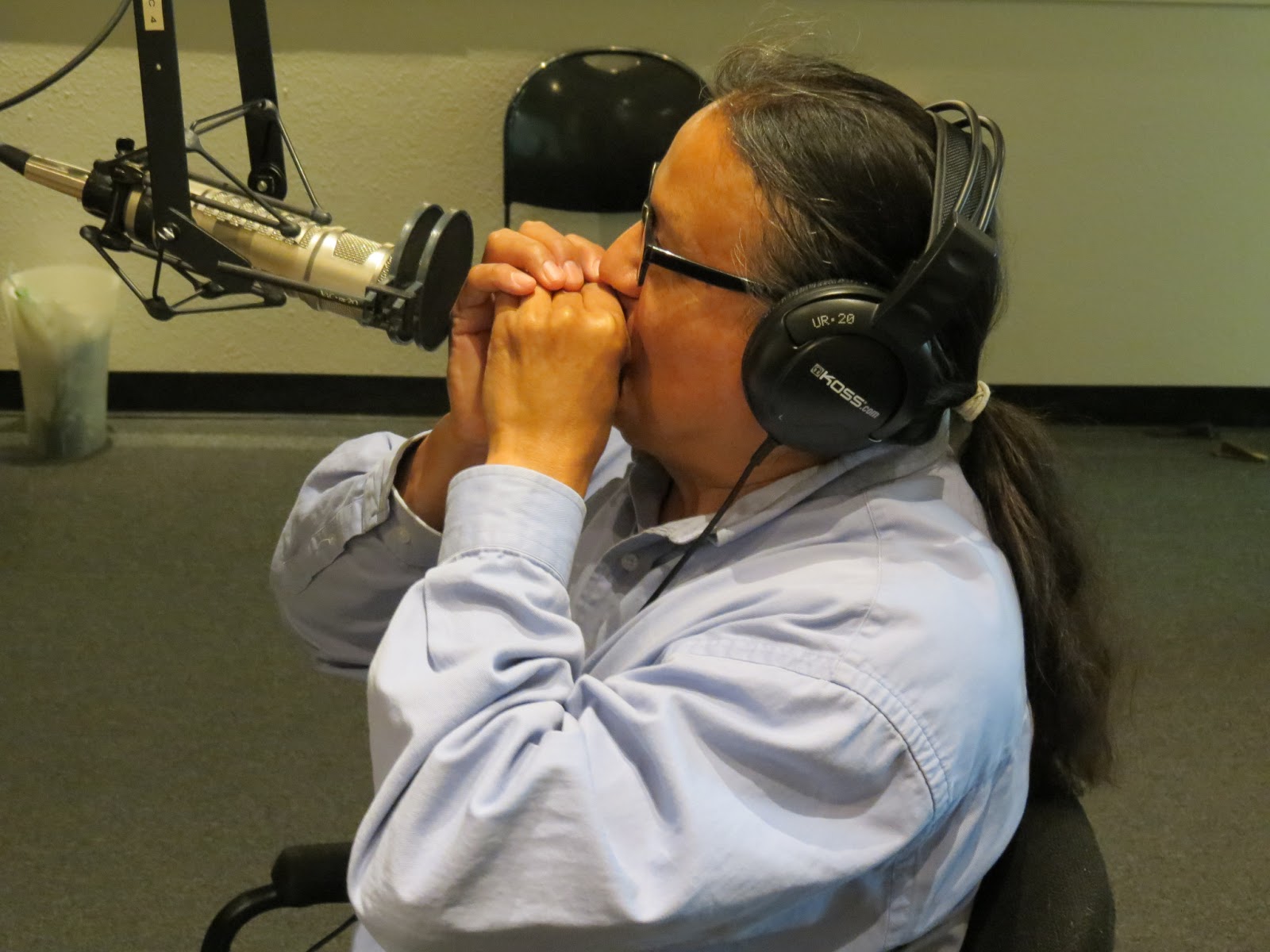
Gerald Torres in performance!
Professor Torres is a past president of the Association of American Law Schools. He has served on the board of the Environmental Law Institute, the National Petroleum Council, and on EPA’s National Environmental Justice Advisory Council. He is a member of the Council on Foreign Relations and the American Law Institute.

Torres was honored with the 2004 Legal Service Award from the Mexican American Legal Defense and Educational Fund (MALDEF) for his work to advance the legal rights of Latinos. He currently is Board Chair of the Advancement Project, the nation’s leading social and racial justice organization. He is also on the board of the Natural Resources Defense Council and is Vice-Chairman of the Board of Earth Day Network.

He has been a visiting professor at Harvard, Stanford, and Yale law schools.


Rag Radio is hosted and produced by Rag Blog editor and long-time alternative journalist Thorne Dreyer, a pioneer of the Sixties underground press movement.

The show has aired since September 2009 on KOOP 91.7-FM, an all-volunteer cooperatively-run community radio station in Austin, Texas. Rag Radio is broadcast live every Friday from 2-3 p.m. (CDT) on KOOP and is rebroadcast on Sundays at 10 a.m. (EDT) on WFTE, 90.3-FM in Mt. Cobb, PA, and 105.7-FM in Scranton, PA.

The show is streamed live on the web by both stations and, after broadcast, all Rag Radio shows are posted as podcasts at the Internet Archive.

Rag Radio is produced in association with The Rag Blog, a progressive Internet newsmagazine, and the New Journalism Project, a Texas 501(c)(3) nonprofit corporation. Tracey Schulz is the show's engineer and co-producer.

Rag Radio can be contacted at ragradio@koop.org.

Coming up on Rag Radio:
THIS FRIDAY,
July 19, 2013: Sociologist, media critic, and author Todd Gitlin.
Friday, July 26, 2013: Sanford, FL-based political science prof Jay D. Jurie, on the consequences of the Trayvon Martin verdict.

The Rag Blog

[+/-] Read More...

29 November 2012

Mercedes Lynn de Uriarte : Supreme Court Case Raises Larger Diversity Issues at UT-Austin

Though the UT-Austin student body is among the most diverse in the country, other related issues plague the school and its history. Photo by Eric Gay / AP / Christian Science Monitor.

Supreme Court focus on UT
student DNA masks pressing issues
The matter being debated by the Supreme Court is not apt to really address the long uneven evolution of the University of Texas toward integration.
By Mercedes Lynn de Uriarte / The Rag Blog / November 29, 2012

AUSTIN -- Several weeks ago the U.S. Supreme Court once again heard a lawsuit (Fisher v. the University of Texas) challenging the admission policies of the University of Texas that take race and ethnicity into account as one of the various factors considered. At the heart of the recurring conflict over admission policy is the struggle over whether UT must become integrated -- an achievement long resisted.

In fact, like many southern universities, the institution has layers of diversity, the most evident of which are the maintenance and service staff. The transient student population is now integrated by population based on DNA count. Over half -- 26,090, 51% --of the campus student body is white. This fall there are 8,973 Latinos, 2,140 African Americans, 7,939 Asian Americans and 151 American Indians. Of these, 80% are Texas residents. UT clearly meets its mandate as a land grant institution to educate future decision-makers largely the result of admission policies.

The battle to retain a bit of intellectual diversity rages on. This month Asian-American faculty and junior administrators met to discuss the implications of what the current suit might mean to their studies center. Just last year Mexican-American students demonstrated against curriculum cutbacks in their studies center made necessary by budget shortfalls. African and African-American Studies also felt the sting of cuts.

But even more visible are a series of racist actions, the most recent and most nasty three occurring since the start of the fall semester three months ago. A UT sorority threw a “Mexican theme” party where invited guests came as gardeners, maids, or criminals -- or wore T-shirts identifying themselves as “ILLEGAL.” Others dressed as border guards mingled.

In another stunt, fraternity members threw balloons of bleach at minority students. One fraternity party, also planned around race themes, was cancelled. The press covered all of these incidents. The October 22 issue of the student Daily Texan, reported that someone carved swastikas in an off-campus dormitory door where three Jewish students live. These sorts of hate messages have a long history at UT where the statue of Martin Luther King has often been vandalized.

July 16, 2004, cover of UT student newspaper, The Daily Texan, featuring story about campus dormitory named after former law prof who was also a Ku Klux Klan leader. Creative Commons image from fretna.org.

Even the buildings reflect a racist past. In 2010, after publication of a history book by Tom Russell, a former UT Law School professor, the University, after some deliberation, changed the name of a dorm memorializing William Stuart Simkins, a Klan leader and Law School professor in the early 1900s. UT administrators named the residence hall just after the 1954 Supreme Court decision outlawed segregated schools.

The least integrated of the UT human component is the faculty.

Demographics of teaching faculty (which excludes those who are deans, directors, or administrative officials) testifiy to slow integration across rank, gender, and diversity. At first glance, this does not seem to be the case: Of 3,018 of this faculty 1874 are male, 1144 are female. Within this group 80% are white.

But the ratio of full professors indicates significant skewed reality -- in 2010 (the latest posted data) just short of 800 were male, only 210 were female. Because race and ethnicity narrows the general professorial group, the ratio of minority professors to full professor whites is minute.

Some departments, including my own, have never promoted a woman or a minority to full -- although one minority woman (no longer at UT) was appointed to full,  a move that avoids the usual review and promotion committee approval -- and recently hired a woman who had earned the rank of full at another university.

Some of UT’s DNA profile records earlier years of blatant discrimination, but more recent evidence indicates a fairly tenacious hold on troubling patterns of the past. For example, three years ago UT authorized a study of the treatment of its faculty women drawing on its own statistics, pay records, and promotion experiences. That produced 170 pages that charted inequity.

The experience of minority females was not made specific because, as one equity researcher explained: “The small number of minority women faculty is not statistically significant.”

So the matter being debated by the Supreme Court is not apt to really address the long uneven evolution of the University of Texas toward integration. The suit, of course, does not consider intellectual diversity -- a component critical to the success of social integration. A legal mandate would raise both first amendment protections and academic freedom guarantees.

But the push in some quarters to do away with studies that focus on minority literature, history, sociology, and other content is short-sighted as well as anti-intellectual. And narrowing access to education contributes to these problems.

[Mercedes Lynn de Uriarte, a PhD, is an Associate Professor Emeritus at the University of Texas. She currently directs a funded study -- Austin Displaced -- which explores the impact of gentrification on affected residents. Mercedes is also president of the board of the New Journalism Project, the nonprofit that publishes The Rag Blog.]

The Rag Blog

[+/-] Read More...

Only a few posts now show on a page, due to Blogger pagination changes beyond our control.

Please click on 'Older Posts' to continue reading The Rag Blog.