Showing posts with label Community Organizing. Show all posts

06 January 2014

Michael James : Like a Bruegel Painting, 1966

The JOIN Community Union was our effort in Uptown, Chicago, to build solidarity and create an organized force for change, especially among poor people of Southern origin.
james JOIN 5
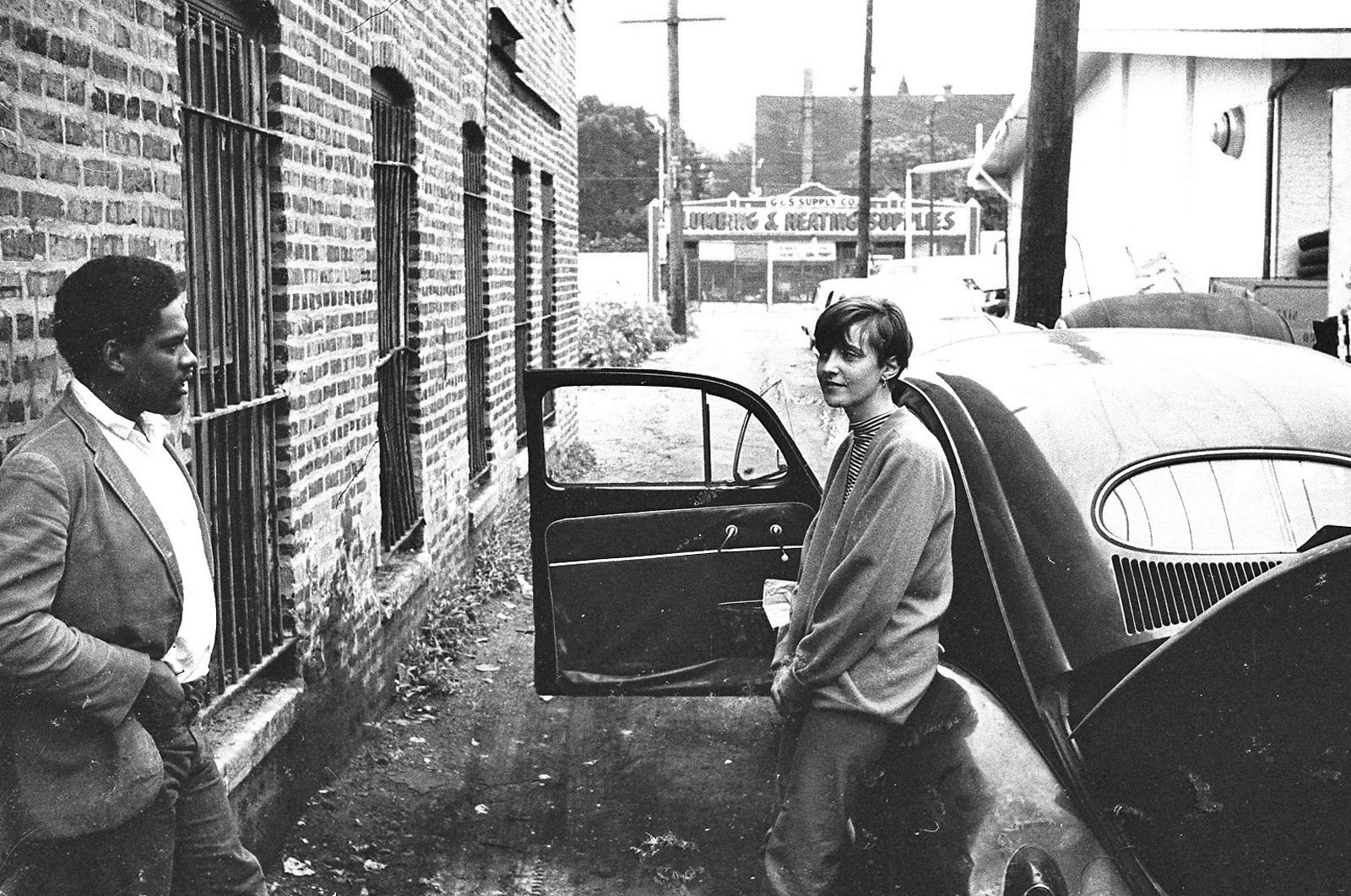
SNCC’s Curtis Hayes (Muhammad) and SDS’s Susan Lum in Uptown, Chicago, 1966. Photos by Michael James from his forthcoming book, Michael Gaylord James' Pictures from the Long Haul.

By Michael James | The Rag Blog | January 6, 2014

[In this series, Michael James is sharing images from his rich past, accompanied by reflections about -- and inspired by -- those images. This photo will be included in his forthcoming book, Michael Gaylord James' Pictures from the Long Haul.]

UPTOWN, Chicago in 1966. I called it “Hillbilly Harlem.” Uptown was the regional capital of poor Southern white migrants moving to the North. The migration of Southern whites began when they came north in the 1940’s for war industry work, and accelerated after WWII when factories flourished in and around Chicago.People arrived from rural and urban areas throughout the South, with the majority coming from Appalachia.

I had lived in Uptown in the summer of 1964 when I worked as a participant observer for a Notre Dame study of Southern white migrants. Daytime had found me hanging out with older guys, often drinking, rolling cigarettes, and playing the guitar under the El tracks next to Graceland Cemetery. Now I was working with others in JOIN Community Union, a community organizing project initiated by SDS (Students for a Democratic Society) and its Economic Research and Action Project (ERAP).

When it first started, as a project to organize the unemployed, JOIN stood for Jobs or Income Now. But when organizing the unemployed didn’t pan out, JOIN evolved into a “community union,” uniting folks to fight around issues that affected their lives, like housing, welfare, and police brutality.

Young radicals like myself went into cities around the country trying to organize “to build an interracial movement of the poor.” JOIN was our effort to build solidarity and create an organized force for change among poor people of Southern origin and others who lived in this community on Chicago’s North Side. We intended to help our nation live up to its stated vision of equal opportunity for all.
james JOIN 2
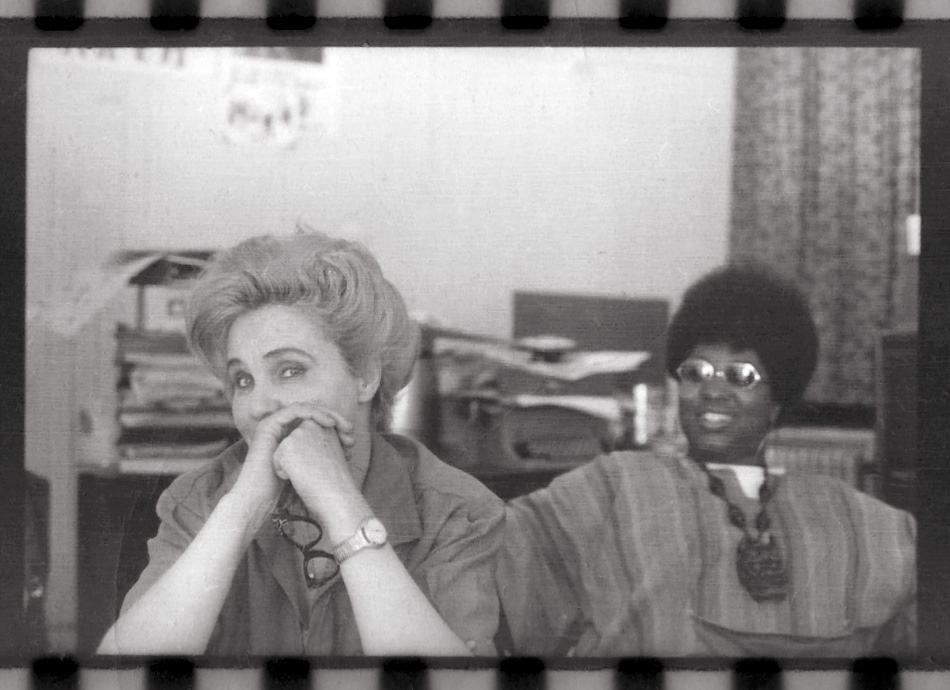
Virginia Bowers and Little Dovie.
In Uptown, we met a lot of folks while leafleting in front of the Unemployment Compensation Office on Lawrence Avenue. The backbone of JOIN was welfare women. The leadership included Dovie Coleman and Dovie Thurman, aka Big Dovie and Little Dovie -- confident and forceful black women.

Southern white women on welfare were aware of the goings-on in the civil rights movement and looked to these black women for leadership. One was Virginia Bowers from Arkansas, who became the JOIN office manager. Key organizers included Harriet Stulman, Alice Keller, and Vivien and Richie Rothstein.

Vivien and I had worked together what had been the West Oakland Community Union Project. In future years she became an organizer in Los Angeles of Vietnamese immigrants. Richie forged links to unions and set up a JOIN School to help community people learn about the power structure, welfare, police, and housing matters.

Post-JOIN he wrote about education for The New York Times and worked on education policy at the Economic Policy Institute at the University of California, Berkeley. In his Uptown work he was serious, smart, dedicated and, as I now realize, inspirational. He didn’t always appreciate my rebellious youthful behavior.

The government’s new War on Poverty was active in Uptown, headquartered on Montrose (now a gym in the increasingly gentrified neighborhood). We believed the War on Poverty didn’t encourage community people to take action or make decisions on the big issues of jobs, housing, education, and welfare. It too often focused on superficial, harmless programs like where to plant trees.

JOIN held weekly meetings that featured speakers, theatrical skits, and singing. The group-sing was enthusiastic, if sometimes off key, and included mountain tunes, spirituals, and traditional union songs. Sometimes we altered the lyrics to reflect current conditions.

We showed films we got from UE’s (United Electrical Workers') treasure-trove of labor documentary and training films. We rented films from a distribution house, including the previously banned Salt of the Earth about striking mine workers in Silver City, New Mexico — though The Hank Williams Story turned out a larger crowd.
Regular attendees were a unique, interesting, somewhat motley crew of Uptown residents.
Regular attendees were a unique, interesting, somewhat motley crew of Uptown residents. We had our share of wino attendees, including a Greek fellow named John. Once I carried a drunk John into Cook County Hospital, when his frostbitten feet prevented him from walking.

Each week there was an increasing number of young guys from the neighborhood, hanging in the back of the room. One Southern kid named James Osborne had a job with the War on Poverty and also hung around JOIN. At a meeting in Washington, D.C., he spoke up and asked Sargent Shriver, the War on Poverty’s head man, a question that was apparently too challenging. James lost his job -- and distanced himself from JOIN.

A short time later he married a nun who worked in the neighborhood and they opened the Book Box on Lawrence (now Shake Rattle and Read) by the Green Mill. Later, in 1968, we held training sessions in its basement for a short-lived outfit called the National Organizing Committee (NOC), which recruited college students to be community organizers.
james JOIN 4
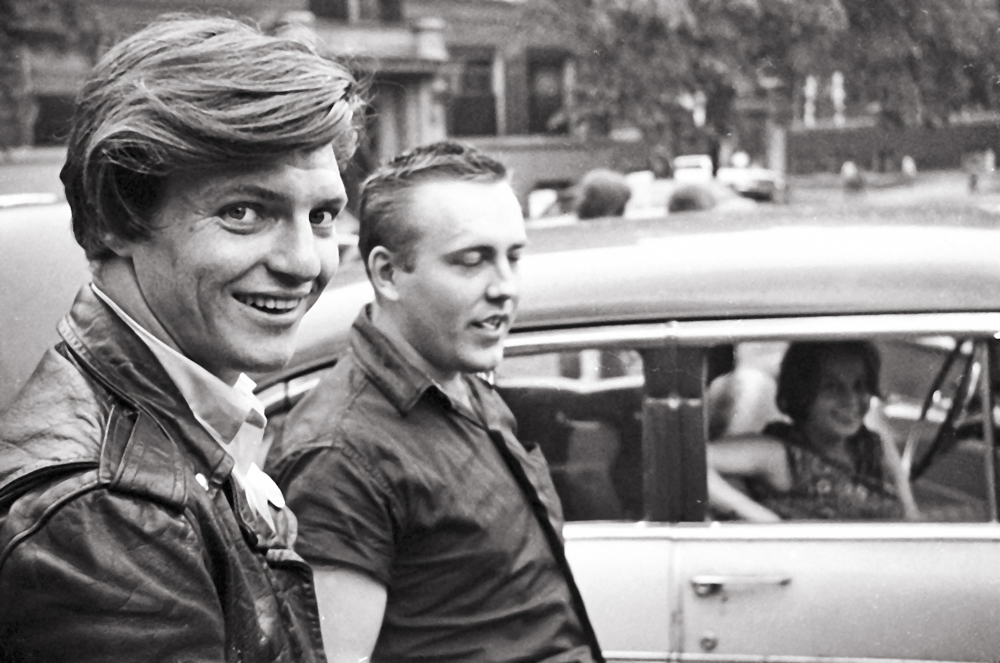
Goodfellows and girl in a car.
While I liked to joke that the meetings reminded me of a Bruegel painting, a mass of tortured and rough-edged peasants, there were of course plenty of sharp and effective people among the ranks, including Sarah, a Russian who had participated in the Russian Revolution and by 1966 was selling papers on Argyle.

Carl, a physically challenged welfare activist, came, as did Eugene Feldman, a retired teacher and former Communist. Feldman had organized sharecroppers in the South during the 1930s and shared pamphlets from those times. We knew we were part of an ongoing, long tradition of organizing and fighting for peoples’ rights.

A highlight of many meetings was a JOIN Theater agitprop skit that focused on the likes of Mayor Daley, urban renewal (poor people removal), landlords, and welfare and police brutality. My younger sister Melody James founded this project. Melody studied drama at Carnegie Institute and San Francisco State, so I asked her to come to Uptown to organize a peoples’ theater. After her JOIN work she returned to San Francisco and became a member of the legendary San Francisco Mime Troupe.

For JOIN Melody put together a lively mix of community people and student organizer types. JOIN Theater performed on various stages around town and in an empty lot on Clifton Street. Following the City’s massive urban removal of people in that part of the neighborhood, they performed before a large crowd, calling on the city to build a Hank Williams Memorial Playground in the space where Truman College stands today.

Over the spring and summer of ‘66 young guys began coming around JOIN. Near the old Wilson Avenue pool hall where Al Capone was said to have played, Reverend Maury ran a program for young guys. As we were less concerned with life after death than a better life in this lifetime, the Reverend’s hall became fertile ground for recruiting and we quickly made inroads.

We got to know these young guys, many of whom readily shared their accounts of police harassment and brutality. By the fall of 1966 Rev. Maury closed his operation. In its stead Bob Lawson, a JOIN organizer who had played football at Berkeley, gathered a group of young Southern guys that included Ralph Thurman, Hi Thurman, Bobby Joe McGinnis, and Jack (Junebug) Boykin.

They started a new group, which was friendly to but officially independent of JOIN. They called themselves The Uptown Goodfellows and opened a hangout-clubhouse space on Wilson at Kenmore.
When the police killed a young man named Ronnie Williams, who had moved to Uptown from Kentucky, it set off activity protesting police harassment and brutality.
When the police killed a young man named Ronnie Williams, who had moved to Uptown from Kentucky, it set off activity protesting police harassment and brutality. The Goodfellows and JOIN together organized a march on the infamous Summerdale 20th District Police Station. Over 300 people marched, mostly but not only, white Southerners.

Summerdale had been implicated earlier in a stolen-goods ring. The “Summerdale Scandal” led to the hiring (and brief tenure) of a forward-thinking criminology professor from Berkeley named O. W. Wilson as Police Superintendent. Our march called for an end to all police brutality but singled out a particularly hard-ass cop named Sam Joseph.

My own interaction with Joseph was limited to a short exchange of wise-ass remarks after he shined a flashlight into my car. I was parked down at Montrose Beach with Susan Ring, who was from a progressive home in the Swedish neighborhood of Andersonville. Her mom worked for the AFSC (American Friends Service Committee) and her dad was a butcher I jokingly referred to as the “Marxist butcher.”

Susan and I were making out when Joseph and his sidekick shined the light into the car and knocked on the window. Later Susan ended up marrying Junebug Boykin, who was my main street mentor.

The Summerdale march gave people a sense of unity, direction, and power. What followed from JOIN and the community was the founding of a program called Citizens’ Alert. This was an earlier version of the Oakland Black Panther Party’s practice of following the police and observing their activities. Citizens’ Alert is still active in Chicago, calling attention to police misbehavior. Activist Mary Powers has long been its leader.

The police response to the march was more hard-hitting on young guys in the neighborhood and an attack on JOIN. My college roommate Patrix Sturgis and my sister Melody were at the JOIN office when the 20th District Chicago Police burst in, ransacked the office and arrested them, claiming to have found a small amount of pot. Though it received less media coverage, they were later acquitted, after the police were found to have lied and planted the marijuana.

Housing was another major concern of folks in the hood. Buildings had mice, rats, and roaches, repairs weren’t made, and people were locked out when rent was late. We held rent strikes and demonstrations around housing issues. A group of lawyers who helped JOIN included Irv Birnbaum and Ted Stein. They worked with organizers and tenants, often going to housing court with them.

We tried to stop evictions. I made my way into a number of basements, turning on gas or electricity after landlords or their managers had turned the utilities off, and was once arrested when I informed an officer of the tenant’s rights and the law. Tenants at a large building on Broadway near Irving Park went up against a slumlord named Gutman. On a Sunday morning Rennie Davis and I went to his apartment building on the northwest side and hung a leaflet inside his vestibule: “Your Neighbor is a Slumlord!” We also put one on every car on the street.

In short order Gutman settled with the tenants, and that particular building became part of an improved housing initative by the Kate Maremont Foundation. A prolonged rent strike with marches at the “Sampson Building” on the 4100 N. Kenmore block led to an agreement and the formation of a tenant’s council.
JOIN did welfare advocacy, demonstrated at the welfare office, and called for fair treatment by the Illinois Department of Welfare.
JOIN did welfare advocacy, demonstrated at the welfare office, and called for fair treatment by the Illinois Department of Welfare. We worked closely with the Kenwood Oakland Community Organization (KOCO) and the Latin American Defense Organization. These demonstrations and marches exemplified the potential for building an interracial movement of the poor. Actions involving primarily black, brown, and white organizations helped lay the early groundwork for rainbow coalitions to come.
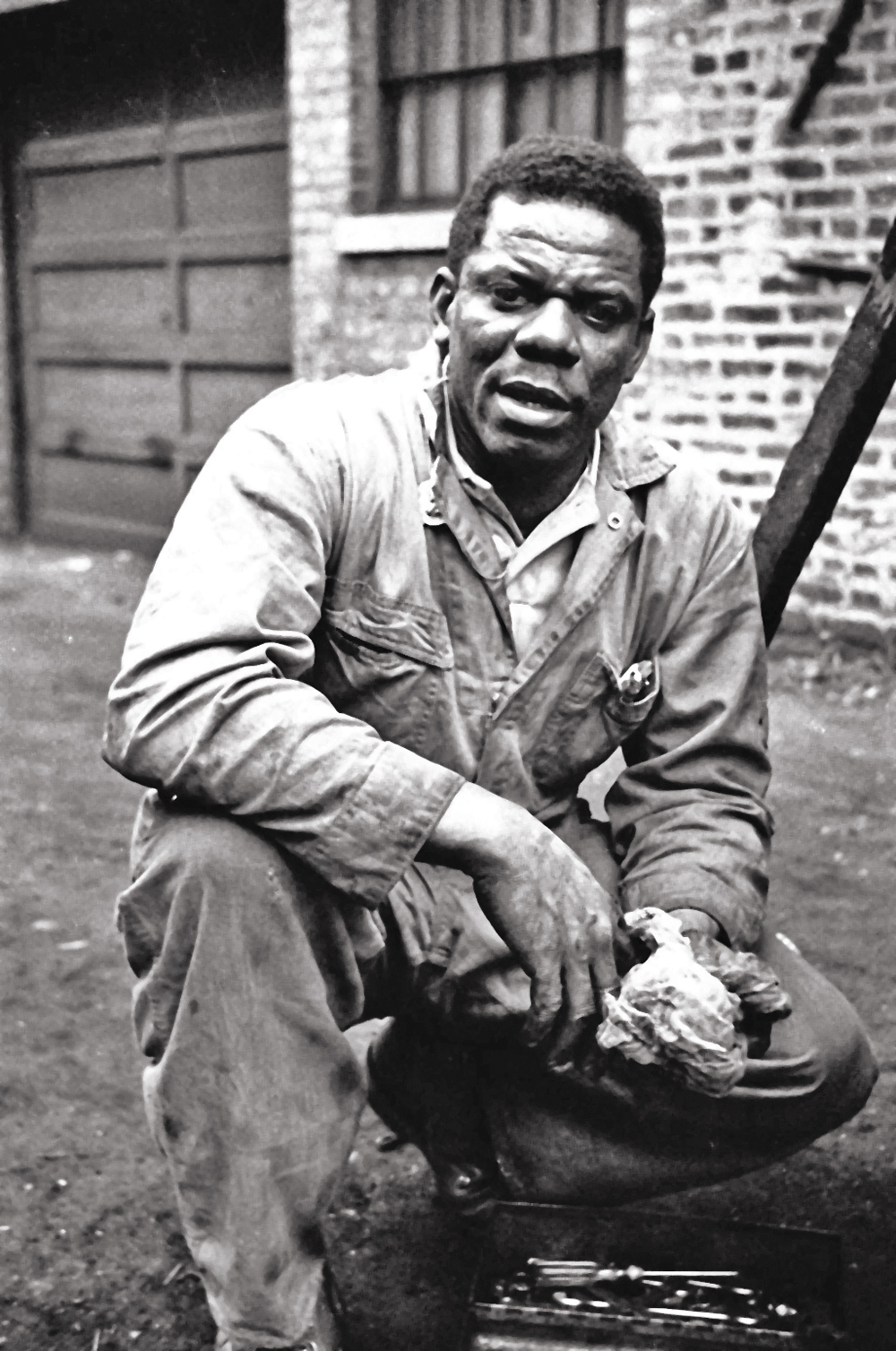
james JOIN 3
Mechanic and Steelworker Eric Gil.
 One spring afternoon the photographer Danny Lyon gave me a ride on his Triumph motorcycle to Molly Hagen’s apartment on Hyde Park Blvd. on the South Side. Molly’s crib became a regular destination. I would head there to hang out, smoke weed, and eat. I met Curtis Hayes (now Muhammad), who had worked with Molly in the Student Nonviolent Coordinating Committee (SNCC), and Eric Gill, from Belize, who worked on cars and had a job in the steel mill, and an assortment other characters, including a salesman for Duncan Yo Yo.

That summer I bought a 1963 Triumph 650 TR6 motorcycle from Clay Highland, who I knew from Lake Forest College. On the bike, sometimes with Molly on board, I explored Chicago and its far-flung neighborhoods, communities, and off-the-beaten-path treasures. I loved late night cruising up and down Lake Shore Drive, the green tunnel of Lower Wacker Drive, the smell of chocolate production on Kinzie, and the blast furnace at Finkl & Sons Steel on Armitage.

In addition to country music joints in Uptown, I went to hear Paul Butterfield, first in Old Town at Big John’s (where I had first seen Steve Miller), and then at the Blue Flame on Drexel Blvd at 39th Street, where he played with Howlin’ Wolf’s old band. At a meeting of activists from various projects around town I met a law student named Bernardine Dohrn.

Days later Bob Lawson and I took an exhilarating ride on my Triumph to the SDS Convention held in Clear Lake, Iowa, the place where Buddy Holly, Richie Valens, and the Big Bopper had gone down in an airplane. While there we got word that both the JOIN office and the new Movement for A Democratic Society office in Rogers Park had been busted. People were out of sorts.

Wearing a cowboy hat, I stood up and quoted Joe Hill: “Don’t mourn, organize.” This moment was my introduction to the assembled SDSers, and I left Clear Lake as part of SDS’s leadership, a member of the National Interim Committee. Before heading back to Chicago I reintroduced myself to Bernardine by sending her a post card: “Nice meeting you; how about we take a ride together on my motorcycle?”

[Michael James is a former SDS national officer, the founder of Rising Up Angry, co-founder of Chicago's Heartland Café (1976 and still going), and co-host of the Saturday morning (9-10 a.m. CDT) Live from the Heartland radio show, here and on YouTube. He is reachable by one and all at michael@heartlandcafe.com. Find more articles by Michael James on The Rag Blog.]

The Rag Blog

[+/-] Read More...

08 December 2013

Michael James : Back to Uptown, 1965-1966

Two men, Uptown Chicago, 1966. Photos by Michael James from his forthcoming book, Michael Gaylord James' Pictures from the Long Haul.
Pictures from the Long Haul:
Back to Uptown: Bye-bye California, 
Chicago here I come, 1965-1966
I was glad to be back in Uptown, progressing along my path with another left turn and a big step into America.
By Michael James / The Rag Blog / December 9, 2013

[In this series, Michael James is sharing images from his rich past, accompanied by reflections about -- and inspired by -- those images. This photo will be included in his forthcoming book, Michael Gaylord James' Pictures from the Long Haul.]

The West Oakland organizing project over, I planned to leave Berkeley. But in the late fall of 1965 I was still there. I had classes. I was thinking about conflict, and how you could bring conflicting groups together. I met others who were already doing community organizing, including Mike Miller who is still at it in 2013, and Mike Sharon with whom I’ve lost contact. I was going to be a community organizer, either in Newark or Chicago.

That fall I lived with friends, for a time with John Williams, who taught me a lot about cooking and politics, and then at Julie Miller’s. Julie was a politically active student friend from Los Angeles. I studied and took in doses of politics and culture. In addition to sociology classes with Nathan Glazer and Hebert Blumer (a renowned academic who had played football at the University of Chicago and then professionally with the old Chicago Cardinals), I went to talks, rallies, demonstrations, films, and musical events.

The playwright and poet LeRoi Jones had become Amiri Baraka. He came to campus and his anti-white rap shook me up. My more knowledgeable pals Davy Wellman and Joe Blum helped me to understand Black Nationalism. A few years later Black Panther leader Bobby Seale would distinguish between revolutionary and reactionary nationalism. “You don’t fight fire with fire, you fight fire with water, and you don’t fight racism with more racism, you fight racism with solidarity.”

Simply put: dig yourself and others.

There were large marches into Oakland, against the Vietnam War and against the racist Oakland Tribune and its rightwing Republican owner, former Senator Bill Knowland. I saw the great guitarist John Fahey along with Country Joe and the Fish at the Finnish Hall. On Telegraph Avenue I bought and listened (over and over) to Joe’s EP Section 43. And I began going to concerts at the Fillmore Auditorium in San Francisco.

Also in San Francisco I took in a movie I’d read about, Jean Genet’s Un Chant d’Amour, a flick about gay men in prison and their fantasies. The article in Studies on the Left reported on the SF Police Department’s harassment of a theater showing the film. This was all new to me; I didn’t have much consciousness about gays at the time.

I liked the film; it featured a black prisoner and a white one, breathing and whispering through a straw between their neighboring cells. I found it pleasant and sensual; it sure bumped up my learning curve on such matters.

I visited what I now considered my second home, the Williams compound in the Carmel Highlands. From there I explored down the coast. I climbed foothills of the Santa Cruz Mountains and went to a rodeo in the old mission town San Juan Bautista. The rodeo was different than my early rodeo experience in Madison Square Garden -- this one was small, outdoors, and heavily influenced by Mexican culture.

Charlie Mingus, Monterrey, California, 1965.
And I went to the Monterey Jazz Festival. A jazz fan since my mid-teens, I’d been to shows and concerts in Greenwich Village and NYC’s Town Hall. I was at the Newport Jazz Festival in 1961, and went to many sets in Chicago. The Monterey Jazz Festival was my first jazz event on the West Coast. I took some pictures of Charlie Mingus hanging out in the concession area before his short set.

At Christmas time I went home to Connecticut. My brother and I, in a tradition started accidentally by our Dad years earlier, went to get a tree late on Christmas Eve; as usual the tree seller had long gone. My Dad returned to the lot to pay the next day, but no one was there. In subsequent years Beau and I didn’t even make that much effort, so later in my life when I sold trees at the Heartland Café, I never got too upset if some went missing and unaccounted for. Karma.

I’ll always remember that particular Christmas, especially for the warm vibes I felt while listening to the Beatles’ Rubber Soul, over and over. I suddenly appreciated them, and saw both them and the Remains at the Chicago Amphitheater the following year.

After Christmas I went to Newark, New Jersey, to visit Tom Hayden and others who worked in the Newark Community Union Project, in a black community. Then I went to Chicago and visited the National Office of Students for a Democratic Society, which was located at 63rd and Cottage Grove.

While in Chicago I visited a snow-covered, gray, and very cold Uptown, where I met with two JOIN Community Union organizers, Peter and Stevie Friedman, working in what was then a predominantly Southern white community. Next I headed down to the University of Illinois in Champaign Urbana, where SDS was holding one of its conventions. My only recollection of that meeting is of when I leapt off a table to break up an altercation between a black community person from the Newark Project and Bob Speck, a Navy vet from the Austin SDS chapter.

At the end of winter break I rode with fellow SDS members from Chicago to Los Angeles, and made my way back to Berkeley. Early in the New Year of ‘66 I was at a SNCC (Student Non-Violent Coordinating Committee) benefit at the Fillmore, featuring Grateful Dead, Quick Silver Messenger Service, Moby Grape, and comedian Richard Pryor.

In the back of the hall I met and talked with Stokeley Carmichael (Kwame Ture) who was then head of SNCC. I shared with him my intention to leave Cal and go into a community, either Newark or Chicago. He told me in no uncertain terms to “Work with whites, we’ve got plenty going on in the Black community. We need more support from within the white community."

California girls. Carmel, California, 1965.
That was it. Bye-bye California. Chicago here I come.

But it took a while longer.

I had a graduate paper to write on organizing the poor. I was comparing three efforts: the Saul Alinsky model from his Industrial Areas Foundation, the conflicting and self-constricting efforts of the Government’s War on Poverty, and the “be one with the people” and “let the people decide” projects of SDS and ERAP. My research findings of course declared the SDS efforts best, and I spent the winter of 1966 in the Highlands writing about poverty and organizing.

While there I battled a raccoon that raided the bird feeder every night. Laying in wait, I was inside writing with a baseball bat nearby. I attached bells to the feeder and when they jingled I leapt into action. I went for the animal with a mighty swing, missing as the raccoon jumped free ahead of the bat.

Back up in the Bay Area I ran into someone at a Paul Butterfield concert who said, “I thought you left for Chicago.” I replied: “Soon -- I’m finishing a paper.” I was. I was also having a real fine time in my final weeks as a California resident.

But bye-bye California and hello Chicago did come to be. One Sunday in early April, JOIN organizer Burt Steck and I began heading east in my 1957 Ford convertible, to the heart of the nation.

On Monday night we stopped on the Navajo Reservation in northeastern Arizona and slept on the ground beside the Ford ragtop. In the morning we found that we had actually slept very close to the edge of Canyon de Chelly. Driving on a dirt road we stopped to pick up a hitchhiking Navajo kid. His mom came running out from the bushes and they both got into the car.

The small woman had a blanket she was bringing to a trading post. I just happened to have with me a box of broken abalone shells I had literally thought about “trading to the Indians.” They made great buttons. When we reached the trading post I gave them to the mom. She smiled. Inside I arranged for the trader to send me a buckskin, which I later traded to Austin SDS friend Bob Pardun for a very nice cowboy shirt.

Over a thousand miles and 20 hours later, Wednesday morning found us parked and asleep in front of the U.S. Farmers Association (USFA) office in Des Moines, Iowa. Two policemen tapped on the window and woke us up. We engaged in friendly and humorous conversation about Berkeley, the FSM, and heading to Chicago to organize the poor. They did ask about marijuana; I shared that I had tried it, but assured them we didn’t have any.

We were in Des Moines because a new SDS friend from the University of Nebraska, Carl Davidson, had told me about a radical farmer named Fred Stover. Stover had been a Department of Agriculture official in the Roosevelt and Truman administrations, had supported the progressive, Henry Wallace, in the 1948 presidential campaign, and opposed the Korean War. He had been accused of being a member of the Communist Party in his youth and had been forced out of the leadership of the National Farmers Union (NFU). That led to his founding of the USFA, a progressive offshoot of the NFU.

When Fred arrived he took us out to eat, treating us ravenous boys to a big Iowa breakfast. We had a good talk. I really liked Stover. I myself had been a member of the 4H Club (“Head, Heart, Hands, and Health”), and have always liked agriculture and farmers, particularly those on the progressive side of the political equation.

By mid-afternoon Burt and I were in Chicago in Uptown. I immediately became involved in a small demonstration at the Price-Rite TV Repair Shop on Argyle. Mrs. Hinton, an East Indian on welfare and a JOIN member, had tried to return a broken used TV set she had purchased from Price’s. They refused. JOIN organizers and community folks were picketing out front. One of the Price brothers and I got into some macho posturing and arguing. Eventually Mrs. Hinton got her just due. The Price brothers were from Appalachia; eventually they would become JOIN supporters themselves.

It was a good day. I was glad to be back in Uptown, progressing along my path with another left turn and a big step into America.

[Michael James is a former SDS national officer, the founder of Rising Up Angry, co-founder of Chicago's Heartland Café (1976 and still going), and co-host of the Saturday morning (9-10 a.m. CDT) Live from the Heartland radio show, here and on YouTube. He is reachable by one and all at michael@heartlandcafe.com. Find more articles by Michael James on The Rag Blog.]

The Rag Blog

[+/-] Read More...

10 November 2013

Michael James : Going Off Campus, 1965

Sam and Theophilius at sunset in Jackson Hole, Wyoming. Photos by Michael James from his forthcoming book, Michael Gaylord James' Pictures from the Long Haul.
Pictures from the Long Haul:
Going off campus:
Idaho, Wyoming, and Connecticut, 1965
I proceeded to quote Tom Paine: “Let them call me rebel and welcome, I feel no concern from it; but I should suffer the misery of devils were I to make a whore of my soul.”
By Michael James / The Rag Blog / November 11, 2013

[In this series, Michael James is sharing images from his rich past, accompanied by reflections about -- and inspired by -- those images. This photo will be included in his forthcoming book, Michael Gaylord James' Pictures from the Long Haul.]

At UC Berkeley in the winter and spring of 1965 the Free Speech Movement battles continued. The court proceedings for the Sproul Hall arrests continued, as did rallies and negotiations. My sentence gave me a choice: 25 days in jail, a year’s probation, or a $250 fine. Believing that a year’s probation would limit my political activities, I took the fine, and said to the judge; “A lot of people across the land are coming to feel as I do,” and proceeded to quote Tom Paine: “Let them call me rebel and welcome, I feel no concern from it; but I should suffer the misery of devils were I to make a whore of my soul.”

Eventually the University agreed to permit tables and discussion in Sproul Hall Plaza, and reversed their edict on no political activity. And political activity there was. The U.S. war on the people of Vietnam was in the forefront. I got involved with the Vietnam Day Committee initiated by Jerry Rubin, Stew Alpert, and others. In May we held a two-day teach-in, which thousands attended. Senator Ernest Gruening of Alaska was a featured speaker. He and Oregon’s Wayne Morse were the first Senators to stand in opposition to U.S. involvement in the war in Vietnam.

Ken Kesey and his Merry Pranksters showed up in a wildly painted school bus; Allan Ginsberg, Wavy Gravy, and others were on the scene. Protest singer Phil Ochs came to perform. Before he took to the stage I was fortunate to hang out with him at the home of Neil Blumenthal, a Berkeley psychologist and the Free Speech Movement’s resident shrink.

Man on Harley, Route 53, Connecticut.
For the teach-in I helped compile a pamphlet with articles on Vietnam and the war. While laying it out at the Berkeley Free Press, I leaned on the light table and fell through the glass (no injuries, luckily, and the shop owner took it in stride). When the pamphlet made it to press, I remember the brass bell on the Multilith offset that gave a constant ding-ding at the tempo of the press’s speed. The pressman was David Goines, who became a well-known poster artist.

Students for a Democratic Society was the organization that caught my attention, and then my love and devotion. Back when we surrounded the police car with Jack Weinberg in it -- the event that really set the Free Speech Movement in motion -- I had found a leaflet put out by SDS calling to “build the interracial movement of the poor.” SDS “traveler” (field organizer) Mike Davis, now a noted author, came through town and signed me up into the ranks of SDS. At an SDS party I talked and drank wine with Michael Harrington, who I had heard speak in 1962 at the University of Chicago, along with the old socialist Norman Thomas. Harrington’s ’62 book The Other America exposed the dramatic extent of poverty in the U.S.

The summer of ’65, while the anti-war movement was building at Berkeley and across the land, some of us were making plans to move into West Oakland. We would be among SDS members involved in the Economic Research and Action Project (ERAP), which had begun organizing in 13 cities, trying to build an interracial movement of the poor. Paul Booth, an SDS leader, came to California to help with what would be called the West Oakland Community Project (WOCP). We were idealistic. We said, “Let the people decide.” An SDS button proclaimed Sam Cook’s lyric “A change is gonna come.”

Twelve of us --11 white, one black -- were involved in the WOCP that summer. We had a house at 320 Henry Street near the Southern Pacific Railroad yards. People in the community wondered who we were and what was going on. A ragtag group of men who lived at the Catholic Worker’s Peter Maurin House came by to check us out. [Peter Maurin was a Catholic activist who along with Dorothy Day founded the Catholic Worker Movement]. They’d been drinking wine and their spokesman was challenging, but mellowed out when we shared our hopes and intentions.

Lots of people were working for change in Oakland. There were freedom schools, summer work projects, and labor projects. The issue that got traction in our efforts was beautification. It may not seem radical, but responding to the way the city was tearing down fences and ruining people’s gardens at Peralta Villa Public Housing without notice or community input, was about letting the people decide, a major SDS principle. The Peralta Villa folks were pissed off, and they let the city know about it. The fence removal was halted, a small but significant victory.

A mostly white group of Berkeley students organizing in a poor black community did not bring us far on the road to a revolution. Perhaps the biggest deterrent to sustained work by WOCP was the exploding growth of opposition to the Vietnam War. There was considerable anti-war activity on campus and energies were pulled in that direction.

To top it off, there were the troop trains, and the efforts by hundreds to stop them. During August there was a demonstration at the railroad tracks in Berkeley. My clearest memory of that day is a soldier’s face, probably a conscript, who was on the Union Pacific train from Fort Riley in Kansas, heading to the Oakland Army Terminal to be shipped off to Nam. He was at the window with a shaved head. His face was laughing yet somehow also fearful as he watched me take the picket sign I held and slap it against the window. “U.S. Out of Viet Nam!” I hope he made it back.

Sam and Theophilus in Wyoming or Nebraska.


At the end of the summer I headed back east. My Staples High School pal, football lineman Sam Whiteside, was on the West Coast. He and I, along with two women from the Oakland Project and a young black SNCC activist named Theopholis Smith, headed east in Sam’s Chevy wagon. Theo had been on a break from his work in the South and was heading back to the voter registration battlefield in Alabama.

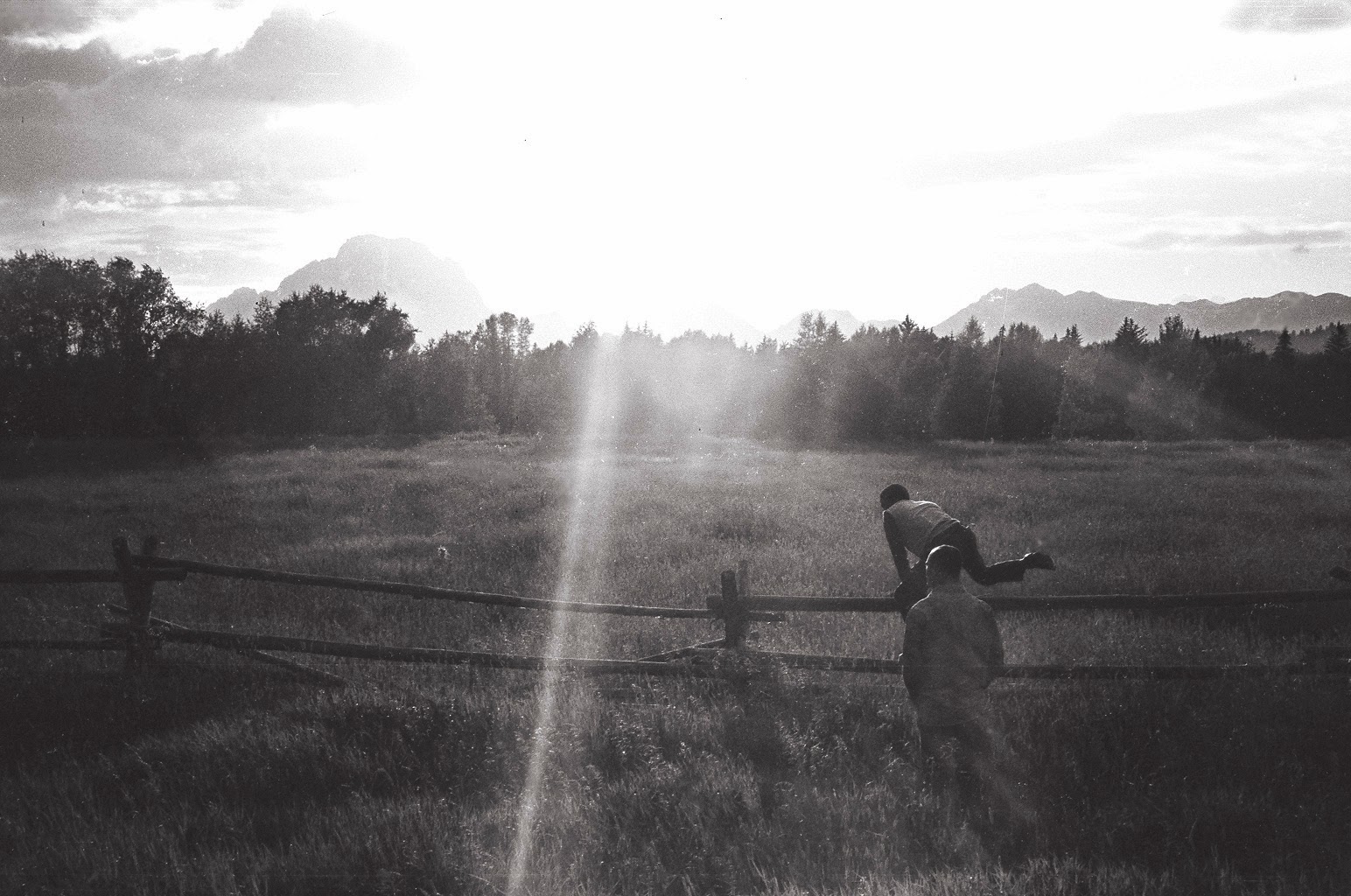
I was back on the road, heading east from Berkeley by car for the first time. Sam, like me, was up for a circuitous route, and I had a camera with me. We drove through Nevada, then Idaho, and on to Jackson Hole, Wyoming, where at sunset I caught a picture of Sam and Theo climbing a over a fence. Later that night we spotted Indians swaying and staggering along the road. We were riding through a Crow reservation as we neared Dubois, Wyoming. In Dubois we ate at a bar while a piano player tickled the keys. We joined him in song before driving off into the night.

By morning we were in my ancestral homeland of Nebraska. Near Valentine we decided to stop and take a jump into the Niabrara River. Sam cut his foot, and got stitches from a doctor in Valentine. I talked to the doc about the war, which he supported. As my family will attest, this was the beginning of a lifetime of bringing up politics with folks anywhere I am -- in an elevator, at a gas station, attending a wedding, on the phone with an operator at a credit card company in wherever. “And what state are you taking this call in? Hope you guys are going to vote out so-and-so!”

In Chicago we went to the Uptown neighborhood, where the JOIN (Jobs or Income Now) Community Union office was located on Argyle. There I met Sandra Cason, aka Casey Hayden, who had just left her work with SNCC in Mississippi after Stokley Carmichael (Kwame Ture) had booted the white members out. Sam and the others left me there.

Cross, cowboy, Conoco, and Wonder Bread truck in Idaho.
Casey and I visited Old Town, a pioneer hip neighborhood and happening place. The night heat was close to unbearable, and the sidewalks were packed with people. A guy on a motorcycle, his squeeze on the back, was jumpy and jittery as he revved his bike, moving through the crowds crossing the street. I suggested to Casey, “Let’s get out of here!” We took the Chicago Northwestern RR to Lake Forest, 30 miles north. It was cooler there, where we stayed at the home of my anthropology Prof Gerry Gerasimo.

The next morning we said goodbye to Gerry and his wife Dottie, who had been a classmate of mine. Casey and I grabbed our stuff and hitchhiked east, stopping for a night at an SDS ERAP project in Cleveland, located in a mostly poor white neighborhood near the Great Lake Erie. The next day, thumbs out, we hitched rides and made it to Connecticut.

We linked up with fellow Berkeley sociology student Nigel Young and his wife Antonia, serious peace activists from England. Nigel told me about writing “U.S. out of Guatemala” on a wall in London in 1956, when he got arrested while trying to figure out how to spell Guatemala. They were quite a couple, he in mod all black: turtleneck, black pants, short black jacket, and pointy-toe black shoes. Antonia wore a big long fur coat. (This was before there was much talk of animal rights.)

All four of us headed west in a gray 1957 Plymouth station wagon “drive-away” that needed to be delivered to California. We stopped at the Custer Battlefield and Museum in Montana, where the park ranger-guide kept referring to “the hostiles” coming over this hill, and doing this or that. With Crazy Horse and Sitting Bull already heroes in my consciousness, I found his rap to be offensive. In Billings we stopped to eat at a place with an adjacent bar that had a dirt floor and a sign “Check guns at door.” That made sense.

We cruised through Yellowstone National Park, took in the geysers, and had our progress momentarily halted while a bull buffalo decided to mosey along the middle of the road. In Idaho we crossed over a mountain and stopped to eat early in the morning. On the jukebox I noticed Johnny Cash covers of Dylan tunes, and thought: “Wow, something is happening here, the times indeed are a-changing.”

A ranch in Idaho.
On a back road we stopped at an abandoned ranch where I found a branding iron. Down the road we had to stop for a herd of sheep. The shepherd was Basque, didn’t speak English, and wore a jean jacket and pants and engineer boots. Later Nigel enlightened us about the struggles of the Basque people in Spain.

Back at school in Berkeley, I was a graduate teaching assistant. Casey was bereft, missing her comrades in Mississippi, and returned to her family’s home in Victoria, Texas. I tried to restart the Oakland Project along with Vivian Rothstein. From 12 of us, we were down to two. We moved into a different house where neighborhood kids ripped us off. Honest talk led to the goods being returned.

Barry and Betty, both of whom had worked in the Newark Community Union Project (NCUP), soon joined Vivien and me in our efforts. We took a trip to a commune near Big Sur. As we approached we heard beating drums, apparently a sunset ritual to help the sun to go down over the Pacific. A number of longhairs came running at us with clubs, but backed off when Barry yelled he was there to see his sister.

It quickly became clear that the Oakland Project had run out of steam. Though my heart was still with the interracial movement of the poor, I needed to figure out the best place for me to help work toward that vision. Knowing now that I wanted to leave Berkeley, to go off campus and organize, I began contemplating my next moves.

[Michael James is a former SDS national officer, the founder of Rising Up Angry, co-founder of Chicago's Heartland Café (1976 and still going), and co-host of the Saturday morning (9-10 a.m. CDT) Live from the Heartland radio show, here and on YouTube. He is reachable by one and all at michael@heartlandcafe.com. Find more articles by Michael James on The Rag Blog.]

The Rag Blog

[+/-] Read More...

20 March 2013

Michael James : Pictures from the Long Haul

Menominee Boys at the Battle of Mole Lake Historic Marker Crandon, Wisconsin, 1978. Photo by Michael James from his forthcoming book, Michael Gaylord James'  Pictures from the Long Haul.
Pictures from the Long Haul:
Duane and the Menominee warriors
Duane was a fast runner, and he was the guy who came through the woods, through the snow, bringing and giving out the word that the Menominee Warrior Society had taken over the Alexian Brother's Abbey.
By Michael James / The Rag Blog / March 20, 2013

[In this series, Michael James is sharing images from his rich past, accompanied by reflections about -- and inspired by -- those images. This photo will be included in his forthcoming book, Michael Gaylord James' Pictures from the Long Haul.]

Back in the 1970's I founded a newspaper and political organization called Rising Up Angry (1969-1975).

We were part of an inspirational coalition, dubbed the Rainbow Coalition by Black Panther leader Fred Hampton. It initially included the Black Panther Party, Young Lords Organization, Young Patriots, and then Rising Up Angry. We claim the Rainbow Coalition laid the groundwork for the election of the late Chicago Mayor Harold Washington. It was his election, and the coalition he put together, that brought the young Barack Obama to Chicago.

I spent a lot of time selling our newspaper, hanging out in parks, neighborhoods, food joints, bars, and schools. We would talk, we would cool out fights, and we promoted the revolution and all issues before us: police brutality, war, racism, imperialism, sexism, health care, legal rights, etc.

Sometime in the early 1970's I was at the statue-monument in the Logan Square neighborhood where young people would hang out, and it was there I met a Menominee Indian by the name of Daryl. He took me to his house nearby, where I met his brother Duane, who was in the act of butchering a live chicken he found who-knows-where.

I'm not sure if it was because I had helped the farmer down the road as a kid in Connecticut, butchering both cows and pigs, and had also worked in a butcher shop at age 14, but in any event, Duane and I became fast friends. We shared our histories, partied together, and I followed his adventures as he and other young natives toured around the country in those wild days of the American Indian Movement (AIM).

I visited Duane and his extended family on numerous occasions up in Neopit, Wisconsin on the Menominee Reservation. We had some great times living on black coffee, canned vegetables, white bread, and meat, taking sweats, and jumping in the Wolf River. In altered states we climbed the fire towers in the night, and chased porcupines near the garbage dump overrun with deer. I was encouraged to get some porcupine quills by hitting the animal with the swing of a t-shirt, a little scary in that altered state even though I knew then that they do not shoot the quills!

Duane was a fast runner, and he was the guy who came through the woods, through the snow, bringing and giving out the word that the Menominee Warrior Society had taken over the Alexian Brother's Abbey in January 1975. Back in those militant days the MWS claimed the Abbey was on Menominee tribal land. Marlon Brando came to the Abbey to help find a peaceful solution.

A couple of years later Duane got himself in a legal jam over in Shawano County, or maybe in Green Bay, neither place known then for good vibes with their Native American neighbors. Duane was sent on a little vacation to the McNaughton Correctional Center in Lake Tomahawk.

I took a run up to the res and picked up his sister Rory and three of his kids, and we went to the facility near Crandon for a wonderful afternoon visit. En route to or from we stopped at a Wisconsin Historical Marker commemorating the battle for the local rice beds between the local Sokoagon Band of Chippewa and Sioux from the west. Over 500 warriors were killed and are buried there.

Shown above are three of my pal Duane's kids at the marker. The photo is included in my forthcoming book, Michael Gaylord James' Pictures from the Long Haul.

[Michael James is a former SDS national officer, the founder of Rising Up Angry, co-founder of Chicago's Heartland Café (1976 and still going), and co-host of the Saturday morning (9-10 a.m. CDT) Live from the Heartland Show, here and on YouTube. He is also president of the local progressive 49th Ward Democratic Party, a member of the Screen Actors Guild, a board member of Athletes United for Peace, and on the advisory panel of the organic watchdog organization, The Cornucopia Institute. He is reachable by one and all at michael@heartlandcafe.com. Find more articles by Michael James on The Rag Blog.]

The Rag Blog

[+/-] Read More...

09 January 2013

Jonah Raskin : In the Wake of Sandy

The Rag Blog's Jonah Raskin in post-Sandy Far Rockaway, New York.

In the wake of Sandy:
An interview with Far Rockaway
community organizer Ofelia Mangen
'I think Sandy is a human disaster. We’re the disaster, not nature. We created it. If you call it a natural disaster, that’s a way to deny responsibility. Experts on climate change have been predicting this kind of storm for at least a decade.'
By Jonah Raskin / The Rag Blog / January 9, 2013

FAR ROCKAWAY, New York -- She’s so thin she hardly casts a shadow on this cold blustery January afternoon. Ofelia Mangen is one of the fortunate ones. She has electricity and heat in her house in Far Rockaway, in a neighborhood hard hit by Superstorm Sandy.

Far too many of her neighbors -- hundreds if not thousands of families -- still don’t have light and heat as of January 2, 2013. Dozens of others have boarded up their homes and have evacuated the area hoping to return in spring and make repairs then. Many feel downright powerless to do anything to improve their living conditions, and it’s months after Sandy, the storm of the century, hit the East Coast.

Relief from the federal government hasn’t arrived in Far Rockaway and no one seems to know when and if it will arrive. (Two days after my conversation with Mangen, the U.S. House of Representatives approved $9.7 billion to pay flood insurance claims for the damage caused by Sandy. The Senate hadn't acted; it would be months at best before citizens received funds to rebuild.

Volunteers have helped immensely. For months, Mangen, who is 30, worked around the clock with all the grit and gumption she could muster. Now, not surprisingly she’s as exhausted as any activist and organizer would be after living through the storm itself and then battling the political storm that followed hard on its heels.

In Manhattan for the day, she’s in need of a little relief and recovery.

Community organizer is a term you won’t find on her hefty resume, though she might add it. She’s a graduate student at New York University (NYU), with heaps of fellowships, though over the past two months, nothing new has been added to her resume. Sandy put her Ph.D. on hold.

After years of seminars, Mangen has trouble thinking of herself as an organizer in a community that sorely needs organizing and organizers. But now that she is, in fact, Far Rockaway’s most visible community organizer she inhabits the role as though she’s spent a lifetime preparing for it.

Abbie Hoffman would embrace her; Tom Hayden would cheer her. Gloria Steinem would yell, “Go Girl, or maybe Go Woman!”

A native of Ohio, Mangen earned a B.S. in visual communication from Ohio University, and an M.A. in media ecology from NYU. As a graduate student working on her dissertation, she conducted research on topics such as the use of technology in crises and how to be a catalyst for positive social change. Indeed, “social catalyst” might define her more precisely than “community organizer.”

Fierce and outspoken, she has a way of reading troubled social situations quickly and knowing what needs to be done to improve them. I’ve known her for years. In November 2012, I visited her in Far Rockaway 10 days after the storm ripped her life apart much as it ripped up the fabric of the whole community. The house in which she was living had been flooded with water from the sea, and the drywall had to be ripped out, along with all the electrical wiring and all the appliances on the ground floor.

Like everyone else for miles around, Mangen was without cell phone service, and without the ability to send and receive emails. Almost immediately, she leapt into action and began to communicate with her neighbors face-to-face and without technology. Everything she studied at school, every paper she wrote, and every article and book she read, seemed to have prepared her for the fallout from Sandy.

When I met her in Manhattan at the start of January 2013, she was just beginning to pick up the scattered pieces of her life. She wore a black cap, a dark vest, and a dark sweater. Sitting opposite me at the kitchen table in a New York apartment owned by mutual friends, Mangen began by discussing communication theory -- encoding and decoding -- but she soon came down to earth and talked about her own experiences and about her neighbors in Far Rockaway.


Jonah Raskin: Why did you throw yourself into relief work and community organizing after Sandy?

Ofelia Mangen: Far Rockaway, which was very hard hit by the storm, is my home and my community. I care about it and the people who live and work there. They were in need and I wanted to help them. But perhaps most of all, I did the work for myself. I haven’t been selfless about it, but rather selfish. I became involved to get my community back. I felt as though I’d lost it. I need it and want it back.

For those who don’t know much if anything about Far Rockaway can you say something about the place?

It’s a peninsula eleven miles long and a part of New York City. The subway -- the "A" train -- runs to Far Rockaway. It has spectacular beaches and it has oceanfront property that has lured real estate developers there. For a long time it was an out-of-the-way place. If you said you were going to Far Rockaway people looked at you as though you were going to fall off the map. It has some very poor sections and some very well-off sections. I’m in the middle.

Do you think of Sandy as a natural disaster?

No not at all. I think Sandy is a human disaster. We’re the disaster, not nature. We created it. If you call it a natural disaster, that’s a way to deny responsibility. Experts on climate change have been predicting this kind of storm for at least a decade. People read the reports about climate change, but they did nothing, made no changes. Sandy was actually very close to the storm that scientists predicted.

The storm made it difficult for you and for others to communicate didn’t it?

Very much so. All the cell phone networks were down. When we were most in need of information, we had the least possible information. If we’re going to survive storms like Sandy we’re going to have to figure out how to communicate more effectively.

When you were able to get in touch with people who did you call?

My sister. I only had a minute. I wanted to let her know I was okay. After I called her, she called my mother and then my mother and sister phoned everyone else in the family and friends, too. They had a kind of phone tree. Now I have a zillion emails to answer.

How effectively did newspapers cover the storm and its aftermath?

The Wave, the local paper, isn’t very good. It hasn’t had a print edition since before the storm; it’s only online now and I don’t trust it. I never did. The information is often inaccurate.

What about The New York Times?

The reporters from the Times didn’t provide a sense of context for the stories they wrote. They didn’t understand that there’s a difference between the Rockaway Peninsula and Far Rockaway, for example, which is a specific community on the peninsula. The nomenclature was off. The Times reporters came and looked around and went home at the end of the day. They didn’t take the time to get to know the place.

Did you become a hub for communication?

I did on my block, Beach Ninety-Second Street. I went around and asked people if they needed anything. I didn’t tell anyone what to do, but if neighbors asked for assistance I provided it. Unlike many residents, I had access to a car and could drive to Manhattan where I could watch TV and read newspapers and find out what was going on. People in wheelchairs, for example, had little mobility and were often isolated. I was able to act as a go-between for them.

Are you able to gage the mood of the community?

What I’ve noticed is that, as the storm passed and receded in memory, people didn’t calm down. In fact, they felt an increasing sense of frustration and despair. When they took the time to reflect, they became more and more angry. Some people are also stuck in depression now.

I would think that in a storm like Sandy the social veneer is peeled away and you see the rifts in the community.

Yes, that’s especially true of the east end of the Rockaway Peninsula, which has been a violent place with poverty and gangs for years. There’s been more violence and more gang activity after the storm. The whole environment has been fractured. Some people probably won’t get their lives back together again; some people and some business will be permanently broken. Others are finding a sense of purpose. I know artists who have come out here and have become community organizers.

Can you stand back and reflect on your own personal experience?

My whole life was upended. I was a college student working on my Ph.D. Sandy wasn’t an intellectual experience. In many ways it was weird. I’m just beginning to understand it. I was at home and in my own house, but I felt that I was in a foreign country and a traveler for two months.

How did you cope?

Well, I have a great support group and a real network of friends. My brother, Andrew, came and he has been a help. I was trying to be Superwoman. I pushed myself to my outer limits. Now, I ‘m resting, eating well, and doing yoga again. I’m getting myself back again.

Did you feel that there was a storm inside you?

I was tossed and turned. All of my emotions were heightened. Everything I did I did intensely. I had moments of anger and I expressed my anger. I put it out there.

Do you think people in Far Rockaway are suffering from Post Traumatic Stress Disorder (PTSD)?

Oh, absolutely! Some people are just now finding out that they have PTSD. Other might not find out for a month or even a year. Some people were on the periphery of the storm and not at the center, but they were still powerfully affected by it, though they’re just discovering how and in what ways.

Does it make sense to compare Sandy to Katrina?

No, I don’t think so. They’re radically different. Katrina affected all of New Orleans. Sandy only affected parts of New York. Katrina was in August, Sandy in November when it’s cold. Now, it’s below freezing; in New Orleans people didn’t have to deal with the cold. Katrina was officially designated a hurricane; Sandy was termed a “Superstorm.” The Gulf Coast is accustomed to hurricanes. New York wasn’t used to anything the likes of Sandy.

Was there disaster tourism in Far Rockaway?

Madonna came out with her entourage in black SUV’s and gave out copies of the Kabala. Some people drove around in their vans and never got out of their vehicles. They looked from behind closed windows.

What about New York Mayor Michael Bloomberg?

His convoy came through. He’s very unpopular now in Far Rockaway. He could do so much; he’s done so little.

I’m reminded of the lines from Roman Polanski’s movie, Chinatown, in which the top L.A. cop tells the detective played by Jack Nicholson, ”It’s Chinatown.” There always seems to be a “Chinatown” -- a place that’s written off, a place where the laws and the rules don’t apply, a place ignored and pushed off to the side.

That’s Far Rockaway. Actually, designating Sandy a "superstorm" prohibits insurance companies from charging a hurricane deductible. Some insurance companies have been documented trying to do so, even though they aren't permitted since Sandy wasn't technically a hurricane when it made landfall. This is a disaster in which ordinary people sorely need the government to help. The government isn’t doing nearly enough to help them. The crisis isn’t over yet.

[Jonah Raskin, a frequent contributor to The Rag Blog, is a professor emeritus at Sonoma State University. The editor of The Radical Jack London: Writings on War and Revolution and the author of James McGrath: In a Class By Himself, he has published interviews on The Rag Blog with Bernardine Dohrn, Eric Foner, Steve Halliwell, Michael Klare, Fred Klonsky, Gus Reichbach, and Allen Young. Read more articles by Jonah Raskin on The Rag Blog.]

The Rag Blog

[+/-] Read More...

18 October 2012

Roger Baker : Which Side Are You On, Austin?

Most Austin City Council members are elected from four affluent zip codes, in red above.

Which side are you on?
The people's plan versus the politicians' plan
The struggle for populist control of the City of Austin government by means of 10 independent district elections can be seen as the 1960s struggle for civil rights brought up to date.
By Roger Baker / The Rag Blog / October 18, 2012

[I make no claim to be unbiased. I fully support and have worked for Proposition 3, which I believe to be the best option to bring more democratic government to Austin. (I also recommend The Austin Bulldog -- Austin's current gold standard for local political reporting -- as the best source to learn more about this issue.) Those who want to participate in what can be a historic victory should contact the 10-1 office -- to make sure that the advantage of people power gets translated into distributed door hangers and yard signs. -- R.B.]

AUSTIN -- Which side are you on? A historic grassroots fight for district representation in Austin, supported by an amazingly broad coalition of citizen groups, has emerged.

It's about money power versus people power. If Proposition 3 is approved by the voters in November, it will be arguably the most meaningful and important Austin populist political victory in decades: a no-holds-barred fight for democratic control of Austin government.

Currently, Austin government is in the hands of six council members plus a mayor, all elected citywide by all Austin voters. As such, Austin is now the biggest city in the United States without districts to bring representative government down to the local level. With Austin's current at-large system, big money tends to dominate Austin City Council elections. This is because non-wealthy candidates who might locally be very popular can't afford the hundreds of thousands of dollars of media buys needed to run big citywide media campaigns.

One result of this is that almost all of the Austin City Council since the 1970s has been elected by a small affluent part of Austin centered in four zip codes -- 78701, 78703, 78731, and 78759 -- which together comprise only 10% of Austin's population. Fifteen out of 17 Austin mayors in the last 40 years have come from this area, as have 50% of the City Council members. Meanwhile, the large numbers of voters in the lower income areas of South and East Austin have elected few Council members.

The struggle for populist control of the City of Austin government by means of 10 independent district elections can be seen as the 1960s struggle for civil rights brought up to date. With 10 districts, there would likely be at least two Hispanic seats on the Austin City Council, plus the high probability of an African-American seat.

It all boils down to a populist battle for control of Austin city government that directly challenges Austin's entrenched political and consultant establishment, largely comprised of Democrats, who have an interest in maintaining control of those who profit from weak development restrictions and growth subsidies. The prevailing interests in Austin government have long favored a banker/developer/land speculator group who profit from suburban sprawl development.

Austin's "growth at any cost" promoters have been in a political alliance with the Texas Department of Transportation  (TxDOT) and the Texas road lobby, building roads with public money to subsidize private growth, often in satellite cities like Round Rock within easy commuting distance.

There is no economy of scale with growth for a sprawling city the size of Austin. Rapid growth of low density sprawl outside the city limits tends to benefit land developers at the expense of existing city taxpayers. There is a lot of money to be made by perpetuating current pro-developer growth policies, both inside and outside Austin city limits. If snubbed by city growth regulations, developers can sometimes get Austin development restrictions weakened or overturned by the threat of going to the Republican-controlled Texas legislature.


Why now?

The people's plan, Proposition 3 on the November ballot, got its start as a result of the fact that the Austin City Council set up a new citizen Charter Review Commission. This group can meet as often as every two years to suggest possible changes to Austin's city charter form of government, subject to subsequent voter approval. When city politicians want to change some basic governance policy, they appoint such a Commission. However there is no guarantee that it will do what they want, or tell them what they want to hear.


Supporters of the 10-1 City Council plan at meeting of Austin's 2012 Charter Revision Committee, Feb. 2, 2012. Image from Trust Austin.

A core group of mostly liberals and political reformers saw this as an opportunity for reform, including veteran political strategist Peck Young and veteran organizer Linda Curtis, and many others (including the author). This citizen group was later known as Austinites for Geographical Representation (AGR), recently renamed "Trust Austin."

AGR started meeting about a year ago in response to this citizen input opportunity. Eventually the group agreed to support a 10-district plan, and urged its members to lobby before the Charter Review Commission. The Charter Review Commission itself, including its chair, former Texas Senator Gonzalo Barrientos, finally, approved the 10-1 citizen plan by a narrow vote They then sent their 10-1 majority recommendation to the City Council.

The City Council, however, saw the 10-1 citizen plan more as a threat than an opportunity for reform. What amounts to an Austin shadow government fought back. Support from the Real Estate Council of Austin (RECA) soon led to the submission of a competing 8-2-1 charter proposal by Mayor Lee Leffingwell, who told the Charter Review Commission that this had to be accepted as a compromise. The battle lines were thus drawn.

The same 8-2-1 plan was decisively rejected by the voters 10 years ago, as had been a number of other attempts to get district representation passed over the last several decades. This spurred the effort to gather at least the 20,000 citizen initiative signatures needed to force the Austin City Council to place the 10-1 plan on the ballot. AGR worked from January and way into the summer this year getting the signatures, ending up with over 33,000 signatures, comfortably more than were required.

The citizen plan, Proposition 3, calls for 10 districts plus the mayor. It is being supported by an amazingly wide-ranging coalition of 29 organizations, including the NAACP and LULAC, the League of Women Voters, the Austin Firefighters and Police Associations, and the Austin Neighborhoods Council. Political support ranges from the Travis County Greens, to Democratic Hispanic groups, to the Travis Republicans and the Austin Homebuilders Association. At least two ex-mayors, Frank Cooksey and Bruce Todd, support it.

Political spending on elections is now largely conducted by political action committees or PACs. It costs a lot to get the word out -- more than $100,000 to do it right. The Populist 10-1 plan has its "Trust Austin" PAC. The politician's plan, 8-2-1, is being promoted by the "Austin Community for Change" PAC .


Why doesn't Austin already have districts?

Austin's current system of at-large elections originated during the era when Austin was much smaller, and has its roots in a racist past. The near win of a city council seat by popular community leader Arthur B. DeWitty in 1951 caused the city to adopt an at-large system. This was then seen as the best way to keep an African-American from winning a seat on the then effectively segregated Austin City Council. This link tells the story.

During the 1970's the on-going conflict between the land development interests nnd the environmental community heated up. Groups such as AARO, the Austin Area Research Organization, were organized to promote business and real estate interests that felt threatened by populist politics. Beginning in 1977, and as part of their program, the business interests that benefited from rapid growth provided enough money to make sure that both an African-American and a Hispanic were always elected to the City Council.

This was the basis of the "gentlemen's agreement," still in effect. Failing to elect at least one African-American and one Hispanic would trigger federal intervention under the 1965 Voting Rights acts. Since Austin was and still rather narrowly is a white majority city, it took a well-funded effort to always elect two minorities to the City Council in order to legally protect the at-large voting system. Retaining business community control of Austin government required the politically active business interests to always promote the two minority campaigns sufficiently to make sure one of each minority would remain in office.

According to KUT, Austin's public radio station,
Ed Wendler and Bill Youngblood were two big players in Austin politics in the ’70s. Peck Young says Youngblood was afraid if there wasn’t Hispanic or African-American presence on the council, the city would be open to a federal lawsuit that might force single-member districts. So they came up with an unspoken rule that the Place 5 council was the “Hispanic seat” and Place 6 was the “African-American seat.” But the agreement wasn’t aimed at encouraging council diversity -- it was aimed at controlling that diversity. “You have minorities, but you don’t have minorities elected by minority voters,” Young said.
In a number of ways, the current fight recalls the earlier epic "Battle for Barton Springs" in 1991. This earlier citizen-led environmental rebellion also led to a grassroots petition effort that succeeded in forcing the issue of environmental reform onto the ballot. Then, as now, an innocent-sounding proposal was placed on the ballot as competition to try to kill the citizens' initiative. Despite the business community's opposition, the 1992 citizens' initiative won big, with the help of united environmentalist support. This led to a successful ordinance to protect the Edwards Aquifer, Austin's fragile recreational and groundwater supply aquifer.

San Antonio already has its own 10-1 system of city government in place, and it works to promote popular leaders of modest means. Having districts doesn't necessarily guarantee good government but it helps. San Antonio's Democratic Mayor Julian Castro was the keynote speaker at the recent Democratic Party convention in Charlotte NC.


The politicians' plan, Proposition 4, has a few problems

The 8-2-1 plan, Proposition 4 on the November ballot, is conspicuously less democratic than 10-1. It was put on the ballot with no signatures, and without much popular support. The photo of a racially diverse group of "supporters" featured on their website is a stock photo they bought.

The politicians' 8-2-1 plan has support from RECA, professional consultants, and political power brokers; it amounts to a full employment act for a handful of campaign consultants. One reason that the current City Council voted to put the politicians' plan on the ballot is the pressure brought about by political strategist David Butts, a top strategist in the 8-2-1 campaign, who makes his living largely from City Council and other local political races. The way Prop. 4 is written it would allow the council to draw and gerrymander the 8-2-1 districts in such a way as to keep their seats. The current City Council members live relatively close together, and without some creative design of the new districts, many would likely end up within the same districts.

The main Austin media have not been neutral. In July, the Austin Chronicle featured a story by news editor Michael King titled "Point Austin: The Usual Suspects; The argument over council districting takes a nasty turn." King's biased political coverage in this case elicited a strong rebuke from UT law professor and national expert on election law, Steve Bickerstaff. He had been a pro-bono adviser for 10-1 on its legality, but had remained otherwise neutral, declining to advocate for either ballot Proposition. Prof. Bickerstaff does believe in fair reporting, however, and the Chronicle spin was too much.
...the Chronicle story was catty, cynical, biased, and poorly reasoned -- unlike most articles written by Michael King. AGR has secured more than 33,000 voter signatures on its petition, the support of many different community organizations, and the recommendation of the Charter Revision Committee. Whether or not Mr. King or the Chronicle supports the group's 10-1 proposal, they should respect this outstanding achievement and laud the vision and hard work evidenced in this exercise of democratic rights.

Council Member Mike Martinez explained his vote in favor of putting this proposal (unchanged) on the ballot as a means of recognizing this group's achievement. Supporters of an 8-2-1 election system could have used a petition drive to show the degree of public support for their plan; they did not.

Also, I was surprised that the Chronicle, which has been so critical of the gerrymandering and self-interest shown in redistricting by the Texas Legislature, could be dismissive of an independent redistricting commission at the city level. Independent commissions have operated successfully in California at the state level and in a number of cities, such as San Diego and Minneapolis. They can take much of the self-interest and politics out of redistricting.

The Chronicle should be supporting the need for an independent commission in Austin as an essential part of any charter amendment changing from our at-large system. The Charter Revision Committee (13-2) politically endorsed creation of an independent commission. Many of the members of the City Council that the Chronicle identifies as preferring an 8-2-1 plan have voiced support of such a commission. Election district lines should not be drawn by the same politicians who seek election in those districts, or by committees appointed by such politicians.
It might be argued that as a halfway step in the direction of democratic district government, 8-2-1 is better than what we have now. However, its real impact, and the reason for the City Council putting it on the ballot very late in the game, is to act as a sort of a poison pill proposal. It was placed on the ballot in response to wide support for 10-1, with the hope of attracting enough votes away from the 10-1 plan to kill the latter.

The politician's plan, the 8-2-1 plan, would appear to have one important flaw. It invites a legal challenge since it seems to be incompatible with the Voting Rights Act of 1965. Proposition 4 would be subject to legal challenge because Austin's African-American population -- which is about 7 percent of the city's total population -- has largely been forced out of its historic areas of concentration in East Austin over recent decades by a combination of gentrification and high property taxes.

This means that it will take a lot of districts of equal size, at least 10, to be able to draw one with sufficient African-American concentration to make it reasonably easy to win an election without outside support, particularly from the business community. With any fewer than 10 districts, according to recent census data, no contiguous district can be drawn that would give Austin's remaining African-American population a legally defensible ability to elect their own representatives.


Bottom Line: Reasons to support Proposition 3 in the November 2012 Austin election, 10-1, the People's plan:
  1. Citizen Districts: The 10-1 plan would establish a Citizen Redistricting Commission which would exclude city politicians, lobbyists, and consultants. The record shows that political insiders tend to draw gerrymandered district maps that favor their own interests.
  2. The 10-1 plan makes all neighborhoods equal, and ends the current concentration of power in a small part of Austin.
  3. Every vote becomes more important. The more districts, the more the candidate’s merit and local appeal become important.
  4. It is supported by 29 major organizations and 33,000 petition signatures gathered following a year-and-a-half-long transparent process (fully reported in The Austin Bulldog).
  5. At least 10 districts are required for a geographic representation system to be legally defensible for Austin under the Voting Rights Act.
  6. The 10-1 plan ends Austin’s racist “gentleman’s agreement” because minorities can best choose their own representatives.
Reasons to oppose Proposition 4, the 8-2-1 Politician's plan
  1. Lacking the safeguards in the 10-1 plan, the 8-2-1 plan allows Austin districts to be gerrymandered by politicians, lobbyists, and consultants.
  2. The two at-large districts retain the unequal legacy of the four privileged ZIP codes.
  3. Having only eight districts denies African-Americans an opportunity district, meaning it will very likely be challenged in court.
  4. The mayor and the two at-large council seats will tend to remain controlled by the special interests.
  5. It perpetuates the “gentleman’s agreement” by which African-American and Hispanic seats can be chosen by power brokers.
  6. As a ploy to defeat the people's plan, the 8-2-1 plan was put on the ballot by politicians with very little grassroots citizen input, even though the same plan failed by a wide margin 10 years ago.
For those who wish to follow the populist fight for Austin district representation in depth, to understand how we got to this point of decision over the past year and a half, the outstanding source is veteran investigative reporter Ken Martin's pro-bono, online Austin political journal, The Austin Bulldog. There are several dozen Bulldog stories on the citizen meetings that led to the People's 10-1 district representation plan, dating back to March 2011, linked here.

By contrast, Austin's daily newspaper, the Austin American-Statesman and Austin's sporadically liberal alternative weekly, The Austin Chronicle, have offered sparse and politically slanted coverage of the Austin district issue.
[Roger Baker is a long time transportation-oriented environmental activist, an amateur energy-oriented economist, an amateur scientist and science writer, and a founding member of and an advisor to the Association for the Study of Peak Oil-USA. He is active in the Green Party and the ACLU, and is a director of the Save Our Springs Association and the Save Barton Creek Association in Austin. Mostly he enjoys being an irreverent policy wonk and writing irreverent wonkish articles for The Rag Blog. Read more articles by Roger Baker on The Rag Blog.]

The Rag Blog

[+/-] Read More...

30 January 2012

Lamar W. Hankins : The American Values of Saul Alinsky

Community organizer Saul Alinksy. Image from Addicting Info.

Saul Alinsky’s American values
'The Radical... is that person to whom the common good is the greatest personal value. He is that person who genuinely and completely believes in mankind.' -- Saul Alinsky
By Lamar W. Hankins / The Rag Blog / January 30, 2012

These days, I don’t often think of Saul Alinsky, but now that Alinsky’s name has been used to slur President Obama in frequent speeches by self-promoting historian Newt Gingrich, it’s time to look at who Alinsky was and the values he stood for.

Gingrich obviously knows little about Alinsky, who died almost 40 years ago. Certainly, the only two things Barack Obama and Saul Alinsky have in common is that both lived in Chicago and Obama did some work as a community organizer, but he was hardly the sort of community organizer Alinsky was.

At recent campaign stops in Florida, Gingrich said,
We need somebody who is a conservative and who can stand up to him (Obama) and debate and who can clearly draw the contrast between the Declaration of Independence and the writings of Saul Alinsky... The centerpiece of this campaign, I believe, is American exceptionalism versus the radicalism of Saul Alinsky... President Obama believes in Saul Alinsky's radicalism [and] a lot of strange ideas he learned at Columbia and Harvard.
Unfortunately, this is the exact opposite of reality.

In 1970, I was able to participate in a small community organizing training session in Austin conducted by Alinsky. Although I never worked full time as a community organizer, I found his ideas profoundly democratic, egalitarian, compassionate, realistic, and in keeping with every enlightened attitude expressed in this nation’s founding documents.

Without doubt, Alinsky saw himself as a radical, but not in the revolutionary or pejorative sense of that word. Alinsky wanted to get at the root of societal problems, not overturn our democratic system of government. In fact, Alinsky believed in and practiced democracy more fervently than any candidate now in the race for president.

Alinsky had the same vision and love of America found in Walt Whitman’s poetry. What Whitman was to poetry, Alinsky was to making democratic institutions serve the interests of the 99%. In the first chapter of his seminal book, Reveille for Radicals, published in 1945, Alinsky warmly identified with the diverse masses of the American people. He wrote that “During Jefferson’s lifetime the words Democrat and Radical were synonymous.”

Democrats and radicals were the few “who really liked people, loved people -- all people,” no matter their race, ethnicity, religion -- and were proud to be branded “radicals.”
They were the human torches setting aflame the hearts of men so that they passionately fought for the rights of their fellow men, all men... They fought for the right of men to govern themselves, for the right of men to walk erect as free men and not grovel before kings, for the Bill of Rights, for the abolition of slavery, for public education, and for everything decent and worth while. They loved men and fought for them. Their neighbor’s misery was their misery. They acted as they believed.
(Using the vernacular of the time, “men” meant humankind and was not intended to omit women.)

Alinsky identified America’s radicals as Patrick Henry, Sam Adams, Tom Paine, John Brown, Thaddeus Stevens, Horace Mann, Wendell Phillips,, Peter Cooper, Walt Whitman, Henry George, Edward Bellamy, John P. Altgeld, Henry D. Lloyd, Lincoln Steffans, Upton Sinclair, Bishop Bernard Sheil, and many others who stood with the masses of people fighting for the general welfare of all:
What is the American Radical? The Radical is that unique person who actually believes what he says. He is that person to whom the common good is the greatest personal value. He is that person who genuinely and completely believes in mankind. The Radical is so completely identified with mankind that he personally shares the pain, the injustices, and the suffering of all his fellow men. He completely understands and accepts to the last letter those immortal words of John Donne (that "no man is an island")...

[The Radical] wants a world in which the worth of the individual is recognized. He wants the creation of a kind of society where all of man’s potentialities could be realized; a world where man could live in dignity, security, happiness and peace -- a world based on a morality of mankind.
Alinsky dedicated his life to working for a society that would eradicate “all those evils which anchor mankind in the mire of war, fears, misery, and demoralization.” He fought for economic welfare; for the freedom of the mind; for political and social freedom; for “a high standard of food, housing and health” for all; for placing human rights “far above property rights”; for “universal, free public education,” which he saw “as fundamental to the democratic way of life”; for social planning that came from the bottom up, rather than from the top down.

Alinsky believed that jobs should be both economically rewarding and personally satisfying to the creative spirit, what he called “a job for the heart as well as the hand.”

Most of all, Alinsky fought against privilege and power “whether it be inherited or acquired by any small group, whether it be political or financial or [from] organized creed.” To Alinsky, the American Radical “will fight any concentration of power hostile to a broad, popular democracy, whether he finds it in financial circles or in politics.”

Alinsky disdained both conservatives and liberals. Liberals he saw as mostly hypocritical people who espoused his values, but did not live according to them. Liberals paralyze themselves into immobility by their inability to take a stand for political and economic justice based on true democracy. For Alinsky, it was essential to be partisan for the people; otherwise, for whom are you partisan?

Alinsky did not try to explain conservatives. He thought they were not worth explaining because they did not accept the American values he saw as essential for democracy. For Alinsky, only the Radical got it right: “The Radical does not sit frozen by cold objectivity. He sees injustice and strikes at it with hot passion. He is a man of decision and action.”

He described liberals as people who “fear power or its applications”:
They labor in confusion over the significance of power and fail to recognize that only through the achievement and constructive use of power can people better themselves. They talk glibly of a people lifting themselves by their own bootstraps but fail to realize that nothing can be lifted or moved except through power.
Now conservatives are the ones who talk this way.

Alinsky spent most of his life helping organize together the existing organizations in a community to find the power to change the lives of the people in that community. But during World War II, Alinsky’s disdain for fascism took him away from domestic organizing for a time. He described his war role in a Playboy Magazine interview shortly before his death:
I divided my time between a half-dozen slum communities we were organizing, but then we entered World War Two, and the menace of fascism was the overpowering issue at that point, so I felt Hitler's defeat took temporary precedence over domestic issues. I worked on special assignment for the Treasury and Labor Departments; my job was to increase industrial production in conjunction with the C.I.O. [Congress of Industrial Organizations] and also to organize mass war-bond drives across the country.

It was relatively tame work for me, but I was consoled by the thought I was having some impact on the war effort, however small... The Assistant Secretary of State blocked [direct military service for me] because he felt I could make a better contribution in labor affairs, ensuring high production, resolving worker-management disputes, that sort of thing.
Alinsky’s first community organizing effort started with the Back of the Yards area of Chicago -- the area where the meatpacking industry was located. My friend the late Paul Gorton Blanton, in his unpublished work The Outside Agitator, adapted from his doctoral dissertation, described the Back of the Yards area when Alinsky started organizing there in 1938:
Even for this late stage of the depression, unemployment was high. Street gangs ran wild. Racketeers were regarded by many as folk heroes. Police protection was rare. The filth of the neighborhood’s broken streets and alleys added to the environment of decay and despair. Garbage was commonly tossed into the alleys, and was later collected by a man with a shovel, a wagon, and a team of horses.

Neighborhood banks often failed during these depressed thirties, resulting in the loss of savings by many poor families. Mortgage foreclosures were frequent. Health care was grossly inadequate, particularly for children and the elderly. The inevitable cycles of poverty and disease brought about a neighborhood mood of hopelessness.
Alinsky organized disparate groups, even those who saw themselves as natural enemies, such as the C.I.O.’s Packinghouse Workers union and the Catholic Church, into an organization of organizations that identified the community’s most pressing problems and devised ways to eliminate them.

According to Blanton, “Clusters of families, groups, clubs, businesses, and economic enterprises, through which individuals in the community found their own identity” became, together, The Back of the Yards Neighborhood Council. Over several years, the Council took on and solved problems in health care, unemployment, education, nutrition, sanitation, fire safety, juvenile delinquency, and other matters.

The creation of a credit union that offered 1% loans drove most loan sharks and small finance companies out of the neighborhood. As a result of health services introduced by the Council, in just over one year infant mortality dropped from 10% to 1.5%, a free chest x-ray program was established to fight tuberculosis, a free dental program was developed, and water fluoridation was achieved.

Through other efforts, 2400 new jobs were created for neighborhood residents. Later, a free lunch program was created. Over the years, the Council lobbied successfully in both the Illinois state capital and before Congress for school-based food programs, including a free or reduced-price milk program that Congress instituted in 1955.

Part of Alinsky’s success was his brilliance at devising strategies and tactics that moved the power elites to respond to the demands of the people. He was able to analyze those in power and take advantage of their vulnerabilities, often by exposing their hypocrisy and corruption, and by using ridicule.

Once, when the first Mayor Daley who ran Chicago calculated that he could back out of some agreements he had made with another organization Alinsky had created in Chicago -- The Woodlawn Organization (TWO) -- Alinsky devised a strategy to embarrass Daley by creating havoc in Daley’s pride and joy -- the O’Hare Airport.

Some TWO members researched the number of toilets and urinals at O’Hare and determined they could recruit 2,500 people to occupy all the toilets and line up four or five people at each urinal, and then rotate from urinal to urinal, making it impossible for most passengers just arriving at O’Hare to use a restroom.

When the word of this plan leaked to Daley, he had visions of vast numbers of travelers, desperate to relieve themselves, urinating in his pot plants at the airport. Daley capitulated instantly and TWO never again had problems with getting him to fulfill his promises to them.

Alinsky and his acolytes organized similar groups in many locations throughout the country. Their organizational efforts and tactics weren’t always successful, but most of them were.

Whatever Obama may have learned about organizing has not manifested itself in the partisan politics he has pursued since the time he worked in Chicago as a community organizer. Nothing in his manner or actions leads me to think that he is a follower of Saul Alinsky. Obama was still nine years old when Alinsky died. There is no evidence that he ever met Alinsky or was influenced by him.

I devoutly wish that Obama had Alinsky’s mindset, values, instinct, and creativity, and would use those characteristics against those who want the government to fail in its stated goal of securing the blessings of liberty for all the American people. But Obama has failed to be the sort of person I once thought he was. Still, there is no one else in the running for president who will come close to doing better.

Once again, Newt Gingrich has proven his ignorance about a historic figure that he claims to understand and about whom he likes to pontificate. Ironically, one group that is proving to be a strong supporter of both Gingrich and Ron Paul has also heaped praise on Alinsky. The Tea Partiers are studying Alinsky’s second book, Rules for Radicals, as they attempt to influence the political system to do their bidding.

They have had minimal success following Alinsky’s example, probably because they lack Alinsky’s aplomb and creativity, but mostly because they don’t share Alinsky’s values. This irony further exposes Gingrich as a faux historian who invents narratives to advance his political ambitions. He will never understand that Alinsky’s values can be traced directly back to the spirit of 1776.

[Lamar W. Hankins, a former San Marcos, Texas, city attorney, is also a columnist for the San Marcos Mercury. This article © Freethought San Marcos, Lamar W. Hankins. Read more articles by Lamar W. Hankins on The Rag Blog.]

The Rag Blog
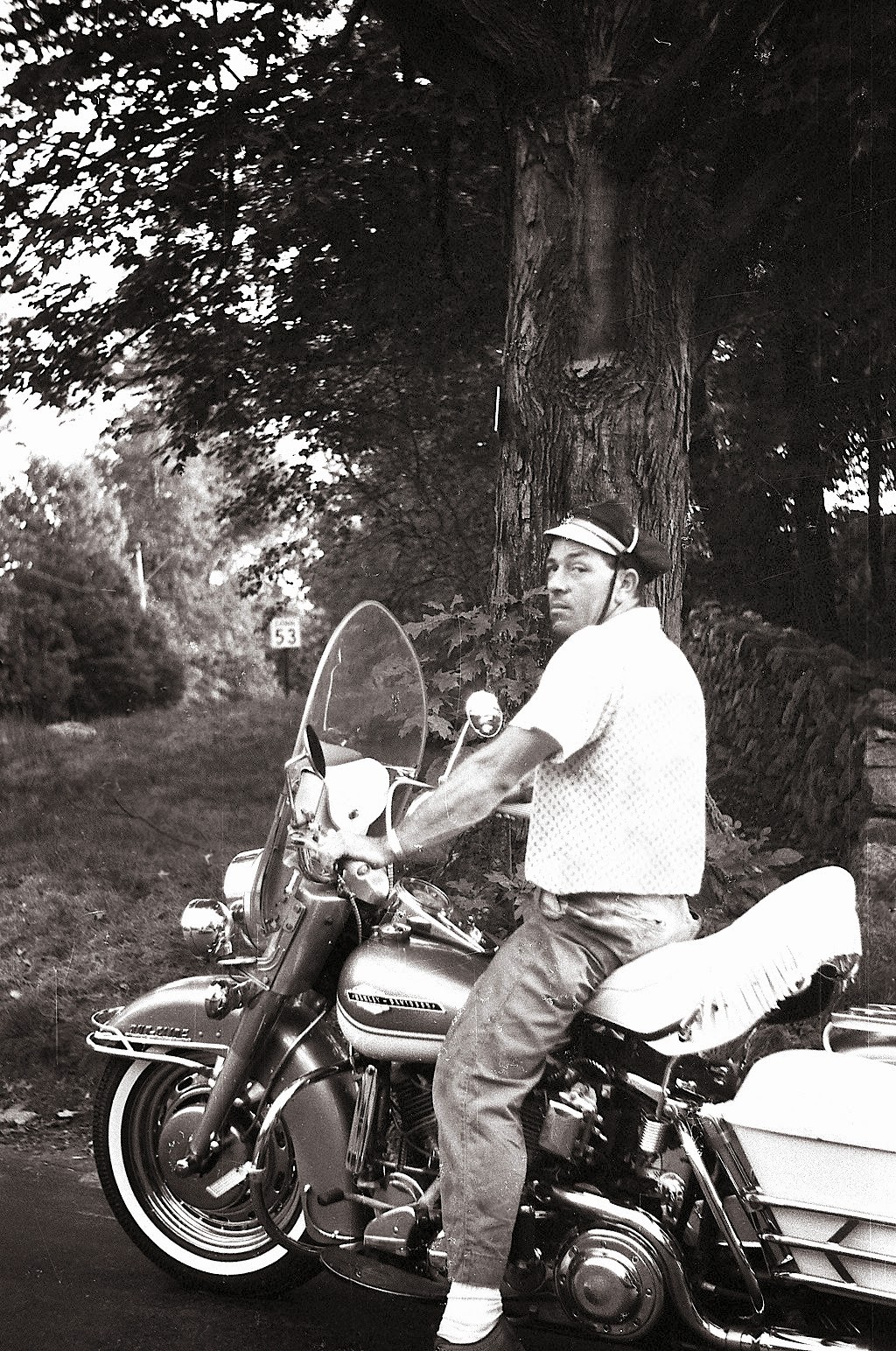
[+/-] Read More...

Only a few posts now show on a page, due to Blogger pagination changes beyond our control.

Please click on 'Older Posts' to continue reading The Rag Blog.