Showing posts sorted by relevance for query marilyn buck. Sort by date Show all posts

19 July 2010

Thorne Dreyer : Poet Marilyn Buck Freed After 25 Years in Prison

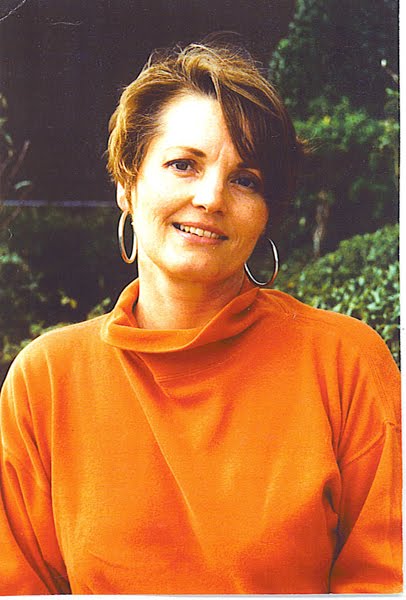
Poet-activist Marilyn Buck was released from a federal prison hospital on July 15, 2010. Photo taken at Dublin Fci, 1998. Photo from The Rag Blog.

Poet and political prisoner Marilyn Buck
Freed after 25 years in federal prison


By Thorne Dreyer / The Rag Blog / July 19, 2010

AUSTIN -- Marilyn Buck is free.

Marilyn Jean Buck, 62, who served 25 years of an 80-year sentence in federal prison for crimes related to her actions in support of the black liberation movement, was released from the federal prison medical center in Carswell, Texas, July 15, 2010. She was paroled to New York City.

Buck, who was considered to be a political prisoner, became a respected and widely published poet while incarcerated.

Last December Buck -- who grew up in Austin -- was diagnosed with a rare form of cancer, a uterine sarcoma. She underwent surgery and chemotherapy for the cancer in prison, but treatment was eventually suspended after it was determined that her body could tolerate no more chemotherapy.

Representatives of her support group, the Friends of Marilyn Buck, announced on July 15:
Our beloved sister, friend and comrade, Marilyn Buck, is out free! She was released from the prison hospital this morning and is on her way to New York.
The Rag Blog’s Mariann Wizard spoke with Buck shortly after her release. Wizard reports:
She is elated, she is exhausted. Her spirits are high, in large part because of the strong support she has received through the years from hundreds of people around the world. She asked me to "please thank everyone" for their support.
The crimes for which Marilyn Buck was convicted included assisting in the 1979 escape from a New Jersey prison of Assata Shakur, who was a Black Panther and a member of the Black Liberation Army. She was also charged in the 1981 robbery of a Brinks armored car in which $1.6 million was stolen and two police officers were killed, and in the “Resistance Conspiracy” trial in which six activists were charged with several bombings, including a 1983 bombing of the U.S. Senate building. These bombings were preceded by warnings and involved only property damage.

There is substantial precedent for considering Marilyn Buck a political prisoner, even though some of the crimes for which she was convicted might not be viewed as explicitly political. Courts have determined that crimes committed with political motives or in a political context should be treated differently from other crimes.

Healing ceremony led by Austin shaman Maria Elena Martinez, at community benefit for Marilyn Buck on June 25, 2010, in Austin. Photo by Carlos Lowry / The Rag Blog.

Mariann Wizard, Marilyn’s friend since 1966 -- and also a poet -- was the primary organizer of a highly successful community-wide benefit for Marilyn Buck on June 25 in Austin, calling for Buck’s immediate release for humanitarian reasons. It featured live music, poetry reading, an art auction, a healing ceremony, and remarks of support from former Black Panther Robert Hillary King, who spent 32 years in Angola Prison as part of the Angola 3.

Wizard wrote a feature story, "Warrior-Poet Marilyn Buck: No Wall Too Tall,” that was published in The Rag Blog on May 19 and has been widely republished. In the article Wizard discusses the crimes for which Buck was charged, and places them in the context of the times in which they occurred.

Mariann wrote:
Marilyn was accused of sensational acts of insurrection... Many otherwise liberal-minded Americans are unable to get past the violence of the confrontations between the police and the small groups of Black and white revolutionaries with whom Buck was linked. Many committed leftists criticized the militants as foolhardy adventurists.

Neither give due weight to the extraordinary repressive measures undertaken by the U.S. government to crush lawful dissent against unjust policies at home and abroad. Behind the shadow of COINTELPRO (the FBI's Counter Intelligence Program), law enforcement agencies operated outside the rule of law against Movement activists...

To be an African-American dissident, especially, meant walking around with a "shoot-to-kill" sign pinned on your chest.
While acknowledging that many, including Marilyn, now question or reject some of the tactics used at the time, Wizard said, “She dared to support with deeds what we only said we supported: the right of oppressed people to defend themselves.”

In 2001, Marilyn Buck told Monthly Review:
I think about the vision I had when I was a nineteen-year-old of justice and human rights and women’s equality. It was a wonderful vision. I think [that] how... we became rigid and rhetorical within that -- took away from that vision. But without a vision, you can’t go forward.
Wizard wrote in The Rag Blog:
Reading her letters, poems, and essays over all these years, I've seen her extraordinary evolution, witnessed the maturation of an articulate, responsible, disciplined, ethical mind.
Marilyn Buck earned a masters’ degree while incarcerated.

Her poems can be found in many collections, in her chapbook, Rescue the Word, and on her CD Wild Poppies. She was awarded the P.E.N. American Center poetry award in 2001. In 2009 City Lights Books published her translation of Uruguayan poet-in-exile Cristina Peri Rossi’s collection, State of Exile.

Her political writings have also been widely published.

1966 UT-Austin police surveillance photo from anti-war rally. From left, Liz Jacobsen (Liz Helenchild), Terry Dyke, and Marilyn Buck. Photo from The Rag Blog.

Marilyn Buck was born in Temple, Texas, but grew up in Austin where her father, the late Louis Buck, was an Episcopal priest at a predominantly African-American church. Louis Buck, an avid civil rights activist, was removed from his ministry after his sharp criticism of the church hierarchy over the refusal of a local segregated Episcopal school to admit two black members of his congregation.

As a student at the University of Texas she became involved in civil rights organizing and in the movement against the war in Vietnam. She was active with the Students for a Democratic Society (SDS) and worked with Austin’s underground newspaper, The Rag.

She later edited the SDS national newspaper New Left Notes and worked in the women’s movement. In the 1970s she became increasingly involved in the fight against racism and in opposition to U.S. imperialism, and committed to active support for the black liberation struggle.

Mariann Wizard reports:
Marilyn is now on parole in New York -- and with her 80-year sentence that is unlikely to change -- so her first tasks are to comply with her parole requirements and try to stabilize her health, but it is very clear that she still has much to contribute to the struggle for human rights and economic justice, as well as to poetry. It has been a very long road to freedom.
[Thorne Dreyer lives in Austin where he is a director of the New Journalism Project, edits The Rag Blog, and hosts Rag Radio, a weekly radio show on KOOP 91.7 FM. He was active in SDS in the Sixties and was a founding editor of The Rag in Austin and Space City! in Houston. He can be reached at tdreyer@austin.rr.com.]

UPDATE: Marilyn Buck died on August 3, 2010, in New York City. Please see Mariann Wizard's article on The Rag Blog.

The Rag Blog

[+/-] Read More...

30 June 2010

Austin Benefit : Friends Support, Celebrate Marilyn Buck

Robert King, former Black Panther and member of the Angola 3, speaks in support of Marilyn Buck at June 25 benefit in Austin. Photo by Alan Pogue / The Rag Blog.

Lively Austin gathering benefits
Political prisoner Marilyn Buck


By Mariann G. Wizard / The Rag Blog / June 30, 2010

AUSTIN -- A community-wide benefit for former Austinite and long-time political prisoner Marilyn Buck, on Friday, June 25, was a success on all levels. The event was co-hosted by The Rag Blog/New Journalism Project and NOKOA/The Observer, along with six other community groups and businesses, and supported by a lengthy roster of contributors.

A spokesperson for Youth Emergency Service, Inc. (YES, Inc.)/The Phogg Phoundation for the Pursuit of Happiness, the tax-exempt fiscal sponsor for the event, expressed confidence Monday that, when all receipts are counted, the event will meet or exceed its fundraising goal.

The evening was also a great chance for people to interact in a relaxed, easy-going atmosphere. Building community is a common goal for all eight hosting groups.

Host committee member Tania Rivera of Ex-Pinta Support Alliance (ESA) agreed. “It was a beautiful sight to see both the younger and older generation of our community join in solidarity to support Marilyn Buck’s release from prison. As an ex-pinta [“pinta” is Spanish for “female prisoner”], I was reminded of the importance of my commitment to struggle against the oppression of those left inside the cages, and for those coming home in exile.”

Marilyn Buck, imprisoned for 25 years for politically-motivated crimes committed in the 1970s and 1980s, is the daughter of the late former Episcopal priest Louis Buck, prominent in civil rights activity here in the early 1960s. Some attending the benefit were influenced by the elder Buck while they were students at UT Austin; some had participated with him in the struggle to end “Jim Crow” discrimination.

Other attendees had never met either Buck, but know of Marilyn through her acclaimed poetry, her contributions to political journals, or the sometimes exaggerated story of her days as an urban guerrilla that has evolved while she’s been behind bars.

Friday’s benefit, at a private East Austin riverfront estate, featured music by country/folk singer/songwriter Karen Abrahams and friends, activist songwriter Joe P. Carr, and the conscious hip-hop stylings of Riders Against the Storm. Poets Jorge Antonio Renaud and Henry Gonzalez read from their work, and some of Marilyn’s poems were read to the receptive crowd.

Event organizer Mariann Wizard with Akwasi Evans, editor of the progressive Austin weekly, NOKOA/The Observer. Photo by Alan Pogue / The Rag Blog.

Maria Elena Martinez, a shaman, medicine woman, and leader in Austin’s La Alma Mujer Council, led a healing ceremony for Marilyn, who now has a serious cancer. Under a brilliant full moon, participants held hands in a great circle, connecting to the four directions, the sky, the earth, and their own hearts, as they sent positive energy to Buck, now being treated in a prison hospital in Ft. Worth.

An art auction featuring works from several artists and collectors, including award winning documentary photographer Alan Pogue, noted painter Madelon Umlauf, co-host South Austin Popular Culture Center, and Houston “working class artist” Robert Al-Walee, drew many bids during the evening..

In addition to raising funds to help Marilyn when she is released on parole in August, and hopefully aid her recovery, organizers also honored her commitment to her ideals even while imprisoned. Without revisiting all of her decisions in an era of heavy government repression against radical groups, they cited factors that made her actions something other than criminal. The slogan for the event, “Free Marilyn Now," urges speedy consideration of a request by Buck’s attorney for accelerated compassionate release, in light of her life-threatening illness.

Al-Walee, a former member of the Black Panther Party, likens Marilyn’s actions in opposition to racial oppression to those of pre-U.S. Civil War firebrand John Brown, except that in Buck’s case, she was not in the forefront of an imminent outbreak of hostilities. “When a revolutionary succeeds, he or she is revered as a hero, but success depends on many factors. Marilyn’s actions took place when repression was in the ascendancy, so she is treated as a common criminal.”

Two policemen and a Brinks security guard died in attempted robberies in which Buck and other members of what became known as the “Resistance Conspiracy Case” took part, and public property was damaged in bombings protesting U.S. foreign interventions.

Fugitive members of the radical underground, Marilyn and her co-defendants in this complicated, lengthy, multi-layered case represented the last vestige, in 1985, of what had, 15 years earlier, been a broad-based cultural and political “revolution." While some goals of that movement had been then and still are being realized, its hopes for fundamental, systemic changes in our economic and political system remain far from realized.

The benefit also launched discussions in some quarters about the existence of political prisoners in the U.S. today, and what that means or should mean to the rest of us. Robert King, a local author and former political prisoner as one of the “Angola 3," featured speaker at the benefit, also tackled the issue in programs on KOOP Radio earlier in the week and in his remarks Friday.

Born poor and black in Louisiana in the 1940s, his eventual encounter with the criminal injustice system was almost inevitable. Convicted of a crime he didn’t commit, his increasing political awareness and membership in the Black Panther Party helped him see that he had “been in a minimum security prison” all along.

King was held on what would later be acknowledged as false charges for 29 years in solitary confinement in Angola State Penitentiary. “We are all political prisoners,” he says, “only some are held in harsher conditions than others. Marilyn Buck’s confinement has been extremely harsh, and she deserves to come home.” A BBC documentary about the Angola 3, In the Land of the Free, narrated by Samuel L. Jackson, has recently been released to critical acclaim.

Some benefit guests traveled from San Antonio, San Marcos, and the Dallas-Ft. Worth area to attend. Other hosts were Ecology Action, One Love Kitchen, and Resistencia Bookstore/Red Salmon Arts.

To make a contribution to Marilyn Buck’s support, please send your check or money order to YES, Inc; PO Box 13549, Austin, TX 78711, with a note that it is for this purpose. Contributions are tax-deductible to the extent allowed by applicable tax law.

[Mariann Wizard, a Sixties radical activist and contributor to The Rag, Austin's underground newspaper from the 60s and 70s, is a poet, a professional science writer specializing in natural health therapies, and a regular contributor to The Rag Blog.]
The Rag Blog's Mariann Wizard (left) with Marilyn Buck at Dublin FCI in 1996.
Marilyn Buck's bout with cancer

[The following update on Marilyn Buck's condition comes to us from Friends of Marilyn Buck.]

Marilyn has received her last chemo treatment at the hospital and is now back at the prison, receiving palliative care. She has undergone as much chemo as her body can tolerate. She feels that her medical care has been similar to what she would be getting in the free world, and that her doctors have been both competent and respectful of her. She is also receiving support from her sister-prisoners who are able to visit with her.

She's been having very good visits with her family, and continues to feel the love and support of so many people who are meditating with her, sending her cards and generally keeping her in their thoughts.

Every effort is being made by her attorney to secure an early release. Marilyn asks that people not initiate their own letter-writing or phone campaigns for her release, as these are likely to be counterproductive. Should the situation change and such a campaign be deemed helpful, we'll let everyone know right away.

In spite of the serious situation she faces, Marilyn's spirits remain incredibly strong and her energy is focused on coming home to be with the people who love her.

Singer/songwriter Karen Abrahams performs, with Mike Landschoot (left) and Richard Bowden.

Activist/songwriter Joe P. Carr at the benefit for Marilyn Buck.


Poet Jorge Antonio Renaud spoke and read from his work Photos by Alan Pogue / The Rag Blog.

The Rag Blog

[+/-] Read More...

03 August 2010

Mariann G. Wizard : Poet/Political Prisoner Marilyn Buck Dies in New York

UPDATED Wednesday, Aug. 4 at 9:03 a.m. (CST)

Marilyn Buck was released from prison July 15, 2010.

Recently released from Texas prison:
Cancer takes poet Marilyn Buck


By Mariann G. Wizard / The Rag Blog / August 3, 2010

AUSTIN -- Friends of long-time political prisoner, former Austinite, and acclaimed poet Marilyn Buck, 62, were saddened by news of her death at the home of her attorney Soffiyah Elija, early Tuesday, August 3.

Buck was released from the federal prison medical center in Carswell, Texas, July 15, 2010, and was paroled to New York City.

Buck served 25 years of an 80-year prison sentence for politically motivated crimes undertaken in opposition to racial injustice and U.S. imperialism. As a prisoner, Marilyn, while moderating her ideas about methods, continued to stand tall for her beliefs.

A selfless advocate for others, especially in the arena of prison medical care, Marilyn was diagnosed late last year with a uterine sarcoma, a rare and aggressive cancer, too late for treatment to save her life.

While attending the University of Texas at Austin, Buck became involved in the civil rights and anti-war movements, and worked with SDS and the underground newspaper, The Rag. In the following years she became increasingly committed to and active in support of the black liberation struggle in this country.

Buck is survived by three brothers; several cousins; her long-time counselor, Jill Soffiyah Elijah; and loving friends worldwide. Her parents, Dr. and Mrs. Louis Buck, who both pre-deceased her, were leading civil rights activists in Austin in the early 1960s.

According to sources close to Marilyn's family, there will not be a funeral, but memorial gatherings will be scheduled in the future in New York City, in California's Bay Area, and in Texas. Funds raised for her hoped-for transition to the free world that had not been dispersed at the time of her death will be used according to her wishes to assist other aging prisoners.

The size of the U.S. prison population guarantees that increasing numbers of those released after lengthy sentences will lack savings, health insurance, or the network of friends from all walks of life that sustained Marilyn -- and benefited from her generous, principled spirit -- throughout her years behind bars.

Marilyn Buck was the recipient of funds raised at a June 25 community support event and benefit in Austin hosted by eight local groups, including NOKOA the observer and The Rag Blog, and supported by many businesses, artists, poets, and compassionate individuals.

Youth Emergency Service, Inc., fiscal sponsor for the event, will continue to accept tax deductible contributions through PayPal at its website, or by check or money order, made out to YES, Inc., at PO Box 13549, Austin, TX 78711.

CORRECTION: The Rag Blog was originally informed that Marilyn Buck died in a New York hospital. Now we have learned that Marilyn in fact died surrounded by friends at the Brooklyn home of her attorney and long-time close friend, Soffiyah Elijah, where she was living after being paroled to New York City. Linda Evans announced the following through Freedom Archives:
Our dear comrade Marilyn Buck made her transition today [August 2] at 1 pm est peacefully and surrounded by friends at home in Brooklyn. Details of memorials and where to send cards and donations will follow soon.
Also see:The Rag Blog

[+/-] Read More...

19 May 2010

Warrior-Poet Marilyn Buck : No Wall Too Tall

In prison but clearly in bloom. Marilyn Buck at Dublin FCI, 1994. Photo by Mariann G. Wizard / The Rag Blog.

Supporters call for release:
Free Austin's Marilyn Buck!
For her acts of selfless courage on behalf of victims of American criminal behavior, Marilyn has spent 25 years as a political prisoner of the United States government.
By Mariann G. Wizard / The Rag Blog / May 19, 2010

AUSTIN, Texas -- Marilyn Buck and I have been friends since 1966, a world or so ago. For the two and a half decades that her life has been narrowly circumscribed by a prison cell, our friendship has remained strong through all too few visits, many letters, phone calls, books shared, other friends met, and poems critiqued.

But before that, there were her fabulous boots, working together on The Rag (Austin's pioneering underground paper), Students for a Democratic Society, my husband George Vizard, our well-meant matchmaking, George's death, GI organizing, hippie dancing, every visit I ever made to San Francisco, and unconditional love.

For all its state-imposed limits, Marilyn is one of my closest and dearest friends, one of those, for me, of whom The Who sang, "You can count 'em on your one hand." I mention this only to let you know up front that mine is not an unbiased report. And there are hundreds of people around the world who love her as much as I do. She has earned every bit of our affection.

Marilyn Buck dared to dream of a world without racism, without American imperialism. More important, for those who dream this dream today, she dared to act. She dared to try to make this dream a reality. For her acts of selfless courage on behalf of victims of American criminal behavior, Marilyn has spent 25 years as a political prisoner of the United States government.

A year ago, it looked as if Marilyn’s long exile from the free world was coming to an end. After uncounted rejections, a new hearing brought a positive decision: she would be released on parole in August 2010! Supporters in the Bay Area began to raise funds for her expected transition.

She’d never talked about what she would do when -- or if -- she was released. When you're doing an 80-year sentence, you do it, as they say, "one day at a time." Suddenly she was full of questions: "What kind of computer should I get, a laptop or a desk top?" Like most prison inmates, she's never been in cyberspace. (I told her to get a smart phone for the first six months and see if she even needs a computer.)

The Rag Blog's Mariann Wizard (left) with Marilyn Buck at Dublin FCI in 1996.

Unconvinced that digital cameras are now as good as film, the gifted photographer talked about how she might find work in a darkroom. Although she’s tried hard to stay in touch with social and technological changes, it’s hard to do so behind the bricks and razor wire fence, with your legs in shackles any time you’re moved, restricted in every daily choice.

But she was coming out. Nothing else mattered.

Then, last December, right around her 62nd birthday, she was diagnosed with a rare form of uterine cancer, a sarcoma, dangerous as a rattlesnake, potentially lethal. Another friend sent me a clinical description of the disease, but I couldn’t bear to read it all the way through.

Marilyn had symptoms for months before diagnostic tests were made, but not wanting any "fuss" over herself, not wanting to worry her friends, she kept her “health issues” vague and low-key with most people she spoke to or corresponded with, while she and her lawyer tried to get medical tests done.

Health care in the federal Bureau of Prisons is not renowned for its excellence. But, as her friend Penny Schoner reminded me gently, “This is a woman who wakes up every morning thinking about the plight of women in Afghanistan and Palestine, not about herself.”

Marilyn had surgery in the Bay Area pretty quickly after the diagnosis was made and should have started chemotherapy six weeks later, when the surgical wounds had healed. But when she was finally admitted in mid-March to Carswell Federal Medical Center in Ft. Worth, where thousands of seriously ill federal prisoners are treated, the tests performed revealed new tumors and growths outside the original cancer site.

Now at last, the chemo has started, and she is full of hope. She has so much pent-up energy, so many dreams, desires, abilities, concerns -- so much life to live! Her experiences in America's prisons have illuminated a hundred worthwhile projects and pressing needs to which she wants to contribute, as well as a whole new world of experiences that so far she has been denied.

Marilyn Buck with "Resistance Conspiracy" codefendant Susan Rosenberg circa 1985.


Marilyn was accused of sensational acts of insurrection -- including jail break, bombings, and a robbery attempt in which two police officers were shot and died. Many otherwise liberal-minded Americans are unable to get past the violence of the confrontations between the police and the small groups of Black and white revolutionaries with whom Buck was linked. Many committed leftists criticized the militants as foolhardy adventurists.

Neither give due weight to the extraordinary repressive measures undertaken by the U.S. government to crush lawful dissent against unjust policies at home and abroad. Behind the shadow of COINTELPRO (the FBI's Counter Intelligence Program), law enforcement agencies operated outside the rule of law against Movement activists.

To be an African-American dissident, especially, meant walking around with a “shoot-to-kill” sign pinned on your chest. Being Black or Brown or Red, or even white and "hippie-looking," was to face hatred and brutality (and possible death) day and night at the hands of racist white police and their allies in the U.S. Justice Department.

Marilyn Buck saw her friends being hunted down like dogs on the streets of Oakland. It may be that the murder of her friend (and my husband) George Vizard, in the summer of 1967 in Austin, by person or persons then unknown, also led to her belief that right action lay in helping victims of oppression defend themselves, as the saying went, "by any means necessary."

Marilyn Buck in 1971. Photo by Jeff Blankfort.

Part of Marilyn’s story is told on a website, Friends of Marilyn Buck, created by friends and supporters. There is a lot more to her story of activism, self-sacrifice, and achievement. But it is her story to tell, and she's not yet able to tell it -- and, until she is free, perhaps not yet able to see it whole.

Meanwhile, the simple facts, and a few errors (e.g., she was born in Temple, Texas, not Jasper, as Wikipedia reports), are scattered in bits and pieces through Wikipedia entries, New York Times archives, and websites or various organizations supporting the rights of political prisoners in the U.S. and abroad.

After a 1973 arrest for buying two boxes of ammunition under a false name, Marilyn Buck was sentenced to 10 years in federal prison. It was a harsh sentence for the actual crime, but those were harsh times.

It’s not unreasonable, given the circumstances, to suspect that the real accusation against Buck was that a middle-class, educated white woman had acted as quartermaster for the Black Liberation Army, an offshoot of the Black Panther Party. She was charged and convicted for the same reason that University of California professor Angela Davis had been arrested: she gave material support to Black people to defend themselves against white supremacist attacks and the racist police who allowed and, in some cases, even enabled them.

After four years at Alderson (West Virginia) Federal Women's Prison -- and after being denied parole for, I think, the third time -- Marilyn was given a furlough to consult with her lawyers. She didn't come back.

During the next few years Marilyn allegedly participated in the prison escape of BLA leader Assata Shakur, a bank robbery to assist the New Afrikan independence movement, and, with other militant activists, was involved in a concussion-bombing of the U.S. Capitol to protest the U.S. invasion of Grenada and the bombing of Lebanon by U.S. warships.

When she was captured in 1985 and charged in what became known as the “Resistance Conspiracy case," she and three women co-defendants took a plea to secure the release of a male co-defendant, a physician whose non-Hodgkin’s lymphoma had recurred in prison. Marilyn received a total sentence of 80 years.

Marilyn Buck.


As a prisoner, Marilyn has always embodied the old-school principle, "Don't mourn, organize!" Ever since her first arrest, she has steadfastly resisted diverting "movement resources" to her defense or benefit. In her interactions, she directs attention away from her personal inconveniences as a high-security prisoner (she is considered a "terrorist" by the government) to social and political issues -- or at least to the personal lives of her friends and correspondents with whom she unfailingly empathizes, even when pointing out occasionally that I’m being whiny.

Her character is like the finest steel: it resists corrosion, shakes off the grime of daily use, and shines forth. Her level-headedness alone is enough to make her a valued friend!

Despite her selflessness, an active support group has grown up with members all over the world. It is centered in San Francisco, across the bay from Dublin Federal Correctional Center where Marilyn was sent after human-rights lawsuits forced the closure of a brand-new “supermax” prison in Marianna, Florida, where she began her second incarceration.

She has been upheld throughout her captivity by a multicultural, multi-gendered group of working class supporters, poets, former prisoners, prison reform activists and others, enabled to buy postage stamps, prepaid phone minutes, paper and pens, and kept in books and periodicals (she's a daily reader of the New York Times).


During those years, Marilyn became an accomplished, highly acclaimed poet and translator, the result, she says, of being “a censored person. In defiance, I turned to poetry, an art of speaking sparely, but flagrantly.” Marilyn’s poems can be found in many collections, in her chapbook, Rescue the Word, and on her CD Wild Poppies. She was awarded the P.E.N. American Center poetry award in 2001.

Marilyn has developed a significant artistic talent as a sculptor; organized prisoners to raise funds for AIDS education through a pledge walk-a-thon; and taught untold hundreds of other women how to read, how to think things through, and how to survive and even transcend their prison sentences. She has mentored and inspired scores of poets inside and outside the walls.

All along, her principled conduct has brought many new friends and supporters along with the old. She had a steady stream of visitors at Dublin FCI, including Sixties radical icons and the now-grown children of friends and former neighbors. She corresponds with poets and artists around the world. Thirty or more poets participated in making Wild Poppies, including South Africa's liberation laureate Dennis Brutus and Amiri Baraka (formerly known as LeRoi Jones), who introduces the compilation.

1966 UT-Austin police surveillance photo from anti-war rally. From left, Liz Jacobsen (Liz Helenchild), Terry Dyke, and Marilyn Buck.


Both of Marilyn’s parents passed away during her incarceration, and she could neither see them before their deaths nor attend their funeral services. There have been other serious personal hardships, but that was, I think, the most difficult for her to bear. Even the shock of the 9-11 terrorist attacks in 2001, when Marilyn -- along with scores of other prisoners in many facilities around the country, completely uninvolved in the attacks -- was suddenly removed from her cell and placed in solitary confinement, without access to her attorneys for many days, didn't really compare with not being able to properly mourn her parents.

Marilyn's Episcopal minister father, Louis Buck, was a noted Austin civil rights activist when I first got involved in that cause as a college freshman in 1965. I heard about Dr. Buck, and met him once or twice, before I ever met his daughter. Marilyn had an upper-middle-class private school education, but crosses had been burned on the family lawn north of the University of Texas campus. When her father's denomination defrocked him because he started an integrated congregation that still exists today, Austin’s St. James Episcopal, he became a veterinarian to support his family.

Early on, Marilyn saw that racism was wrong, that she needed to oppose it, and that those with the political power to make changes could not be counted upon to do the right thing. Ironically, her dad sent her to college at the University of California at Berkeley to keep her away from the crazy radicals (SDS and others) at UT Austin. Smart as a whip and curious about everything, the innocent young lady who went to "Berzerkly" soon discovered psychedelics, rock music, and "high” society.

Despite the protection the elder Bucks attempted to provide their daughter, there was no hiding place for anyone with a minimal curiosity about national and world affairs on the college campuses of 1965-66. When she returned to Austin the following summer, she and I, and George, became fast friends. We were fascinated with her West Coast sophistication; she with our close-knit and eclectic community of activists, artists, musicians, and dopers. It was in Austin that she joined Students for a Democratic Society (SDS), worked on The Rag, and met a national SDS organizer on his way out of town. She went with him.

In Chicago, she worked in the SDS National Office and edited New Left Notes, the group's national news organ, then returned alone to the Bay Area, with a sharply honed and newly militant outlook on the state of the world and what needed to be done to change it.

There she worked with Third World Newsreel; this was back when video cameras weighed 30-plus pounds and needed two people to operate, running in tandem through the tear gas-choked streets, taping demonstrations as the San Francisco TAC Squad closed in! It wasn’t long before she met and became friends with members of Bay Area Black liberation groups.

Nor was it long before she emerged as a target of special interest in FBI COINTELPRO operations against the Black Panthers and other anti-imperialist organizations.

Marilyn Buck with Kwame Ture (formerly Stokely Carmichael) at Dublin FCI, 1994.


So why, now, with parole already scheduled and her serious illness, is she still imprisoned at all? She's been incarcerated longer than most other political prisoners of the Sixties. Former Chicago Black Panther, working class artist, and Houston's "Mayor of da 5th Ward" Robert al-Walee says, "If Marilyn was a Black woman, she would be free by now; there would have been a public outcry for her release."

Lee compares Buck to famed abolitionist leader John Brown, demonized in the American historical record. Whites who stand steadfastly against racism and discrimination become "race traitors," and the label of "terrorist" -- by which Brown was also known -- drives away liberal support.

Assata Shakur, who has lived in exile in Havana, Cuba, for many years, agrees. She wrote,
When I think of Marilyn as a preacher's daughter, I think of her as someone who wrestled with the moral problems of our times and who was not afraid to take principled positions around those issues.

Marilyn had a choice. She could have remained silent; she could have reaped the benefits of white-skin privilege. But instead she chose the path of righteousness. She has defended the have-nots, the powerless, and as a woman she has struggled for the liberation of all women. The only reason that she remains incarcerated is because of her political activism.

She needs and deserves the support of all those who are committed to freedom and the abolition of pain and suffering on this earth. She deserves to be supported, she deserves to be respected, and she deserves to be free.
Austin author and “candyman” Robert King, a former prisoner and Panther activist at Louisiana's notorious Angola Prison, where his two comrades from the Angola 3, Herman Wallace and Albert Woodfox, remain imprisoned, expressed his wishes for Buck's recovery and remarked on her "indomitable spirit." He says,
Marilyn's self-directed commitment shows her evolution towards the ideal of the revolutionary 'New Wo/Man' of whom George Jackson spoke. This is what enables her to weather the storms of life. She has given so much and has asked for nothing. She has kept the faith and continues to fight the good fight. She will always have my love and respect.
Kathleen Cleaver, professor of law at both Yale and Emory Universities and a veteran of both the Black Panther Party and the Student Nonviolent Coordinating Committee (SNCC), states that "Marilyn has always been stalwart and devoted in her dedication to the liberation of Black and all oppressed peoples. Unlike some, she never withdrew from that struggle."

Marilyn Buck with Kathleen Cleaver at Dublin FCI cica 2007.

Akwasi Evans, editor and publisher of Austin's NOKOA: The Observer, is another long-time admirer. He says,
Marilyn Buck is a truly courageous woman who sacrificed her liberty in the struggle for the liberation of all of America's oppressed. She has paid a great price for her crimes against capitalist exploitation and ought to be released from prison now so she can fight her cancer in freedom instead of incarceration!
Marilyn's support has always been strong in the Black community and among "minorities" in general. But some of us, her white sisters and brothers, may have let her slip from mindfulness. She dared to support with deeds what we only said we supported: the right of oppressed people to defend themselves.

Her experience underground, after her 1977 escape from prison, is of special relevance today. Marilyn has had a long time to meditate upon the mutually reinforcing beliefs, held then by some, that armed revolution was imminent and that the duty of the revolutionary was to make a revolution. Reading her letters, poems, and essays over all these years, I've seen her extraordinary evolution, witnessed the maturation of an articulate, responsible, disciplined, ethical mind.

In her 1999 master's thesis in fine arts (she's earned undergraduate and graduate degrees by correspondence while incarcerated), she wrote,
The artist creates the concept and framework for a different cultural paradigm. Political speeches, leaflets, and pamphlets that exhort and condemn the old oppressive order rarely do that. Without the imagination, there is little daring to confront the old.
We need her out here in the world; need her insight, her experience, and her creative imagination. I can’t wait to hear her speak freely.

James Retherford and Sarito Carol Neiman contributed to this article.

[Mariann Wizard, a Sixties radical activist and contributor to
The Rag, Austin's underground newspaper, is a poet, a professional science writer specializing in natural health therapies, and a regular contributor to The Rag Blog.]

Marilyn Buck in her trademark boots, at offices of the San Francisco Express-Times, 1968. Photo by Jeff Blankfort.
Free Marilyn Now!

There will be a “Free Marilyn Now!” benefit in Austin on Friday, June 25, from 7 – 11 p.m., at 3105 E. Cesar Chavez Street, with a suggested donation of $10 at the door, and all proceeds from food, refreshments, an art sale, and other events going to Marilyn’s freedom fund.

Bands are still being confirmed at this time, but a diverse lineup is planned, along with healing meditation exercises and special guests.

Marilyn will need medical monitoring and care while she convalesces, and for a good while to come, and her plans for working right away will need to be put on hold. She needs some good nutrition, too, after 25 years of prison chow, and for crying out loud, this woman is going to need some good new boots!

Sponsors are quickly coming on board for the event, but include The Rag Blog, NOKOA News, Resistencia Bookstore/Red Salmon Arts, OneLove Kitchen, Ex-pinta Support Alliance (ESA), Texas Jail Project, Austin Cab, and Youth Emergency Service/Phogg Phoundation -- that I know of so far.

Save the date and start saving your pennies! Have something cool to donate? Willing to volunteer? Watch The Rag Blog for more details!

-- MGW
M. Buck, Poet. Photo taken at Dublin FCI, 1998.

The Rag Blog

[+/-] Read More...

10 May 2012

BOOKS / Mariann G. Wizard : 'Inside/Out': The Poetry of Marilyn Buck


'Inside/Out':
The poetry of Marilyn Buck
 
By Mariann G. Wizard / The Rag Blog / May 10, 2012
The Rag Blog's Mariann Wizard will join fellow poets Czarina Aggabao Thelen, Lilia Rosas, Jorge Renaud, Michelle Mejia, and Jane Madrigal (San Quilmas) at "Inside/Out: a Reading and Celebration of a new poetry book by former political prisoner Marilyn Buck," presented by Red Salmon Arts at 7 p.m., Wednesday, May 16, 2012, at Resistencia Book Store, 1801-A South First St., Austin.
[Inside/Out: Selected Poems by Marilyn Buck;  Foreword by David Meltzer (2012: City Lights Books, San Francisco); Paperback; 128 pp.; $13.95.]

Marilyn Buck's fellow poet and mentor David Meltzer writes that once when he was visiting her in Dublin Federal Correctional Center (prison), she expressed a desire to be known "not as a political prisoner poet, but simply as a poet."

For this collection, racing against uterine cancer until her death, she and a small group of now-surviving artistic and political friends (Meltzer, Felix Shafer, and Miranda Bergman, with poet Jack Hirschman and City Lights publisher Elaine Katzenberger) selected 63 poems that will give general poetry lovers their first real opportunity to savor her body of work.

Marilyn Buck was a Ragstaffer in Austin and Newsreel activist in San Francisco before becoming active in the Black Liberation movement. She died in August, 2010, in her 63rd year, after 25 years in federal prison and 19 days of freedom.

She began writing poetry in prison as one of the few means of self-expression open to her. As she wrote in her Master's thesis, On Becoming a Poet and Artist: Beyond Censorship to Re-Imagination (New College of California, Fall 1999, author's copy), "I was a censored person by virtue of being a political prisoner. Ironically, defiance of State censorship reduced me to self-censorship. Nevertheless, I needed to affirm myself... I turned to poetry, an art of speaking sparely, but flagrantly."

Buck's earlier collections (a chapbook, Rescue the Word [San Francisco and New York: Friends of Marilyn Buck, 2001], and a CD, Wild Poppies [San Francisco: Freedom Archives, 2004]), and other published works, while including poems that didn't spring from political or criminal convictions or fugitive experience, leaned heavily in that direction and by her choice.

While Inside/Out certainly doesn't slight her political and prison-related work, we may also see several other facets of a woman who was much more than a one-dimensional icon. In almost all, she preserves her hallmark "spare... but flagrant" style.

Some selections will be familiar to Buck's readers, and already beloved. "Clandestine Kisses" celebrates love against the rules with defiant elán. Like many of her poems, it summons a vision of irrepressible life finding a foothold in a world of steel and concrete.

"Woman with Cat and Iris" is another understated, sleight-of-hand creation: a tranquil Sunday morning illusion of normalcy dissolves in clanging steel doors and the shouts of guards, but the cat and flower linger, Cheshire-like, in the mind.

Marilyn wrote often about how the human mind can escape the sterility of prison, even for a moment; road maps, perhaps, for other prisoners, of whatever barred crucible, with "Gone" the most direct. "Night Showers," celebrating washing off the pain and grief of each day along with its grit and grime, and "Woman's Jazz Band Performs at Women's Theater" also mine this theme.

Incarceration is in large part a punishment because of its sensory deprivation. Deprivation from color, movement, textures, tastes, rain, the moon, etc., loom large in Buck's work, but as Meltzer notes, it also bursts with music.

The jazz cadences of her longer poems beg for a saxophone's honk and moan, a conga's quick counterpoint. The centrality of music and poetry in liberation struggles past and present, personal and political, is never lost on her. Here are a few lines from the previously unpublished "Reading Poetry":
Chao Ut reads Vietnamese poetry
I tell her she reads well
she smiles...

she reads another poem
                          it sounds like music, I say
       yes I'll read it again
                 the way we everyday talk
she reads
            do you hear?
                      yes, I say...
Or this, from "Boston Post Road Blues":
...I wait in the car's darkness I count
minutes and coins
            11:00 I step through blinking neon
             into the vacant booth drop coins
             and hear a click

the plum-colored voice
             Baby I'm here
trumpet notes tap along my spine
my delight a waterfall
             blues turn bold
                       intimate in the dark…
Buck had a dry, playful wit, well-known to friends but seldom given rein in her published work. It's nice to find it here in a few poems such as "Definition":
when I was much younger
than I am now
my mom told me
look out for tall dark strangers
I thought she meant
look for one
Many poems seen for the first time in this collection are intensely personal. "Our Giant" recalls the darker side of Marilyn's father. Louis Buck was defrocked as an Episcopal priest for opposing segregation. Crosses were burned on the family's lawn during Marilyn's childhood.

A courageous, outspoken crusader to the world, he was a controlling tyrant to his wife and children, demanding perfection, as he defined it, from each of them:
brooding Irish Atlas
props long-legged baby
in the window of a '47 car
(a car I remember better
than my father's sweet attentions)
the only clue left of kindness
             a bled-orange Kodacolor

a handsome rundown football player
like a thundering giant
he dangled our lives from his fingertips
            four morsels
we hovered over the chasm of his rage
our tears seasoned his wounds
swallowed whole
           we were regurgitated
                     each daybreak...
When Marilyn's increasing radicalism led to her involvement in Black Liberation groups embracing armed self-defense, their estrangement increased. After she became a fugitive from the law, she and her father had no contact for many years.

Yes Louis' uncompromising ideals and stubborn courage clearly informed much of her own conduct, including, some might say, the self-destructive parts. Their reconciliation before his death was extremely important to Marilyn. Here she expresses the terror, admiration, and eventual compassion he inspired:
...he was our giant, defrocked
he stomped in "jesus sandals"
stained the silken robes
           of rich men's hypocrisy
a jeremiah in farmboy overalls
           and starched Mexican wedding shirt

titanic storms flayed his flesh
too angry to leave this too-small world…
Her mother, Virginia, to whom the volume is dedicated, is also recalled in "Loss." Her death from the same type of cancer that would claim Marilyn was not only a grievous loss in itself, but a blow to the hope that Marilyn might survive to a healthy old age in freedom.

Virginia Buck defied (and eventually divorced) Louis, visiting as often as possible the daughter she "could not save... from vengeful-suited men nor from myself." Marilyn was not allowed to attend either parent's funeral, another deprivation that took a deep emotional toll.

Besides her poetry, much still uncollected, Marilyn Buck over time developed her ability to express herself "sparely yet flagrantly," making significant contributions to radical and liberation theory and discussion, contributing to numerous journals and publications.

She taught herself Spanish, and in 2008 City Lights published her translation of exiled Uruguayan poet Cristina Peri Rossi's collection, State of Exile, in a bilingual volume.

In prison, Marilyn became a certified literacy instructor and taught hundreds of women to read. She learned and taught yoga, became an advocate for women's healthcare, and organized AIDS education and prisoner fundraising activities. She mentored uncountable prisoners, prisoners' family members, and poets around the world. She was a voracious reader who maintained a vast and varied correspondence, including with my grateful self.

One fault with Inside/Out is that is doesn't tell when the poems were written, except those with dates in their titles. This would have been useful not only to academic readers but to friends and fellow poets who will long to know when such epic works as "Blake's Milton: Poetic Apocalypse" and "Revelation" were composed. Much longer than most of her other poems, these works blaze with intense visions wherein prison walls have neither substance nor meaning, such as these lines from "Revelation":
...Do you see demons and desolation, hear sounds
of screams, wailing? Or smell sulfur burn
behind your tongue – a taste of wormwood
and aloes? Or encounter the touch as a torch upon the skin?
           You imagine fire but it might be ice...
There are no apologies here, no appeals for special consideration. As she rejected white-skin privilege in life, binding herself to oppressed people in words and deeds, Marilyn Buck sought no deathbed, deus ex machina salvation from prison, cancer, or the condemnation of the self-righteous.

For those who loved and miss her, Inside/Out is a special gift, long dreamed-of. For those who don't know her, or who've had limited knowledge of her as person or poet, here she is at last free to speak outside State restraints. No more bars, shackles, solitary confinements, or super-max jails.

The last poem included is "The First Year You Learn to Wear the Robes":
his teacher told him on stepping into the Zen priesthood

to wrap one robe and then another, is not as simple as it looks
rather this is not a simple matter of getting dressed, not a covering
a process of finding oneself inside one's situation,
revelation

a prisoner must learn to wear robes of absence
prepared to live this day
In my heart, I see Buck's eager spirit wearing new robes now, a rebel angel inspiring poets and activists around the world to work compassionately yet relentlessly for justice, peace, and freedom. She lives this day, and tomorrow, in the words left behind.

[Mariann G. Wizard, a Sixties radical activist and contributor to The Rag, Austin's underground newspaper from the 60s and 70s, is a poet, a professional science writer specializing in natural health therapies, and a regular contributor to The Rag Blog. Read more poetry and articles by Mariann G. Wizard on The Rag Blog.]

Inset art above: Hand-rubbed woodcut print of Marilyn Buck by Chicana artist Jane Madrigal, from her forthcoming collaborative project/exhibition: "Revolutionary Women Woodcuts."

Read articles (and poems) by and about Marilyn Buck on The Rag Blog.

The Rag Blog

[+/-] Read More...

21 August 2010

Mariann G. Wizard : Dallas Activists Honor Marilyn Buck

Poster of Marilyn Buck on wall in San Francisco. Photo from Interchange.

Black August tribute:
Marilyn Buck honored by
New generation of Dallas activists


By Mariann G. Wizard / The Rag Blog / August 21, 2010
See 'Black August' by Marilyn Buck, Below.
DALLAS -- On Monday, August 9, 2010, I had the honor of speaking at what I believe was the first of many memorials honoring Marilyn Buck.

Marilyn, the long-time political prisoner, acclaimed poet, former Austin activist, and my friend who passed away on August 3rd, a victim of uterine cancer, 19 days after being paroled from federal prison, was aware of my planned speech before her death, and told friends that she wanted to hear a tape of it. I joked with attendees at “Free ‘Em All!” -- the first public event in this year’s Black August celebration in Dallas -- that she must have wanted to check up on what I’d say about her!

In truth, Marilyn would have been more interested in what’s going on in Dallas these days, and in who attended this meeting, than in my rather scattered remarks. Not knowing what to expect when I accepted the invitation to speak, even before Marilyn’s July 15 release, I found myself in the midst of a young, vibrant, committed community of eager activists.

The event, sponsored by the People’s Lunch Counter (PLC), Malcolm X Grassroots Movement, Dallas Brown Berets, and Prisoners of Conscience Committee, took place in an upstairs meeting room at the Pan-African Connection (PAC), an incense-fragrant art gallery, bookstore, and fount of community wisdom on seedy East Jefferson Boulevard, presided over by Akwete and Bandele Tyehimba.

When we arrived at about 6 p.m. and started getting ready -- putting programs in the comfortable seats, setting up a book table in the hall –- someone started playing a DVD about rapper Tupac Shakur; I would like to see this whole thing! Assata Shakur, freed from prison by Marilyn Buck and others, was Tupac’s aunt.

About 50 folks were present for an informative and entertaining program. (Latecomers, stuck in traffic or delayed by stifling heat, came in well after the 6:30 start time.) My hostess, Satori Ananda, a non-stop mother of three and poet-activist, opened with a brief welcome and summary of the agenda, then read Marilyn’s poem, Black August.

Comrade Erick made a brief presentation on the history of Black August, established after Black Panther Party leader, theorist, and author George Jackson was slain in California’s Soledad prison on August 21, 1971.

I hadn’t realized it had been so long ago -- almost 40 years -- but this short presentation brought the events back to me, and were even familiar to many in the youthful audience. Many freedom fighters, it turns out, have died or faced some great trial in the month of August; yet there are events to be celebrated as well.

Black August is an occasion to learn about such fighters, and remember their lives. In Dallas, four presentations are taking place, as well as a month-long PLC program of political education, physical exercise, and, for some participants, fasting or dietary cleansing.

The final event will feature two members of the Africa family, whose story, along with that of their organization, MOVE, is crucial to understanding the story of acclaimed journalist Mumia Abu-Jamal, who sits today on death row in Pennsylvania.

Cassandra Guerra, Mariann Wizard, and Charles Goodson celebrate life of Marilyn Buck in Dallas. Photo by Satori Ananda.

Cassandra Guerra, a second-generation Brown Beret activist, spoke about some current political struggles in Dallas, informing those present of upcoming meetings and actions. The knowledge and assurance of all these young speakers and leaders was impressive.

An “edutainment” portion was presented by the Black Chamber Movement, two young hip-hop poets, Sam-U-Ill and Pihon, who each performed totally off-the-hook poems covering history, current events, and future developments with ease. I could have sworn that these young men were both Dallas born and reared, and was amazed to learn that both are actually African African-Americans!

I was next, with a 40-minute speech that was, I fear, all over the place; I rewrote it three times as events unfolded with Marilyn’s release and passing, while I was also reporting these events here on The Rag Blog and at NOKOA The Observer.

It’s hard to summarize the life of a person you’ve known for 44 years in 40 minutes. It’s hard to detail anyone’s political and personal journey, and relevance for today, in 40 minutes. I tried to do it all, digressing from my carefully-scripted remarks more than once. I read from my poetry, her poetry, and her little-known essay on the practice of meditation that appeared in Tricycle, a Buddhist publication, in 2004, one of the most self-revealing of Buck's works.

I talked about the definition of “political prisoner," with heavy reliance on former political prisoner Robert King’s opinions, discussing Marilyn on several levels of the phrase. She was first a political prisoner as is everyone living in this society, second a political prisoner because her crimes were politically motivated, third because she was given “special treatment” by political authorities, and finally because, as a prisoner, she continued to choose political activism over passive resignation.

I ended by talking about the defective health care system found in every county jail, and state or federal prison in the world, except for those that may be staffed by well-funded saints. This was an issue close to Marilyn’s heart long before she experienced the first symptoms of the cancer that would claim her, and one many of her supporters will continue to champion. Marilyn’s highly committed legal counsel and extensive network of supporters may have insured better care for her than many prisoners experience, but her concern was always with the powerless.

Past my planned endpoint, I think I won my listeners’ hearts for myself as well as Marilyn with a spontaneously voiced theory about the crucial role of rock’n’roll in revolutionary unity, and a quote from Port Arthur rappers Underground Kings, first asking, “Do y’all listen to UGK?” This is pronounced, for those of you who don’t know (now you know), “oo-gee-kay," and for some reason the fact that I know this brought down the house. The quote? Not fatalistic, but merely factual, words to live well by: "One day you're here, and then you're gone."

After some lively Q&A, the program resumed with gardening information from Eka, a beautiful dark-brown woman with curlicue locks; I learned later she is a teacher, and would say, from my brief exposure, that she must be a very good one! PLC is working on sustainable organic gardens, to be maintained and shared in by community residents. The Dallas City Council, in response to an evident public desire for more healthy, less expensive produce, is considering new regulations, permits, and fees for community gardens! Attendees were urged to express themselves at an upcoming Council meeting.

Seidah, with colorful locks topping her turban, spoke briefly towards the end of the meeting, reminding everyone of upcoming events, thanking me for coming, and expressing her desire to know even more about Marilyn Buck. She mentioned other political prisoners who need our support.

Finally, Tori, a smiling, cherubic woman, led a beautiful call-and-response memorial, pouring libations to the spirits of the ancestors, of whom Marilyn Buck is now one, to the spirits of freedom fighters everywhere, and to the spirits of the children of the future who will carry on our work. Participants were given small votive candles to light at home.

Later, Satori and her family took me to eat at the Café Brasil, where we were joined by some of those who had attended the meeting and others whose work had caused them to miss it; all were eager to hear more about Marilyn’s life. I moved around our three tables to try to visit with everyone.

Personable Charles Goodson had lots of thoughtful questions. Satori’s daughter and her friend, sitting at the merchandise table in the PAC hallway, hadn’t been able to hear my speech, so I asked if they would like to have the written version; the 16-year-olds responded with actual enthusiasm. Poet Abstrakt and I hit it off right away; this is someone still growing, already with a story to tell!

I was really impressed with the intergenerational acceptance and ease within this group. Satori’s youngest son is already a leader and an avid reader, and not even a pre-teen yet! This is what comes of treating children like thinking, responsible creatures!

The experience left me even more convinced that Marilyn Buck’s real work among us is only now starting, as hundreds of friends and admirers around the world, and those who are hearing about her for the first time, reach out to each other to share memories and discuss her evolution as an activist and human being. A number of creative projects may be in the offing, including, if we are lucky, a collection of Buck's previously unpublished poems.

Although she clearly wasn't perfect, Marilyn remained true to her principles and gave herself wholeheartedly to representing them through her poetry, her friendships, her endless networking, and her personal struggles, as well as her overtly political statements. As a result, her presence was clearly felt at this Dallas gathering.

One, Two, Three, Many Marilyn Bucks!

[Mariann Wizard, a Sixties radical activist and contributor to The Rag, Austin's underground newspaper from the 60s and 70s, is a poet, a professional science writer specializing in natural health therapies, and a regular contributor to The Rag Blog.]

Marilyn Buck in 1971. Photo by Jeff Blankfort.
Black August

Would you hang on a cliff’s edge
sword-sharp, slashing fingers
while jackboot screws stomp heels
on peeled-flesh bones
and laugh
      “let go! die, damn you, die!”
could you hang on 20 years, 30 years?

20 years, 30 years and more
brave Black brothers buried
in US koncentration kamps
they hang on
Black light shining in torture chambers
      Ruchell, Yogi, Sundiata, Sekou,
      Warren, Chip, Seth, Herman, Jalil,
and more and more they resist:    Black August

Nat Turner insurrection chief executed:    Black August
Jonathan, George dead in battle’s light:    Black August
Fred Hampton, Black Panthers, African Brotherhood murdered:    Black August
Kuwasi Balagoon, Nuh Abdul Quyyam captured warriors dead:    Black August
Harriet Tubman, Sojourner Truth, Ella Baker, Ida B. Wells
Queen Mother Moore – their last breaths drawn fighting death:    Black August

Black August: watchword
for Black liberation for human liberation
sword to sever the shackles

light to lead children of every nation to safety
Black August remembrance
resist the amerikkan nightmare for life

-- Marilyn Buck, 2000
The Rag Blog

[+/-] Read More...

23 May 2009

Marilyn Buck from the Greybar : Reflections on Liberation and Poetry

Portrait of Marilyn Buck by Tom Manning from Can’t Jail the Spirit: Art by Political Prisoner Tom Manning and others, 2006.
The following is from former Austinite and Ragamuffin (contributor to our Sixties underground paper), long-time political prisoner and poet Marilyn Buck, the latest of her continuing letters to a legion of friends and supporters hopefully awaiting her release, perhaps in 2010.

Her informal reflections on current events provide an important perspective too often missing from our debates. Far removed, as yet, from the world of blogs and tweets, Buck is forced to observe events unfold on their terms, and to objectively weigh their relative importance.

You can see Marilyn's work on The Rag Authors' Page.

Mariann G. Wizard / The Rag Blog / May 23, 2009
'Already it’s May! National Poetry Month in April, celebrated poetry in... more public quarters. I think of prisoners buried in dark cells (maybe not so dark, but bleak without signs of spring and nature).'

By Marilyn Buck / The Rag Blog / May 23, 2009
My legs are tied with a rope
and my arms are bound by my side,
but I smell the sweet perfume of woodland flowers
and hear the birds. Impossible
to keep these from me.
Anyhow, now the road is not so long,
and I am not alone.

Ho Chi Minh
I didn’t quite get to an International Women’s day/month letter, but as always my spirit is renewed through the evidences of our ongoing struggle for equality as human beings.

My spirits were not renewed at all on learning Uncle Sam’s lackey in Afghanistan signed a law legalizing men’s right -- at least in the Shia communities -- to forcibly have sex with their wives, turning anti-women culture tradition into modern law. A few giant steps backward for women, everywhere. And then there’s Nicaragua’s and Uruguay’s presidents, D. Ortega and Tabaré, ostensibly “progressive, former leftists,” signed laws further criminalizing abortion and women’s right to choose.

Let us see how the other progressing nations of Latin America develop programs that do or do not benefit more than half of their populations, the women. If a politic or struggle does not work to liberate the women of the country, the country will not be able to advance very far. Not a good sign for anyone, woman or man, especially among those who advocate for justice and liberation.

Nor is it a good sign that our brother Mumia Abu Jamal’s Supreme Court petition was denied. I hope more strategies will emerge to free our comrade. It continues to be dangerous to give voice to the voiceless, especially when the voice and militancy is African.

Already it’s May! National Poetry Month in April, celebrated poetry in [....] more public quarters. I think of prisoners buried in dark cells (maybe not so dark, but bleak without signs of spring and nature). Even though at times it may seem frivolous, excessive, not serious enough for these times in which we live, poetry... is important for the famished spirit. Spring, with its bursting of flowers, greenery and new life gladdens our hearts, despite the dying, torture and brutality that generates poetry of war, incredible loss and anguish.

Many of us like to think of poets as artists-advocates of progress or justice. I am reminded of the Fascist poets, and, recently I read a short essay by Slavoj Žižek , “The Military Poetic Complex” which reminds us of the role of Randovan Karadzic, a poet/psychiatrist/leader in ethnic cleansing and the torturous dismemberment of Yugoslavia. Žižek reminds us that poetry can advocate for the worst of human behaviors.

As for my own poetry, I’ve not been writing much. Nevertheless, recently a graduate music student (now university teacher) in Texas, Lauren Morgan, used three of my poems as the lyrics for a post-modern musical suite, performed in early April in San Marcos, Texas and sung by an operatic-level soprano. She won a competition for her composition! Finally, [my] translation of [exiled Uruguayan poet Cristina Peri Rossi's] State of Exile was a finalist in the Northern California Book Awards. It was quite a surprise!

May you be well. Spring calls us to renew our energies and to generate collective work towards possibilities of liberation, justice and peace.

Marilyn Buck
FCI Dublin, California

[Marilyn J. Buck was an activist in Austin, Texas in the late Sixties. She was a staffer on The Rag, the underground newspaper that was The Rag Blog’s inspiration. She is also a former editor of the original SDS' New Left Notes, former member of San Francisco’s movement film project Newsreel, an accomplished poet, and a literacy and AIDS prevention educator. She is one of the longest-held woman political prisoners in the US today. To learn more about Marilyn’s history, her incarceration and her creative work, go to her entry on The Rag Authors' Page.]

Also see Marilyn Buck from the Greybar: Thoughts on the Recent Election, by Marilyn Buck / The Rag Blog / Dec. 28, 2008

The Rag Blog

[+/-] Read More...

Only a few posts now show on a page, due to Blogger pagination changes beyond our control.

Please click on 'Older Posts' to continue reading The Rag Blog.