Showing posts with label Cable Television. Show all posts

26 June 2013

Turk Pipkin : Remembering James Gandolfini
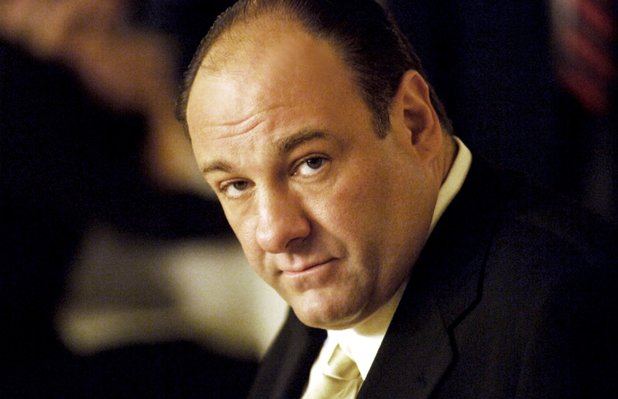
James Gandolfini as Tony Soprano from season six of The Sopranos.
Sleep well, Jimmy:
Remembering James Gandolfini
Though I'd worked a long while in film and television, I never dreamed that a tall drink of water from Texas would end up acting alongside Gandolfini in the show that I loved...
By Turk Pipkin / The Huffington Post / June 26, 2013

From the premiere episode forward, I was a huge fan of The Sopranos and the show's amazing lead actor James Gandolfini. What David Chase and team were creating week after week was quite amazing, but what Gandolfini was creating and living moment by moment was a timeless work of art and passion that we will not see again for a very long time.

Though I'd worked a long while in film and television, I never dreamed that a tall drink of water from Texas would end up acting alongside Gandolfini in the show that I loved, even when I was invited by the Austin Film Festival to do a panel with Sopranos creator David Chase and to honor Chase with their lovely writing award.

David and I spent some enjoyable time talking about his hit show and about the past months I'd spent in Italy writing a book about the Calabrian mafia, the Ndrangheta. I'd recently been in La Stampa prison interviewing Ndrangheta hitmen, one of whom told me of taking a target into the woods and ordering him to dig a grave. When the man ran away, the bad guys had cut his achilles tendons, then made him continue digging. "Let's see you run now," they laughed.

A few days later, Sopranos casting agents called to ask if I'd audition for a part in the show. The scene came over my fax and I read the pages trembling, my eyes pouring over the lines of Aaron Arkaway, Janice's born-again, narcoleptic boyfriend. The title of the episode was one of my lines, "Have you heard the good news?"

I shot the audition in Austin, Fedexed the tape and was on the plane to New York to start shooting by the next week. The first day on the set -- with one of the greatest casts and crews ever assembled -- I ran through the first scene with the full cast with the exception of James Gandolfini, who I believe was still in makeup.

Turk Pipkin, as the narcoleptic Aaron Arkaway, with Aida Turturro, who played Janice Soprano. Photo from HBO.
The Sopranos family was watching football on Thanksgiving Day and I had the easy task of taking a deep narcoleptic nap. I asked the director if it would be okay for me to fall asleep on Tony's shoulder and he said to give it a shot with Gandolfini's stand-in.

Here's the thing. I'd been up all night -- a great way to look sleepy and as it would turn out, one of Gandolfini's own tricks to create a look and feel he wanted -- so when we ran the scene a second time, I didn't actually notice that my head was not resting on a stand-in but on the man himself. Just before "action," Gandolfini leaned down to my drooling face on his shoulder and introduced himself.

One episode turned into two and then into three. There wasn't a lot of broad comic relief on the show and I was loving being a part of it, especially being in the spell of the great and kind James Gandolfini. Filming the show was a marathon for all involved. Late one night, Gandolfini had a rare break where he wasn't in a scene. When he came back for a post-midnight scene, he brought back enough sushi for the cast and crew to cover a 20-foot table. Those type of gestures were not uncommon.

When I'd fallen asleep on the dining room table during Thanksgiving dinner, he bounced nuts off my noggin from the other end of the table, and between takes kept saying, "Man, am I throwing those too hard?" I said, "Is that all you got?" And it turned out that indeed he had a little more.

Gandolfini was a cigar smoker and between scenes would retire to the back porch of the Soprano family home for a stogie. This is on an indoor soundstage at Silver Cup Studios in Queens mind you, a definite "No Smoking" zone. I asked him what it takes to get that privilege and he said, "All it takes is asking. And you're the first to ask."

So there I was, looking at the painted swimming pool chroma-key of the Sopranos family back yard, smoking a Cuban cigar with the greatest actor of my day. Thank you Jimmy, for that and for so much more.

I was just a tiny cog in the great wheel that was The Sopranos, just one of thousands who James Gandolfini treated with kindness and respect. There are few so great who remain so humble, who are able to grasp their own incredible abilities and still recognize them as a gift.

James Gandolfini was a gift. And he will be missed beyond measure. Luckily we have his incredible body of work to keep us company. Thanks, Jimmy, for showing us the way. And thanks, David, for letting me lean on the shoulder of greatness.

[Turk Pipkin, an Austin-based writer, actor, and filmmaker, played a recurring role on The Sopranos. Pipkin founded the education and social action nonprofit, The Nobelity Project, and his films include Nobelity, One Peace at a Time, and Raising Hope. He is the author of 10 books including the New York Times bestseller, The Tao of Willie, written with Willie Nelson.]

The Rag Blog

[+/-] Read More...

06 January 2010

'TV Everywhere' : Pulling the Plug on Web-Based Video?


Say goodbye to free online television:
Comcast launches 'TV Everywhere'

By Josh Silver / January 6, 2010

On Monday, public interest groups called on federal authorities to investigate a plan by the largest cable, satellite and phone companies that threatens the future of Web-based video. "TV Everywhere" gets programmers like TNT, TBS, and CBS to keep their content offline unless a viewer also pays for TV through a traditional company like Comcast or AT&T (phone companies are starting to offer TV service, too).

TV Everywhere is designed to protect the current cable TV subscription model and block competition from upstart online video ventures like Vuze, Roku and Hulu. Cleverly marketed as a consumer-friendly product, TV Everywhere is really a desperate bid by old media giants to crush the emerging market for online TV. Cable giant Comcast just became the first company to launch TV Everywhere under the brand "Fancast Xfinity," and the other dominant cable, satellite, and phone companies have announced plans to follow suit.

At its core, TV Everywhere is about ensuring consumers don't cancel their overpriced cable TV subscriptions that provide companies like Comcast with huge profits ($6.7 billion in 2008 alone). But the current scheme also prevents competition among existing TV distributors. Instead of being offered to all Americans, including those living in Cox, Cablevision and Time Warner Cable regions, Fancast Xfinity is only available in Comcast regions. The other distributors plan to follow Comcast's lead, meaning that the incumbents will not compete with one another outside of their "traditional" regions.

Statements made by cable executives indicate that backroom deals are being cut without asking for permission by regulators -- the kind of permission that the nation's major newspapers recently sought before entering into discussions about a coordinated online "paywall." So TV Everywhere not only threatens the Net's potential to break open access and distribution of video content, it also appears to be an illegal collusion meant to block competition. Any way you slice it, it's bad for consumers. On Monday, public interest groups
released a major report at the same time that they sent a letter to federal regulators requesting an antitrust investigation of TV Everywhere.

New online-only TV distributors and independent channels are excluded from TV Everywhere. The "principles" of the plan, which were published by Comcast and Time Warner (a content company distinct from Time Warner Cable), clearly state that TV Everywhere is meant only for cable operators, satellite companies and phone companies. By design, this plan would exclude new entrants and result in fewer choices and higher prices for consumers.

This deal threatens to stifle the freedom and innovation that are shaping our new media marketplace. The Internet is enabling people to watch video how and when they want it. The programs we watch on TV are increasingly available on your computer: on-demand through Hulu, Fancast and other streaming sites. And the online video you can see on YouTube, Miro, Fancast, Vimeo and other portals are available on televisions and portable devices.

Stranded at the airport, sitting in a coffee shop, on vacation or at work, we can view programs from basically anywhere. And thanks to the Internet's open, neutral platform, anyone can create and share video, meaning we're no longer confined to the programs that media executives choose to offer.

TV Everywhere represents a defining moment in the future of radio, television and other media. In one scenario, we break from history and achieve more consumer choice and an explosion of innovative content. We may need to pay for video online, or continue to watch advertisements, but we won't be forced to buy a traditional cable TV subscription that we don't want or need.

In another scenario, we allow the big cable, satellite and phone companies to use anti-competitive ventures like TV Everywhere to protect the status quo, and make the Internet more like cable television: where they, not you, pick and choose what you can watch, how and when you can watch it, and how much you pay for it.

The central tenet of TV Everywhere is that it can only exist through collusion among competitors. Our federal antitrust authorities and Congress must launch an immediate investigation.

The Internet offers an unparalleled opportunity to democratize the TV screen now controlled by a handful of powerful media companies. This revolution is televised -- and we should be able to view it online, too. Antitrust authorities should start enforcing antitrust laws and protect the public interest.

[Josh Silver is the Executive Director of Free Press a national, nonpartisan organization that he co-founded with Robert McChesney and John Nichols in 2002 to engage citizens in media policy debates and create a more democratic and diverse media system.]

Source / The Huffington Post

The Rag Blog

[+/-] Read More...

10 December 2009

Comcast-NBC Merger : Controlling Content and Delivery

Image from ZeroPaid.

The Comcast-NBC marriage:
The importance of Net Neutrality
With a monopoly on delivery, what’s to stop a new breed of ISPs/cable providers from dictating content to customers?
By Jared Moya / December 10, 2009
See 'Internet war: The fight for free access,' Below.
A scary thing happened last week when the Comcast Corporation, the largest cable provider in the U.S. and ISP to some 15 million customers, decided to to purchase NBC Universal in order to delve further upstream from the pipe that simply delivers content to the world where’s it created.

“We believe this venture represents a natural evolution in the world of communications and entertainment, a marketplace that becomes more open, more competitive, and more global every day,” it says. “The opportunity to combine these assets makes possible some innovative programming opportunities that will permit the new company to better serve the interests of many key segments of the viewing audience, including local viewers in the markets served by NBCU’s owned-and-operated stations, and the particular interests of Hispanics, African Americans, children and families, and other key audience segments. This combination also permits us to hasten the arrival of the multiplatform, ‘anytime, anywhere’ future that Americans want.”

In other words, it has seen the writing on the wall in terms of streaming video-on-demand services. Consumers increasingly want to watch content when and where they want.

However, the move means Comcast will control every step of the system from content creation to delivery, and could easily begin preventing customers from accessing competing content or charging them more to do so than they would normally as a sort of a penalty.

“While we believe that this transaction is, and will be determined to be, pro-competitive, pro-consumer, and strongly in the public interest, we recognize that competitive concerns will be raised about the combination of such significant multiplatform assets in a single company,” it adds. “Therefore, we also intend to make a number of affirmative voluntary commitments in our applications for approval that we believe will effectively address any such concerns.”

It leaves out the fact that none of its “commitments” say anything about guaranteeing online access to its competitors or allowing competing streaming services to exist on its network. Since streaming is the future of content delivery it’s important that equal access be guaranteed to all, especially since ISPs enjoy regional monopolies around the country (try finding more than one broadband provider in your area).

“I am not exaggerating when I say that Comcast’s proposed acquisition of NBC Universal poses a genuine threat to free expression and diversity of speech in our democratic society,” says Andrew Jay Schwartzman, president of the Media Access Project, a non-profit law firm and free speech advocacy organization that promotes freedom of expression, independent media, and low-cost, universal access to communications services.

“I believe that the sale should not be permitted. The deal is the first attempt at vertical integration of content and delivery in the broadband era. It presents antitrust and communications regulators with the challenge of addressing whether any one company should be allowed to hold dominant positions in both video and Internet delivery,” he says.

Exactly.

The easiest manifestation of the harm it could do to competitors is the simple withholding of NBC content from both standard cable and online competitors. It also has an inherent interest in making sure that competing video streaming services don’t succeed.

Comcast CEO Brian Roberts says that “today NBC makes certain content available online and I can’t imagine we will change that process,” but we all know that could change with time. The primary concern of a business will always be profits, and it’s only a matter of time before Comcast begins attempting to maximize the potential of of NBC content by dictating the price and availability.

Gigi Sohn, executive director of Public Knowledge, a public interest advocacy organization dedicated to promoting the public interest in access to information, warns that the deal will ultimately harm consumer choice and result in higher fees for services.

“With all that programming under its control, Comcast will have every incentive to take its shows off of the Internet and force consumers to buy a cable subscription to get online access to that programming,” she said. “Want to watch reruns of 30 Rock? Buy a Comcast subscription.”

The whole affair makes Network Neutrality even more important. Federal Communications Commission (FCC) Chairman Julius Genachowski has already emphasized that we need to “safeguard the free and open Internet” by ensuring, among other things, that consumers must be able to access the lawful Internet content, applications, and services of their choice.

Without it, Comcast will have a free hand to do as it pleases.

Stay tuned.

Source / ZeroPaid

Graphic from techrepublican.
Internet war:
The fight for free access


There is a silent battle occurring in Washington, D.C., over our ability to freely access and exchange information through our last unbiased medium, the Internet. The telecom industry is feverishly buying up policy-makers in an attempt to block new, unanimously approved FCC regulations on Internet service providers.

The new plan would ensure Internet users' equal rights to its content, while prohibiting broadband providers such as AT&T, Comcast and Verizon from selectively blocking or slowing content and discriminating against competitors.

In retribution, the big telecom interests are sending a message using their highest paid member of Congress, Sen. John McCain, to submit the Internet Freedom Act, which is anything but. The act states the FCC "shall not propose, promulgate or issue any regulations regarding the Internet or IP-enabled services."

So the FCC would not be allowed to be the FCC, giving service-providers freedom to control, without checks, any and all bandwidth, connection speed, content and applications.

Misleading policy makers and scare tactics should be ignored. FCC regulations would only affect the big Telecom interests and not the Internet itself. Opponents mistakenly claim regulations might slow innovation. Does this include censoring, blocking or stifling applications such as VoIP, Google Voice and legal peer-to-peer networking applications by companies such as AT&T and Comcast?

Regulation preventing such acts, according to a number of studies, will not only lower prices and guarantee higher performance overall, but open the web to more users -- allowing people to share ideas and programs and accelerating innovation and investment. AT&T's own two year experiment in 2006 with neutrality rules brought about greater increases in investment than any other ISP in America.

What deregulation means to these companies is not freedom from some fictitious dictatorial power but immunity from having to answer for their own irresponsible and inevitably oppressive actions. What has deregulation really given us, besides robbing us of laws designed to protect the environment, worker safety and consumer rights?

Michael A. Burger / CJOnline
  • For previous Rag Blog articles about Net Neutrality, go here.
Thanks to Media Reform Daily / The Rag Blog

[+/-] Read More...

02 September 2009

Journalism at its Best : Rachel Maddow Takes on Tom Ridge


Rachel Maddow leaves Tom Ridge begging for Homeland Security

In what essentially amounted to a seminar on left-leaning critiques of the Bush administration, Maddow asked pointed questions on the gamut of security issues...
By Joe Coscarelli / September 2, 2009
See Videos of Rachel Maddow interviewing Tom Ridge on MSNBC, Below.
When a high-ranking government official meets an establishment journalist, the ensuing fawning at the feet of power can sometimes be too much to bear. Just last weekend, blogger Andrew Sullivan compared Fox News Sunday’s Chris Wallace to a "teenage girl interviewing the Jonas Brothers” for his lack of incision in a televised segment with former Vice President Dick Cheney.

And then there’s Rachel Maddow, who on last night’s episode of her MSNBC show was the most well-prepared “teenage girl” on TV, calmly dismantling every argument put forth by former U.S. Secretary of Homeland Security Tom Ridge.

In what essentially amounted to a seminar on left-leaning critiques of the Bush administration, Maddow asked pointed questions on the gamut of security issues, but landed the most blows when she zeroed in on U.S. intelligence in the lead-up to war. Under President George W. Bush, Ridge helped build the case for the war in Iraq by corroborating reports that America’s domestic security was at risk from chemical and biological weapons. On the program to promote his new book The Test of Our Time, the former Pennsylvania governor was reduced to a rambling, stammering mess as Maddow took him to task as a “crucial” part of a “false case to the American people.”

Maddow remained smooth and assertive throughout the interview, keeping Ridge on the hot seat with questions about his level of responsibility for “Homeland Security failing so catastrophically” during Hurricane Katrina (only seven months after he left office) and the manipulation of terror alert levels. New York University professor and press critic Jay Rosen went so far as to call Maddow’s measured, piercing performance "one of the most extraordinary things I’ve ever seen on television” and even compared the host to the late Edward R. Murrow.

Check out the entire interview, in three parts, embedded below.

Source / Mediaite

A knockout in three rounds:
Rachel Maddow interviews Tom Ridge on MSNBC


The Rag Blog

[+/-] Read More...

16 January 2009

FCC : The Controversial Legacy of Chairman Martin

FCC Chair Kevin Martin leaves a mixed legacy.

'“For a deregulator, he was amazingly pro-consumer in his interventions,” said Gene Kimmelman, of Consumers Union. “Nobody thought he was going to be like this.”'

By John Dunbar / January 15, 2009

WASHINGTON – Among the legions of predictable, starched-shirt regulators that populate Washington, outgoing Federal Communications Commission Chairman Kevin Martin has been a conundrum.

Martin, who announced this week he will step down from the commission on inauguration day, is a self-described free-market Republican. Yet he has nevertheless used his considerable power to push consumer-friendly policies that angered cable television companies, like “a la carte” pricing that would allow customers to select and pay only for the channels they really want. In addition, he pried open wireless networks, protected Internet users from unequal treatment by service providers, and paved the way for a new generation of wireless Internet devices.

But Martin has also toed the deregulatory GOP line by backing major corporate mergers, removing regulations on giant telecommunications companies, and enforcing strict limits on racy content on television.

While those positions may seem contradictory, telecommunications veterans say there is a common thread — he has fought consistently to open markets to new competitors. That may be the most important legacy of Martin’s almost four years as chairman. Whether anyone remembers it, though, is another question.

What will be remembered is Martin’s controversial bedside manner. A congressional report depicts Martin as running the FCC in a Machiavellian fashion, fostering a climate of “deception and distrust.” The report blasted the chairman for creating a “climate of fear” at the agency and withholding information from other commissioners and staff to further his agenda. In his almost four years at the helm, in fact, the chairman managed to aggravate a remarkable cross-section of politicians, consumer advocates, industry lobbyists, and agency employees.

“People,” said Martin, “have a tendency to remember all the things they are mad at you about.”

The FCC chairman traditionally leaves the commission when a new president takes power. Martin announced he would resign at his final meeting Thursday, and allowed his young son Luke, 3, to bang the gavel for him.

Martin’s successor, according to people briefed by the Obama transition team, will be Julius Genachowski, a technology entrepreneur and former Harvard classmate of Obama’s. Genachowski’s first order of business will be overseeing the transition of the nation’s broadcasters to digital broadcasting on February 17. President-elect Obama wants to delay the switch.

Martin will take a position at the Aspen Institute, a nonprofit leadership training organization and think tank that has become popular place to work for former FCC chairmen, such as Michael Powell and William Kennard.

Contrary from the Beginning

Martin’s contentious tenure has been full of surprises. His habit of occasionally siding with the two Democrats against his fellow Republicans on the five-member commission could hardly have been predicted, given his mainstream GOP background. The 42-year-old North Carolina native came to the commission with both political connections and hands-on experience in the arcane world of telecommunications regulation.

He is former deputy general counsel for the 2000 George W. Bush campaign and also served as legal adviser for former Republican FCC commissioner Harold Furchtgott-Roth.

Bush named Martin to the commission in 2001. In 2003, Martin gave a glimpse of his partisan independence in a highly publicized vote regarding local telephone competition. Martin sided with the two commission Democrats against a proposal by then-Republican chairman Michael Powell to partially deregulate dominant local telephone carriers. It was a stinging defeat for Powell and his supporters. Yet in the same proceeding, Martin also supported less regulation of Internet services.

Martin would succeed Powell as chairman in March 2005.

A la Carte and the Cable Crusade

Not long after taking over as chairman, Martin began pushing the cable companies to sell channels on an “a la carte” basis. Cable systems normally sell their service to customers in tiers, or program packages, at a flat rate. Each tier includes a substantial group of channels. It is a carefully calibrated arrangement between operators and programmers that has generated steady profits for decades. Martin wants cable companies to sell programming on a per-channel basis, arguing that under the current system, viewers are stuck paying for channels they do not want and may not want their children to see. But the cable companies are vigorously opposed to a la carte.

Under Powell, the FCC released a study that said a la carte pricing would raise prices for the average customer. Under Martin, a second report was released, refuting the previous study. This one said there would be “substantial consumer benefits” in an a la carte world.

“We’ve seen decreases in wireless prices, long distance calls, local calls, and international calls,” Martin said. “If you look at broadband prices, with competition primarily cable and telephone, you’ve actually seen dramatic price declines in broadband services since 2001.”

But cable prices have “skyrocketed” in the past decade, he said. “Consumers are also forced to purchase bigger and bigger bundles of channels, regardless of which ones they may actually want.”

Martin’s claims about prices are “distorted, disingenuous, and no longer relevant” in a market where voice, video, and Internet services are bundled together, said Brian Dietz, a spokesman for the National Cable and Telecommunications Association. When considering all services, prices have actually dropped, he said.

Despite Martin’s efforts and some support on Capitol Hill, a la carte pricing never became a reality during his tenure.

Anti-Cable or Pro-Bell?

In the modern telecommunications era, what’s bad for cable is often good for traditional telecommunications companies, such as Verizon Communications Inc. and AT&T Inc. The two industries compete directly. Cable companies are offering phone service while phone companies are offering television service, and each side is looking for any edge it can get.

Some in the cable industry say Martin has favored the traditional telecom giants over cable companies. In late 2006, Martin worked hard to push through AT&T’s buyout of BellSouth Corp., the largest telecommunications merger in history. The deal faced heavy opposition from consumer groups and smaller telephone companies who feared the re-emergence of the old Ma Bell monopoly.

Around the same time, Martin also pushed through a proposal that would help Verizon and AT&T provide television service in local markets more quickly. Democrats opposed the move as did community advocates. Cable companies sign agreements with local governments to provide service. The new FCC rules would strip away some of the bargaining power of small communities who want cable operators to provide public access channels, city lawyers said.

He kept up the pressure on cable throughout his tenure. Martin re-established a national subscribership cap on cable companies. No single operator is allowed to reach more than 30 percent of pay-television households nationwide. The rule prevents the largest cable companies, like Comcast Corp., from growing much larger.

Martin also attempted — ultimately unsuccessfully — to push through a report that showed the industry had achieved a saturation level nationally that would trigger a clause in federal law allowing for more government regulation. And he granted requests from AT&T and Verizon to shed certain regulatory requirements. For example, the FCC allowed AT&T relief from certain accounting reporting rules.

Martin denies that he favors AT&T and Verizon over the cable industry. “I’ve actually moved on just as many orders trying to facilitate and open up the voice market to cable competition as we have video markets to video competition for the telephone companies,” he said.

Open Access

Among the FCC’s most important tasks is allocating radio frequencies to cell phone companies and other commercial users. In 2008, an extremely valuable portion of this radio spectrum, to be vacated by television broadcasters, was auctioned. But rather than simply sell off the spectrum to the highest bidders, Martin applied restrictions on how some of it could be used.

For instance, he applied a so-called “open access” provision, meaning the winner of one large block of the spectrum was required to allow customers to use any kind of device or software they want, as long as it did not endanger the network. Until the FCC action, the cell phone industry in the United States was a closed system. Customers were stuck using phones and software applications provided by service providers.

Martin prevailed, joined by the two commission Democrats and Republican commissioner Deborah Taylor Tate.

For a Republican like Martin to have gone down that road, said telecommunications analyst Jessica Zufolo of Medley Global Advisors, was “unprecedented.” The wireless industry opposed the rules, and ended up filing a suit in federal court seeking to get them tossed out. The suit was dropped in November.

Meanwhile, AT&T and Verizon ended up winning about 80 percent of the spectrum, which raised more questions — this time about whether the wireless industry is competitive enough.

Media Ownership and Network Neutrality

But allocating radio spectrum was hardly the only bruising battle in which Martin engaged. To the surprise of many, in 2007 the chairman also tackled a rewrite of rules restricting media ownership — a sort of third rail of FCC politics.

After months of hearings staged across the country, Martin proposed the loosening of a single rule — the ban on newspapers owning television and broadcast stations in the largest markets. It was a modest move compared to the massive deregulation that was approved in 2003, a decision that was later largely invalidated in federal court.

In this case, Martin was joined by his two Republican colleagues in a 3-2 vote. Democratic commissioner Michael Copps said it was a decision that would “make George Orwell proud.”

Not long after, however, Martin found himself friends with the Democratic commissioners again. Comcast, the nation’s largest cable company and a major provider of high-speed Internet service, was accused of blocking “peer-to-peer” traffic on its network. Peer-to-peer software is often used to upload very large video files. Comcast’s action was in violation of the agency’s policy statement on “network neutrality,” Martin said.

In a highly publicized vote, Martin joined with the two Democrats in finding the company guilty, though no fine was issued. Comcast, which maintained that the policy statement was not enforceable, said that it had merely delayed traffic from users who pump a disproportionately high amount of data through the network, to the detriment of other customers. Comcast sued, and the case is ongoing.

There is some disagreement about the lasting significance of the FCC action — but the bottom line, most agree, is that a precedent was set allowing the agency to intervene when it determines Internet providers are operating networks in a discriminatory fashion.

Profanity Debate Hits High Court

The decision in the Comcast court case is highly anticipated, but it is not the most high-profile FCC policy under judicial review.

A federal appeals court in June 2007 invalidated the agency’s policy on what constitutes indecent speech on the airwaves. Martin and the agency sought a review by the Supreme Court, which has taken the case. It will be the high court’s first review of broadcast indecency in more than 30 years, and it could rule as early as March.

The issue is over so-called “fleeting expletives.” The court is being asked to evaluate the agency’s position that the “F-word” and the “S-word” are inherently indecent and deserving of sanction in virtually any context. Broadcasters say the agency’s interpretation of what constitutes indecent content has been inconsistent and unconstitutional, and has chilled speech.

Martin has been a social conservative on broadcast speech issues. He has also complained about violent content on television as well as advertising he claims has contributed to an obesity epidemic among the nation’s children.

“I come from a very family-oriented background. I’m concerned about the impact the media has on our children,” he said. “We must have limits that distinguish what is appropriate from what is not appropriate in mainstream media where children are likely to be watching television.”

The Investigation

While many of the debates during Martin’s tenure involved substantive disagreements, it was the chairman’s style, above all, that got him into trouble. It all seemed to come to a head at a November 2007 meeting, when he tried to present a statistical report demonstrating that the cable television industry had surpassed a subscription saturation threshold that might trigger additional government regulation.

In a highly rancorous meeting, he was accused of selective use of data, and after other commissioners cried foul, he withdrew the report.

That meeting, in addition to other complaints about how Martin ran the commission, sparked a bipartisan investigation by the House Energy and Commerce Committee’s Subcommittee on Oversight and Investigations.

Investigators spent nearly a year looking into Martin’s regime, reviewing 95 boxes of documents and conducting 73 interviews of former FCC employees. No hearings were conducted, nor was there a vote on the report. Republicans opted not to join in the ultimate findings. The report, released in December, was scathing.

Singling out the a la carte and cable subscribership issues specifically, the report pointed to instances in which the chairman “manipulated, withheld, or suppressed data, reports, and other information.” Investigators said Martin possessed a “heavy handed, opaque, and non-collegial management style” that had “created distrust, suspicion, and turmoil among the five current commissioners.”

Martin called the report “old-style politics” and said many of the specific criticisms were about problems that occurred prior to his chairmanship. And Martin said he did not handle information any differently than it had been handled under previous chairmen at the agency.

But current and previous FCC staffers say Martin could be maddening to deal with. He seemed to plot a course of action and stick to it regardless of the introduction of any new facts, they contended. “In government it’s important how you go about your decision making,” said one FCC official who asked not to be named because he is not authorized to speak to the press. “It’s not fixed from the very beginning.” With Martin, “not only was it fixed, he had a position on essentially everything, and he linked everything together in order to maximize leverage.”

Martin disputes this, pointing to the wireless auction as an example. He was initially opposed to the open-access requirement, he said, but after hearing from consumer groups and others, he changed his mind.

Last Flurry Falls Short

Martin seemed mostly undeterred by the congressional report. In fact, he was determined to go out with a flourish as FCC chief by pushing through plans to vastly expand access to high-speed Internet service.

One initiative — to use the frequencies that exist between television channels for new wireless devices to connect to the Internet — was successful, despite relentless opposition from the broadcast lobby.

Martin also made some progress reforming the Universal Service Fund — a giant pot of money paid into by phone subscribers to subsidize phone service in rural areas. Martin wanted to reform the fund and use it to provide Internet service in those areas. In the end, he was able to get the commission to cap the growth in one part of it and convince the agency to look into comprehensive reforms.

Martin was unable, however, to secure support from either party for his boldest broadband initiative. He wanted to auction off a swath of airwaves and require a portion be used to provide free wireless broadband access to most of the population. But with time running out, President Bush’s Commerce Department and incoming chairmen of both House and Senate committees that oversee the FCC recommended that he not pursue the plan.

Legacy of Openness

Looking back, Martin says he is most proud of his efforts to provide wireless broadband access to consumers and crack open those networks to competing devices and applications. His philosophy, he said, has been that “we’ll rely upon the markets to determine competition to a large extent, but we must be willing to step in when the market cannot fix itself.”

Even some of Martin’s fiercest critics say he has followed through on those commitments.

“For a deregulator, he was amazingly pro-consumer in his interventions,” said Gene Kimmelman, vice president of international affairs for Consumers Union. “Surprisingly pro-consumer. Nobody thought he was going to be like this.”

As for the controversies, Martin remains philosophical.

“I am willing to push the fact that we need to make decisions. I am willing to make very hard decisions,” he said. “And in the past, some commissioners haven’t wanted to make the difficult decisions.”

[John Dunbar is a senior fellow at the Center for Public Integrity.]

Source / The Center for Public Integrity

Also see House Democrats call FCC under Martin 'dysfunctional' Orbitcast / with link to Congressional Report.

The Rag Blog

[+/-] Read More...

Only a few posts now show on a page, due to Blogger pagination changes beyond our control.

Please click on 'Older Posts' to continue reading The Rag Blog.